
The house was nearly empty when Roselyn Simpson returned with dinner on January 18. The move was supposed to be over, but lights were still on inside the Lake Balboa rental. Simpson opened the door and said she found her former landlord, Richard Smith, going through belongings she had left behind. Moments later, she said, Smith lunged at her and she ran across the street to call police. Smith offered a different account: the move-out had run late, rent remained unpaid, and the arrest that followed was unjustified. In court, the dispute became a test of photographs, messages, video, and credibility. The judge ultimately dismissed Simpson’s claims and awarded Smith $4,000 on his counterclaim.
This was a civil landlord–tenant case presented on Judy Justice, not a criminal trial deciding that either party was guilty of a crime. The ruling turned on whether the parties could prove the claims and counterclaims they brought before the court.

A rental chosen during cancer treatment
The dispute began with a practical decision made under difficult circumstances. In 2022, Roselyn Simpson was receiving cancer treatment and wanted to live closer to the hospital. She found a house in Lake Balboa, California, advertised online, and rented it from Richard Smith.

Smith did not regularly live at the property. In court, he described himself as retired and discussed living in Hanoi, Vietnam, although the exchange also included his statement that he had visited there only once. Simpson and Smith had agreed to a one-year lease beginning July 21, with the arrangement expected to convert to month-to-month after the initial term. The technical moving date was August 1, the same date Simpson said she was scheduled for surgery. She acknowledged that she moved in before Smith had permitted her to do so.
That early accommodation set the stage for a relationship that initially appeared flexible. Later, however, the parties disagreed about rent, possession of the house, and the date on which Simpson was required to leave.

The move-out that did not happen on schedule
By October 2023, Simpson was renting month to month. She gave Smith 60 days’ notice because she had purchased a house. The plan was straightforward: she would move out, and Smith would return from Hanoi to prepare the property and rent it again.
The purchase did not close on time. Simpson agreed that problems involving the seller’s contingencies delayed the process and repeatedly shifted her moving date. Smith, meanwhile, wanted to regain possession of the rental. Simpson told the court that Smith had agreed to let her remain until the closing and that they would determine a prorated amount of rent for the additional days.

The disagreement sharpened around December and January. Simpson maintained that Smith had agreed to apply her security deposit toward December’s rent and to prorate January after the move. The judge repeatedly asked to see the specific text message supporting that account. Simpson searched for it, but the requested message was not produced during the exchange shown in the transcript. As a result, the court had to weigh her recollection against the payment history and the documents actually presented.
The financial question was central because the monthly rent was $3,650. Simpson acknowledged that she had not paid January’s rent. Smith’s side also argued that December’s rent had not been paid, while Simpson said the security deposit was supposed to cover it. She first referred to paying by Zelle, then explained that no December payment had been made because Smith had allegedly agreed to apply the deposit. The judge’s questions made clear that an alleged agreement was not enough by itself; the court wanted to see the message that documented it.
What happened on January 17 and 18
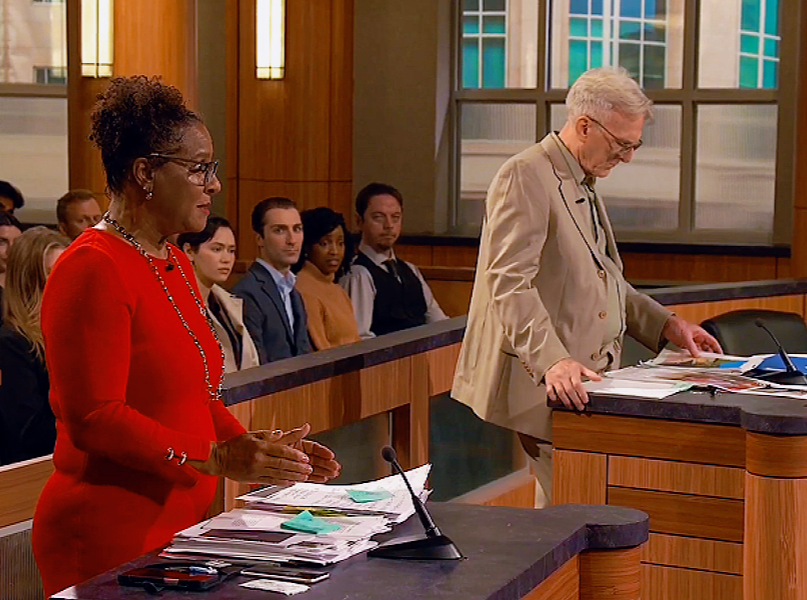
The central conflict unfolded over January 17 and January 18. Simpson said she arrived on January 17 to move her belongings. She had hired professional movers, but canceled them, rented two trucks, and brought in day laborers after Smith made clear that he wanted possession of the house.
According to Simpson, Smith had agreed that she could remain until the closing and that rent would be prorated. While she was arranging the move, she said, Smith removed some of her belongings from the house and placed them outside before she had finished vacating. She identified Christmas decorations, golf equipment, and a vehicle carrier rack among the items she claimed had been exposed to rain.

The move continued into January 18. Simpson said her daughter and the day laborers returned to collect the remaining property. After returning cable boxes and walking to a UPS store, she picked up dinner and came back to the house. She noticed that the lights were on, opened the door, and said she found Smith going through items she had left behind, including fragile pictures and glass objects.
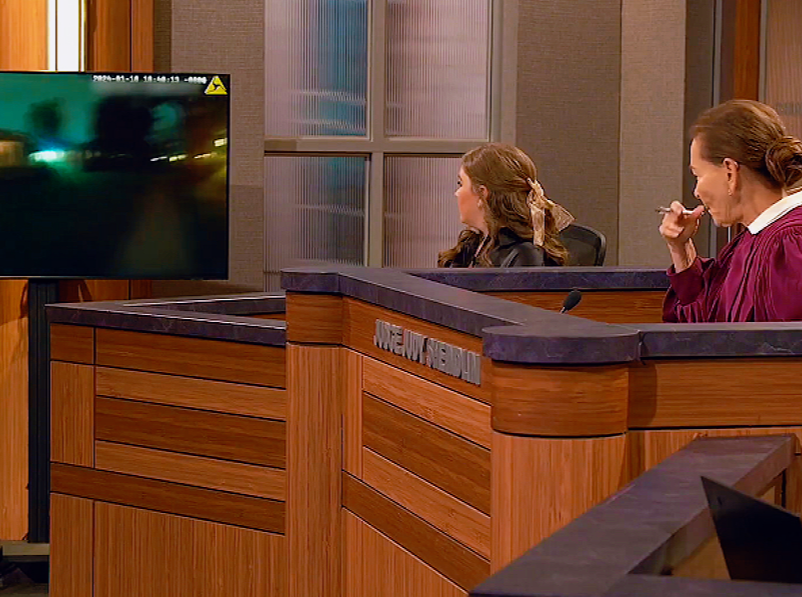
Simpson told the court that Smith lunged at her near the front door. She said she ran across the street and called police. Smith disputed that description. The court reviewed video supplied by Simpson, but the judge said the portion shown did not establish the conduct she alleged. The transcript records the allegation and the court’s response; it does not provide an independent finding that Smith assaulted her.
The evidence problem behind the property claim
Simpson also sought money for property damage. She said Smith had placed Christmas decorations, golf equipment, and a vehicle carrier rack outside in the rain. When the judge examined photographs of the Christmas decorations, however, the images showed the items in boxes outside rather than proving that they had been destroyed. That distinction—exposure to rain versus demonstrated, compensable damage—became important.
A similar problem followed the claim involving fragile belongings. Simpson said Smith tore down window coverings and broke glass in a custom-framed picture. But when the judge asked her to identify the damaged items in the photographs, the evidence shown did not persuade the court that the claimed losses had been established.

The trespass allegation presented a separate complication. Simpson’s account placed Smith inside the residence while she was still collecting belongings. At the same time, Smith owned the house, had returned to prepare it for re-rental, and believed the move-out had gone beyond the agreed schedule. The court did not treat ownership as an automatic answer to every question; instead, it examined the circumstances and the proof offered for the alleged unlawful entry.
Smith presented a separate property claim. He said Simpson had removed a television wall mount that was present when she moved in. Simpson denied taking it, and Smith produced a figure of $140 for materials and labor. The judge asked whether Simpson had taken the mount. She said she had not, and the exchange did not establish that the item had been removed by her.

A citizen’s arrest becomes the center of the counterclaim
The most consequential issue became Simpson’s decision to pursue a private-person, or citizen’s, arrest. The officers indicated that they did not see a reason to arrest Smith, but Simpson insisted on proceeding. Smith was handcuffed, taken to a police precinct, held for approximately an hour and a half, and released. No charges were brought against him. That police encounter later became the most valuable part of Smith’s counterclaim.

Simpson said Smith had attacked her and that she had photographs. The judge asked whether she had a medical record, emergency-room report, photograph of an injury, or treatment record from January 18. Simpson answered no and pointed instead to the police report. The judge said that report did not substitute for proof of an injury. Based on the video and Simpson’s own statements, the judge concluded there was no sufficient basis for having Smith arrested and questioned whether her explanation in court matched the reason given to police.
The judge’s assessment was blunt: the case presented a serious credibility problem. The court noted that, according to Simpson’s own account, Smith had shown flexibility by allowing her to stay beyond the original moving schedule and by discussing the use of the security deposit. Against that backdrop, the judge found the claims of a vicious or unlawful eviction unsupported by the evidence presented.

The ruling
The judge dismissed Simpson’s claims, including the demand for money based on illegal eviction and alleged property damage. The court then turned to Smith’s counterclaim.
Smith was awarded $2,000 for unpaid rent and another $2,000 for the false arrest. The total judgment was $4,000. The hearing ended with the court dismissing the plaintiff’s case and adjourning.

After the ruling, the parties offered sharply different interpretations. Smith said Simpson had been late moving out and that he had placed her belongings where they could be reached without mixing them with his own property. He called the dispute unnecessary. Simpson said Smith had been overzealous about forcing the transition. Those comments did not change the judgment, but they showed how far apart the parties remained even after the court had finished weighing the evidence.

The final discussion returned to the human circumstances behind the conflict. Simpson had been navigating cancer treatment and a delayed home purchase, while Smith wanted his property back and believed the tenancy had extended without proper payment. The court evaluated whether the specific accusations were supported by evidence. On that question, the ruling went against Simpson and in favor of Smith.

FAQ
Who sued whom in this Judy Justice case?
Roselyn Simpson sued her former landlord, Richard Smith. She alleged illegal eviction, property damage, trespass, and assault. Smith filed a counterclaim involving unpaid rent and what he described as a false arrest.
Why did Roselyn Simpson say she needed the rental house?
She said she was receiving cancer treatment in 2022 and wanted to live closer to the hospital where she was being treated.
What happened during the move-out?
Simpson said her move was delayed because the purchase of her new home did not close on time. She said Smith removed some belongings before she had finished moving and later entered the house while she was collecting remaining items.
Was Richard Smith charged after the police encounter?
No. The record states that he was handcuffed, held at a police precinct for about an hour and a half, released, and never charged.
How much money did Richard Smith receive?
The judge awarded Smith $4,000: $2,000 for rent and $2,000 for the false arrest.
What happened to Simpson’s lawsuit?
The judge dismissed the plaintiff’s claims, finding that the evidence presented did not support the alleged illegal eviction, property damage, trespass, or assault claims.