“Leave her alone.”
Judge Judy’s final instruction was short, but the story behind it was not. By the time Chapman v. Bigelow reached the courtroom, two women connected to the same man had spent years confronting one another through protective-order proceedings, social-media posts, accusations, and counteraccusations. Hailey Chapman said Fallon Bigelow had defamed and harassed her. Fallon said the conflict had caused her emotional distress.
What followed was not a simple dispute over an offensive post. It was a courtroom examination of where personal cruelty ends and a legally actionable claim begins—and of how the consequences of one fractured relationship had reached five children.
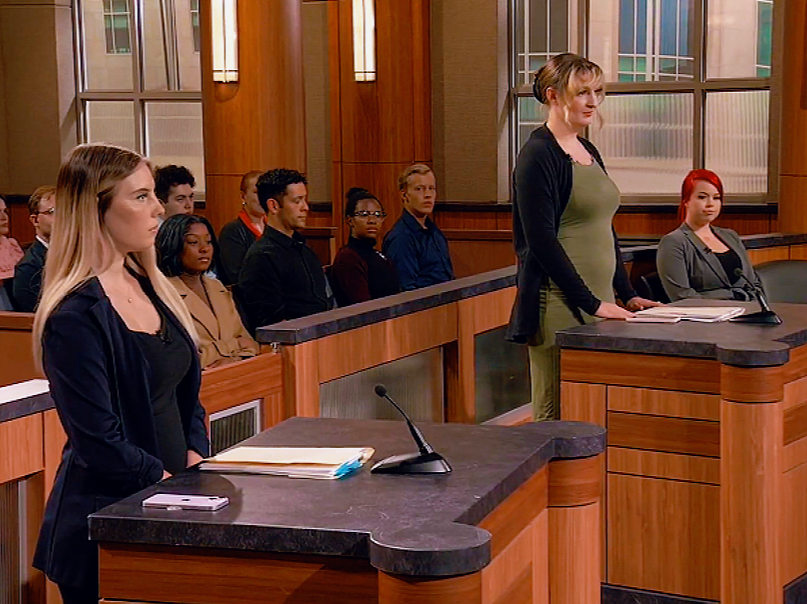
The Family Connection at the Center of the Case
The episode identifies the matter as Case 3022, Chapman v. Bigelow. Hailey Chapman sued Fallon Bigelow for defamation, harassment, and emotional distress. Fallon countersued Hailey for emotional distress.
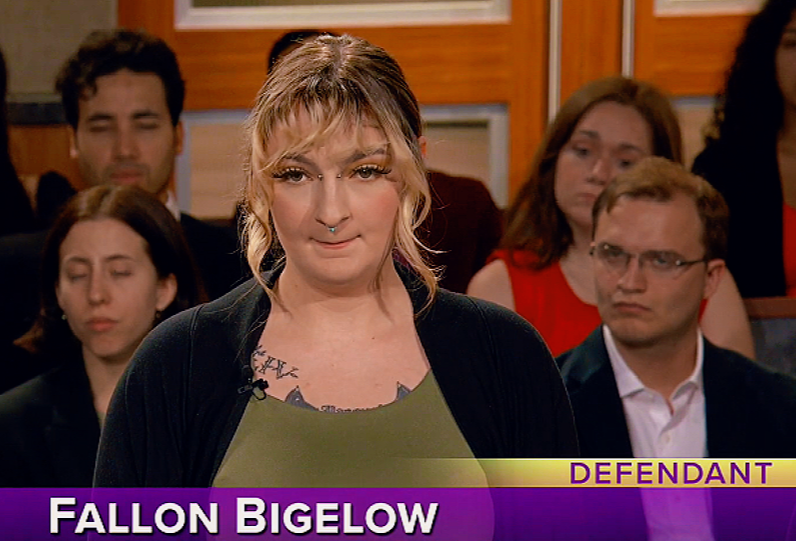
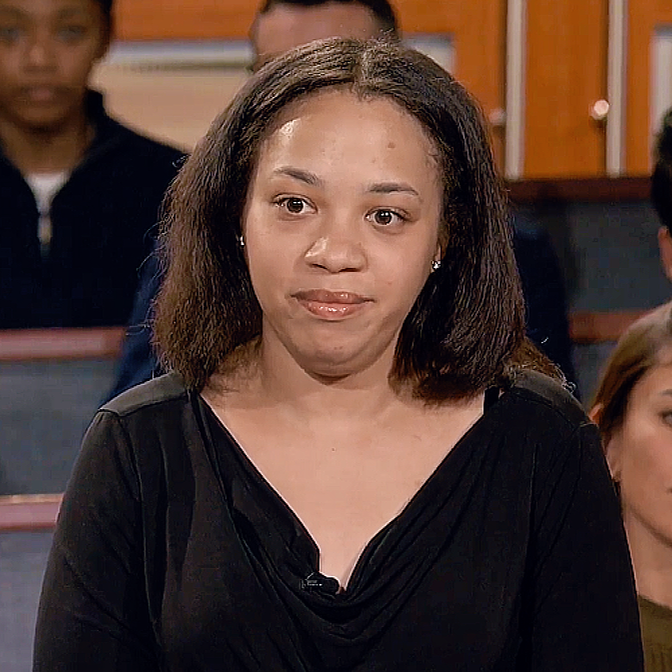
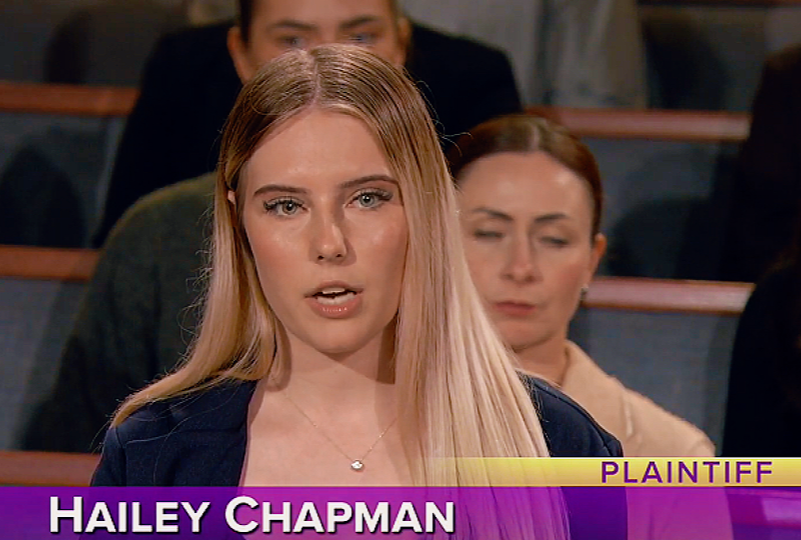
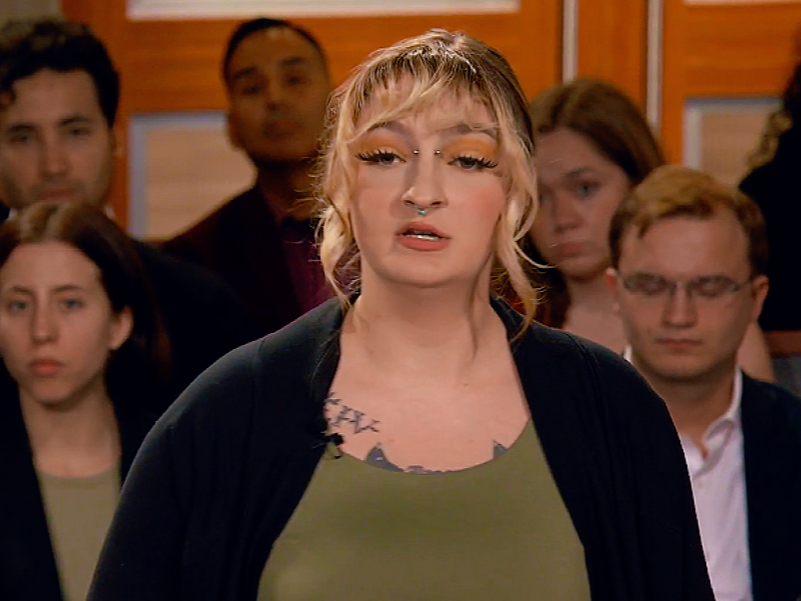
The women’s connection was through Hailey’s husband, who had one child with Fallon. Hailey testified that she was 20 years old, lived by herself, and had four children. She first answered that she had three children with her husband, then clarified that she had four children in total: a five-year-old, a three-year-old, a two-year-old, and a newborn who was two weeks old at the time of the hearing.
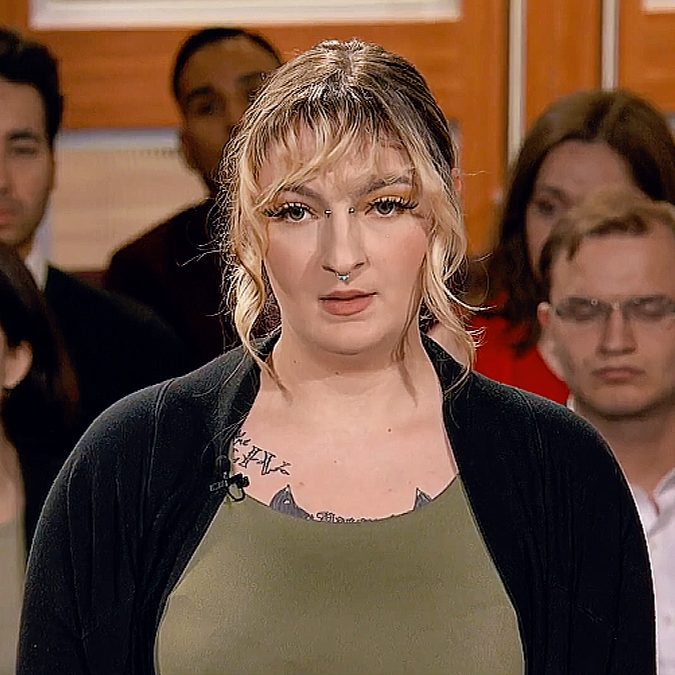
Her husband was absent from court because, according to the testimony, he had been incarcerated in a Florida state correctional institution since his arrest in September 2022. Fallon testified that she had one child with him, a son who was nearly five years old. She worked as a bartender and said she was preparing to move to South Carolina with her son to attend college for underwater welding.
The Protective Order and the First Legal Turning Point
Judge Judy began by establishing the timeline. Hailey said she had filed for a protective order in March 2021. There was no trial on that order. Fallon was present and consented to it. The order prohibited her from assaulting, menacing, threatening, or harassing Hailey for 12 months.
The court also heard that the order was violated on March 15, 2021. A hearing followed, and Fallon said she received administrative probation. That history mattered because it showed that the conflict had already entered the legal system before the social-media evidence became the central focus of the lawsuit.
The later incidents at issue in Hailey’s petition were described as taking place after the protective order expired in March 2022. Judge Judy repeatedly separated those later allegations from the earlier order. The question was not simply whether the relationship between the women had become hostile. The question was whether the particular acts presented at the hearing justified an award of money.
How the Conflict Moved Online
The first post Hailey described involved TikTok. A video connected to Fallon appeared on Hailey’s husband’s “For You” page. It concerned Fallon’s mother, and Hailey said her husband sent it to Fallon’s mother. Judge Judy stopped that testimony because it did not directly establish an act involving Hailey.
The evidence then moved to posts about Hailey’s arrest. Hailey testified that she was arrested in October 2022 after authorities tried to charge her with trafficking drugs. She acknowledged that this was related to the conduct for which her husband was incarcerated. She also said she received pretrial diversion because, in her account, authorities did not have the evidence they needed to proceed.
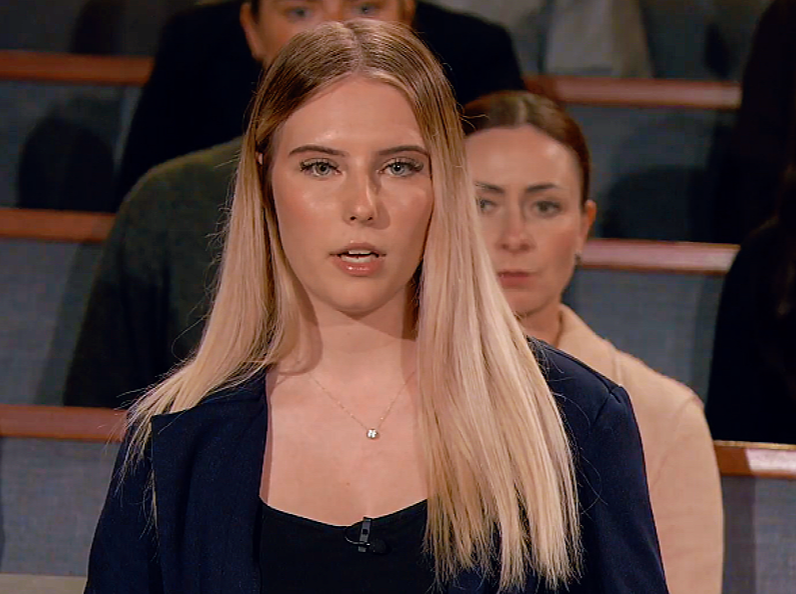
Fallon had posted Hailey’s mugshot and stated that Hailey had been arrested and charged with trafficking in fentanyl. Hailey considered those posts part of the harm she had suffered. Judge Judy focused on a basic factual question: had Hailey actually been arrested? The answer was yes.
That distinction shaped the ruling. Judge Judy said the posts were nasty and pointless, but a statement that Hailey had been arrested was not defamatory when the arrest had occurred. The court did not praise the way Fallon used the information. It simply refused to treat an unpleasant but accurate statement as defamation on the evidence shown.
Fallon also posted about Hailey’s custody history and wrote that she hoped one day to gain custody of her son’s sisters. The wording was challenged in court, and Fallon corrected “daughters” to “sisters.” Judge Judy said the material presented so far still did not show defamation.

The Allegations Behind the Posts
The dispute became more serious when Fallon explained her history with Hailey’s husband. Fallon alleged that he had assaulted her when she was a child, while he was an adult. She said her son was the product of rape. Judge Judy acknowledged the statement but insisted that Fallon’s allegation against the man did not automatically create a legal claim against Hailey.
Hailey then described additional conduct she attributed to Fallon. She said Fallon had told her to hurt herself, threatened to expose nude photographs, and threatened to throw bedbugs in her yard and on her. Hailey also presented what she described as messages in which Fallon admitted making calls to the Department of Children and Families because Hailey would not fight her.
The hearing also touched on an alleged video of sexual assault and an original conversation stored on an iPod. Hailey said police had taken the device because the matter involved child pornography. When Judge Judy asked whether Hailey had the original conversation, the answer was no. That limited the evidence available for the court to assess.
Both women described emotional suffering. Hailey referred to anxiety and depression. Fallon said she experienced chronic post-traumatic stress disorder, anxiety, and depression. Judge Judy questioned whether the material presented proved that either woman’s condition had been caused by the other’s conduct. The judge instead pointed to the wider pressures in Hailey’s life: she was 20, had four children under five, and had a husband who had been incarcerated for approximately a year and a half.
Why Judge Judy Found No Actionable Defamation
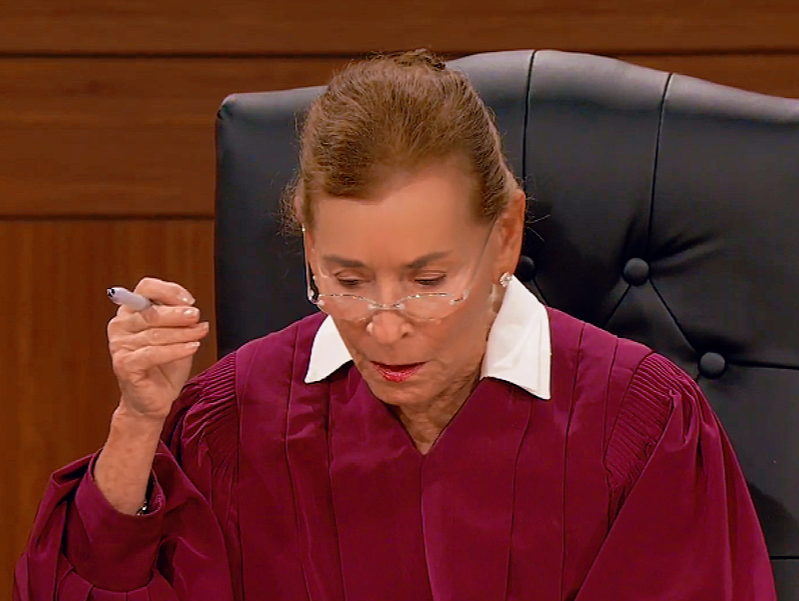
By the end of the hearing, Judge Judy’s position was clear. The conduct shown in court was “nasty,” “stupid,” and “vicious,” but the posts about Hailey’s arrest were not false. The judge therefore found no actionable defamation on the evidence presented.
The same reasoning applied to the broader conflict. A threat, insult, or unwanted post may be disturbing, but the court still needed evidence connecting a specific act to a legally compensable injury. Judge Judy did not award Hailey money. She also told Fallon that she would not receive money on her emotional-distress counterclaim.
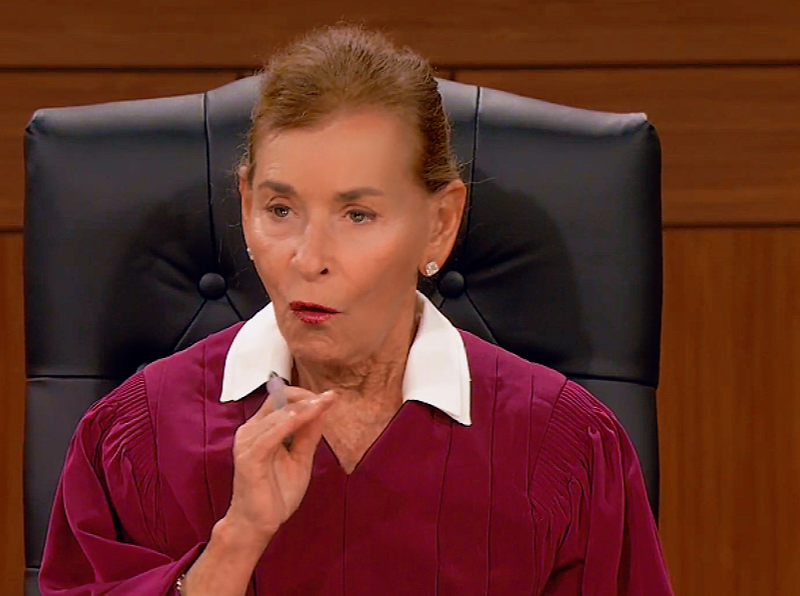
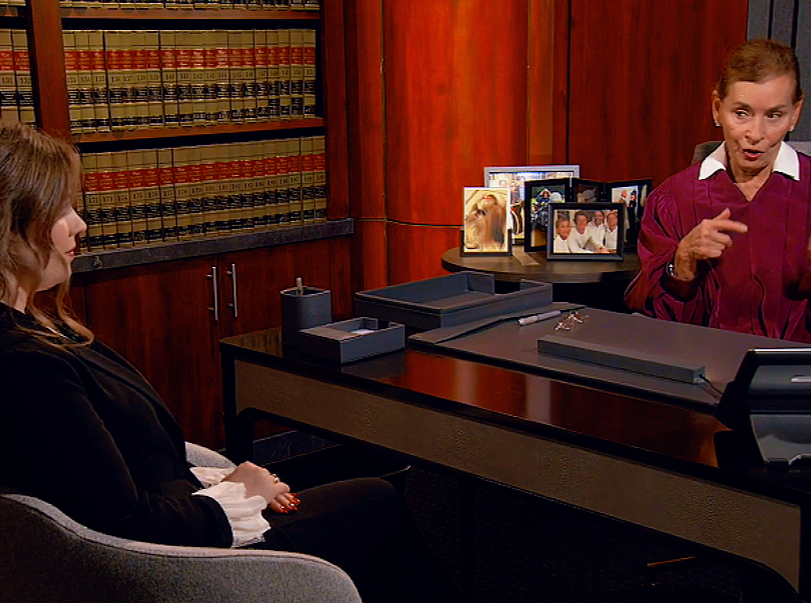
he judge then addressed Fallon directly. She said Fallon was angry and continued posting about Hailey, Hailey’s husband, and the children. Whatever the reason, Judge Judy ordered her to stop. When Hailey began to respond with “so,” the judge interrupted: this was not a “so”; it was a period—the end of the matter.

The Final Instruction and Its Human Cost
After court, Hailey said she hoped the proceeding would help Fallon understand the problems she had caused. Fallon said she wanted the threats, reports, and harassment to stop so that the situation could calm down.

The episode’s closing discussion moved beyond the legal claims and toward the children. Between Hailey and Fallon, there were five children connected to the same father. The testimony described children staying in different arrangements, including with a friend at a hotel, with a mother-in-law, at summer camp, and with a grandfather.
Hailey said she was a nursing student with one year remaining, had taken a break, and planned to return in September while working two jobs.

The case did not resolve every allegation raised by either woman. It showed how quickly a private conflict can become a public cycle: a grievance becomes a post, the post becomes evidence, and the evidence may still not repair the damage.
The final lesson was not that the conflict was harmless. Judge Judy described the behavior as cruel and unnecessary. The legal lesson was narrower: cruelty is not automatically defamation, and emotional pain is not automatically proof of legal liability. The judge told Fallon to leave Hailey alone and use her time to build a different life.
FAQ
Was Hailey Chapman convicted of fentanyl trafficking?
The SRT states that Hailey was arrested in October 2022 and charged in connection with trafficking in fentanyl. Hailey said she received pretrial diversion. The transcript does not state that she was convicted.
When was the protective order issued?
Hailey testified that she filed for the protective order in March 2021. Fallon was present and consented to it. The order was described as lasting until March 2022, and the SRT refers to a violation on March 15, 2021.
Why did Judge Judy reject Hailey’s defamation claim?
Because the central post shown in court stated that Hailey had been arrested, and Hailey acknowledged that she had been arrested. Judge Judy considered the posts nasty but found that the evidence did not establish actionable defamation.
Did either woman receive money?
No damages were awarded to Hailey. Judge Judy also stated that Fallon would not receive money on her counterclaim for emotional distress.
What did Fallon Bigelow say she planned to do next?
Fallon said she planned to move to South Carolina with her son and attend college for underwater welding. She also testified that she had saved $180,000 from bartending over the previous two years.