“Show me the policy.” That is the question that gradually strips the first case down to its essentials. Arielle Kresin says her late father’s will excluded her, while a separate insurance policy should have paid her directly. Across the courtroom, her sister Shoshanah says the estate was handled according to their father’s wishes. Before the hearing ends, a second family dispute takes the same turn: a payment meant to help repair a woman’s teeth becomes a claim for thousands of dollars after a marriage breaks apart.
The First Case : A family inheritance dispute begins with a missing policy
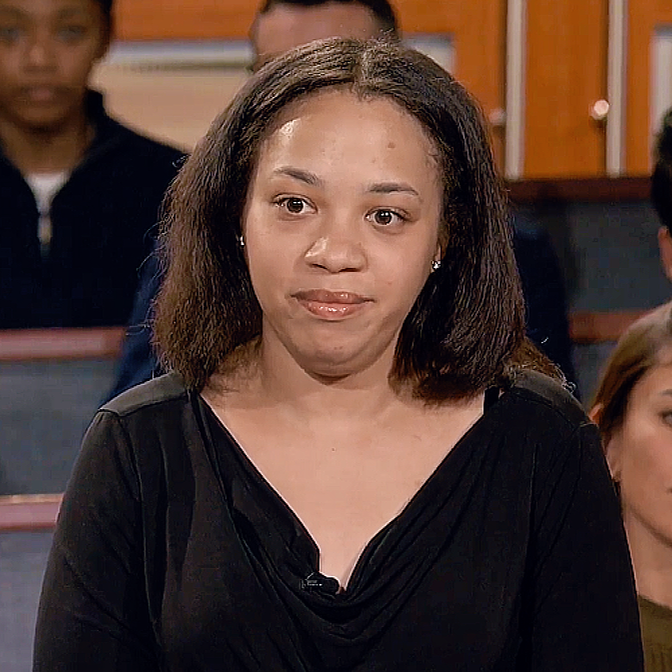
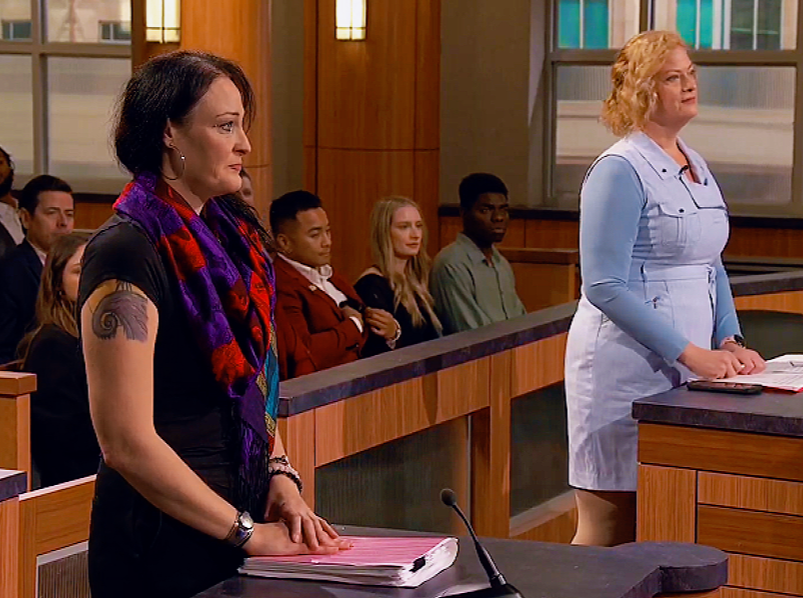
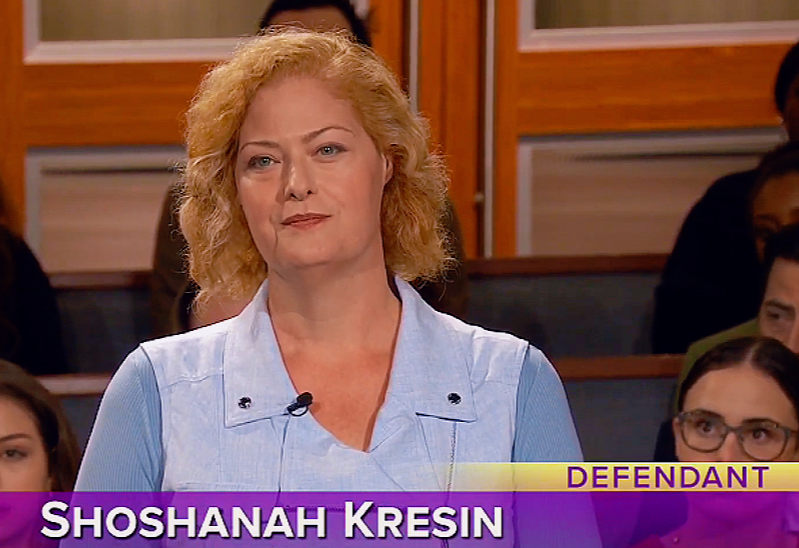
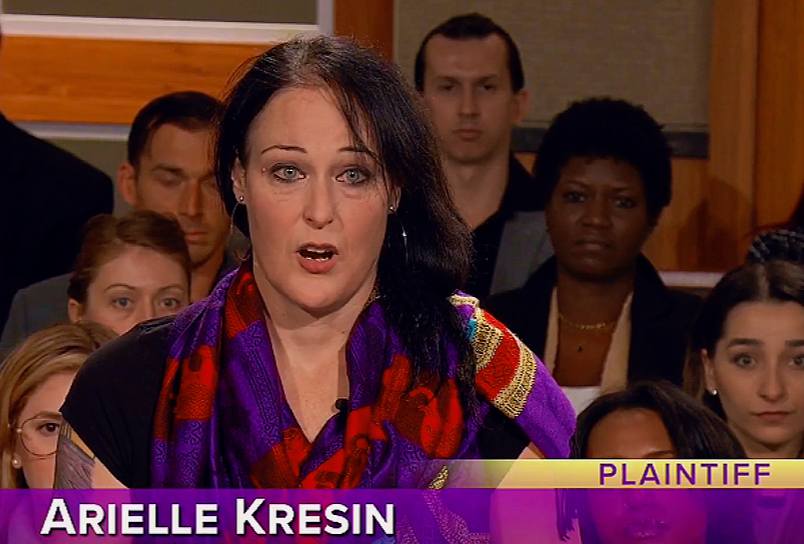
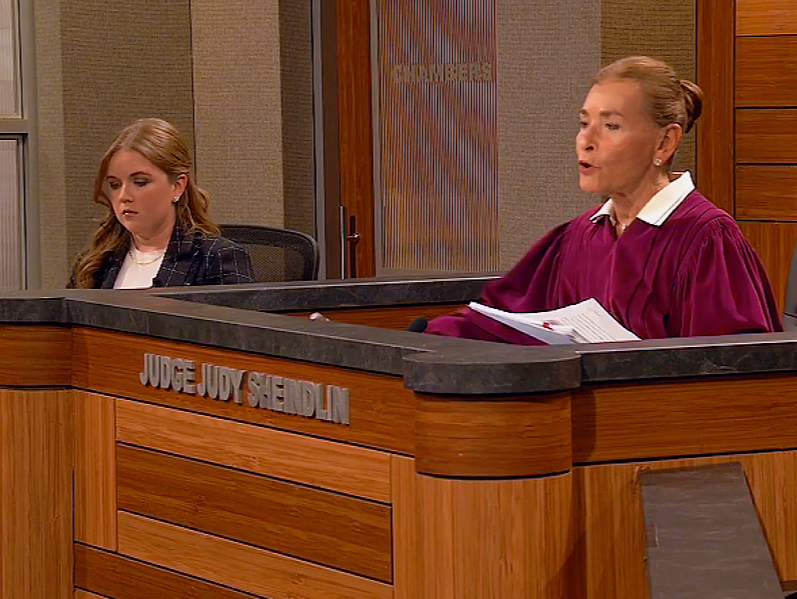
The first case, Kresin v. Kresin, places two sisters on opposite sides of a question involving their father’s estate. Arielle Kresin is suing Shoshanah Kresin for money she believes came from their father’s life-insurance policy. Their father died in 2022. There was a will, Shoshanah was the executor, and Arielle confirmed that the will did not leave her a direct inheritance. The will had already gone through probate, and Arielle said the probate process was finished.
That history matters because Arielle’s complaint was not limited to the will itself. She argued that a life-insurance policy was separate from the estate plan. In her view, being removed from the will did not automatically remove her as a beneficiary of an insurance policy. She wanted the policy information so she could determine whether she was entitled to receive checks.
Judge Judy Sheindlin immediately focused on the document that could prove that claim. Arielle presented paperwork describing estate assets and referred to two policies with estimated values of $190,000 and $30,000. She also showed a Gerber Life check made out to her for $3.36. But the materials discussed in court did not identify Arielle as the beneficiary of the larger policy she was claiming.
Arielle Kresin asks for insurance information
Arielle said she had repeatedly asked Shoshanah for the insurance information and had also contacted the attorney who worked with her sister. She said Shoshanah had placed Arielle’s mailing address on insurance-related information, leaving Arielle without a direct way to contact the companies. Arielle further testified that Shoshanah had told her that two insurance checks would be received and that Arielle would need to sign them over. According to Arielle, Shoshanah intended to give part of the money to their father’s companion and place the rest in a trust for a cousin. These were Arielle’s allegations; the transcript does not present them as findings that the court independently confirmed.
Arielle also described the personal circumstances surrounding the dispute. She said she had spent two years requesting a signed and dated copy of the will and that, during the relevant period, she had been living in a homeless shelter with her children. Her testimony made clear why the insurance money mattered to her. She said she needed the checks to buy food and water and to get her children out of the shelter.
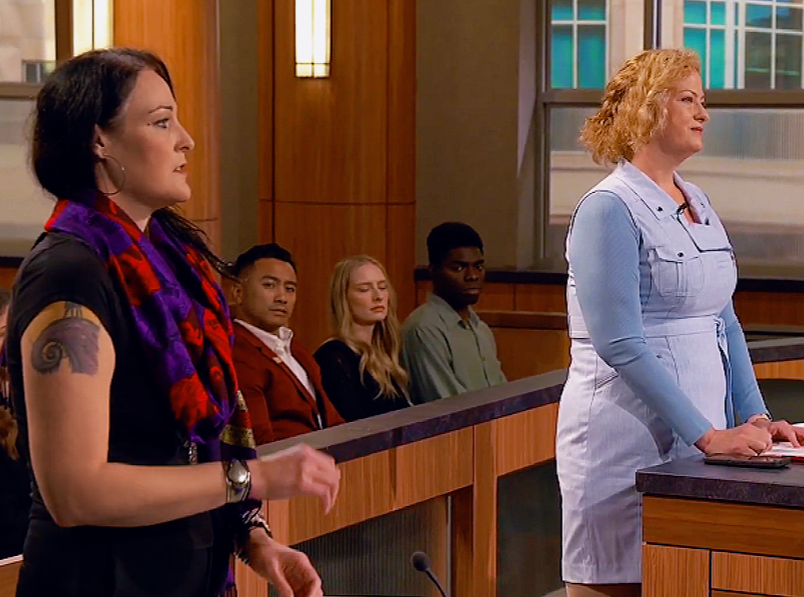
Judge Sheindlin did not dispute that the situation was difficult. But she repeatedly separated hardship from the legal question before her. If Arielle believed Shoshanah had mishandled the estate, or if she believed the will had been forged, the judge said those issues belonged in probate court or surrogate’s court, not in this small-claims proceeding.
Arielle said she had already gone to surrogate’s court but had not received the result she wanted. Judge Sheindlin explained that the estate court was still the appropriate forum for estate matters. The fact that Arielle had not obtained satisfaction there did not transfer the dispute to the courtroom where she was appearing.
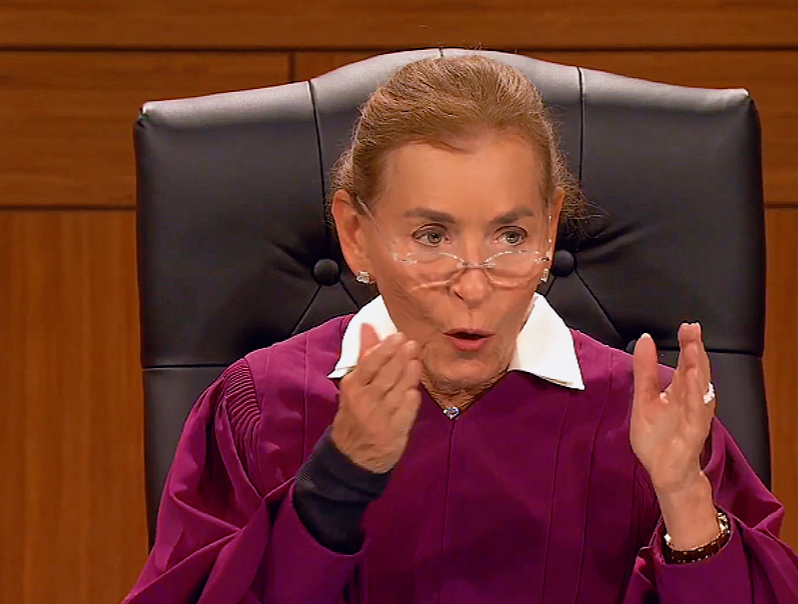
The will’s language redirects the argument
The hearing changed direction when Shoshanah explained what she said their father had done. According to Shoshanah, he removed Arielle from the will because of her behavior but directed the share that would have gone to Arielle to her two sons. Because the boys were minors, Shoshanah said the money was to be held in trust for them. She also stated that approximately $50,000 from insurance was associated with their share, along with one-fourth of the proceeds from the eventual sale of the family co-op.
Shoshanah clarified that the two policies she was discussing were accidental-death insurance policies, not life-insurance policies. That distinction added to the confusion already surrounding the case: Arielle was asking about a life-insurance policy, while Shoshanah described other insurance proceeds connected to the children’s trust.
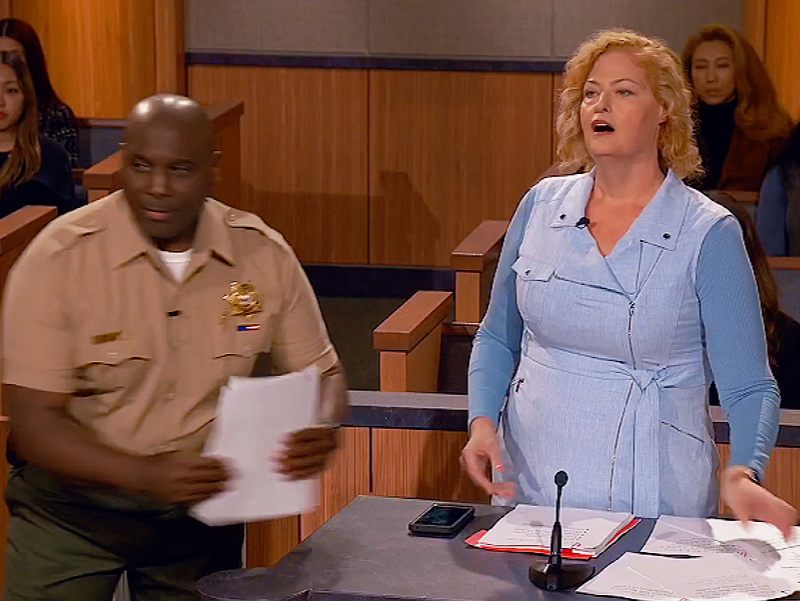
Judge Sheindlin then examined the original will. The document stated: “I do not leave a direct bequest to my daughter Arielle.” The words “I do not” were described as underlined and in bold. The judge interpreted the document before her as directing Arielle’s intended share to her sons rather than giving that share to Shoshanah personally.
Arielle rejected that explanation. She said her father had no reason to disinherit her, referred to photographs and communications showing that they had been in contact, and insisted that the will was fake. But Judge Sheindlin made clear that she was not deciding whether the will was valid. Her task was to determine whether Arielle had proved the insurance claim in this case.
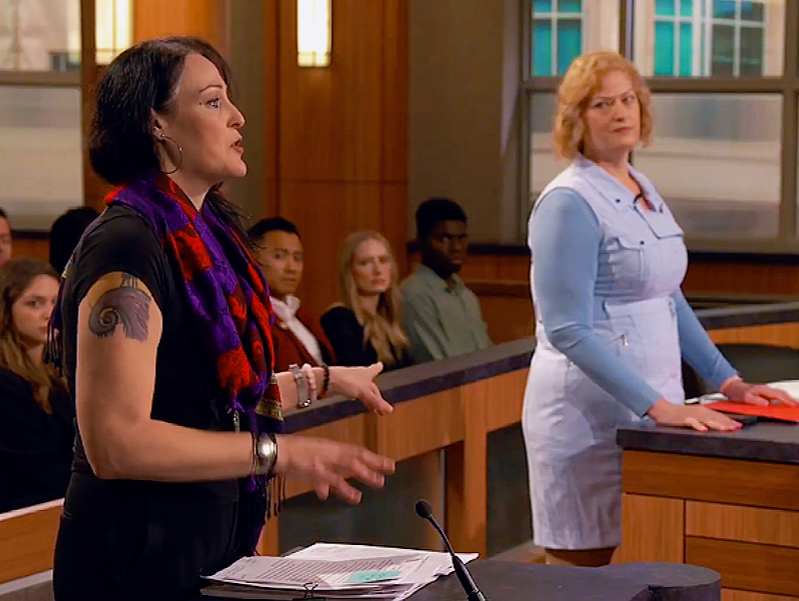
She ruled that Arielle had not produced evidence showing that a policy named her as beneficiary. Arielle’s case was dismissed. Shoshanah’s counterclaim for slander and harassment was also dismissed. The ruling did not establish that Arielle’s allegations about the will or the estate were true or false; it established that this case, in this court, could not proceed on the proof presented.
The Second Case : Family relationship enters the courtroom
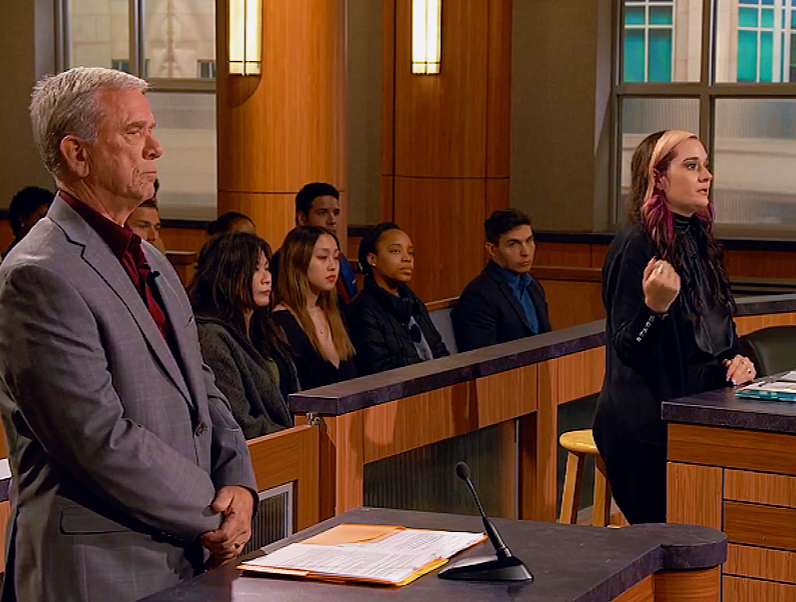
The episode then moves to Smith v. Hunt, a dispute between Randy Smith and his daughter-in-law, Allison Hunt. Randy sued Allison for unpaid dental loans and traffic citations. Allison and Randy’s son, Brian, were still legally married, but Allison testified that they had separated on June 6, 2023. They had married on September 7, 2019, had no children together, and Allison was living with her parents.
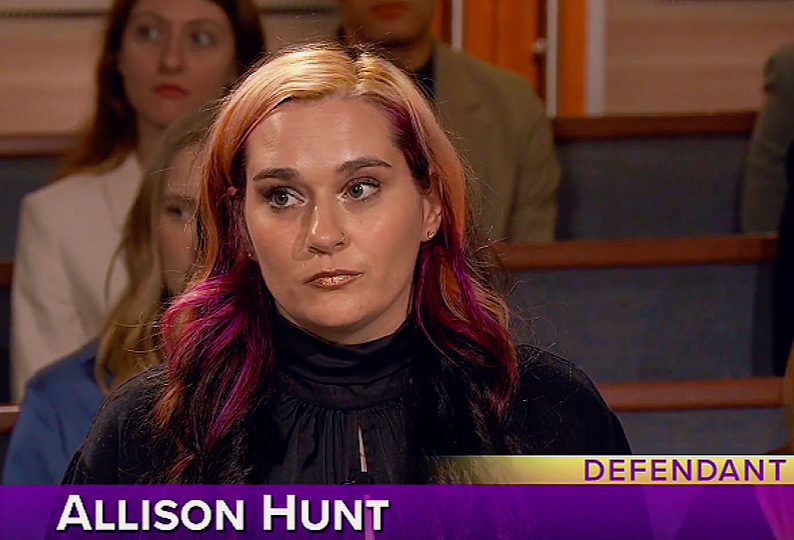
The central disagreement was whether Randy’s payment for Allison’s dental treatment had been a loan or a gift. Randy said he paid for root canals and crowns because Allison needed dental work. Allison did not deny that he paid. Instead, she said he offered the money while she was still living with Brian, then demanded repayment after she had left and wanted the entire amount in one lump sum.
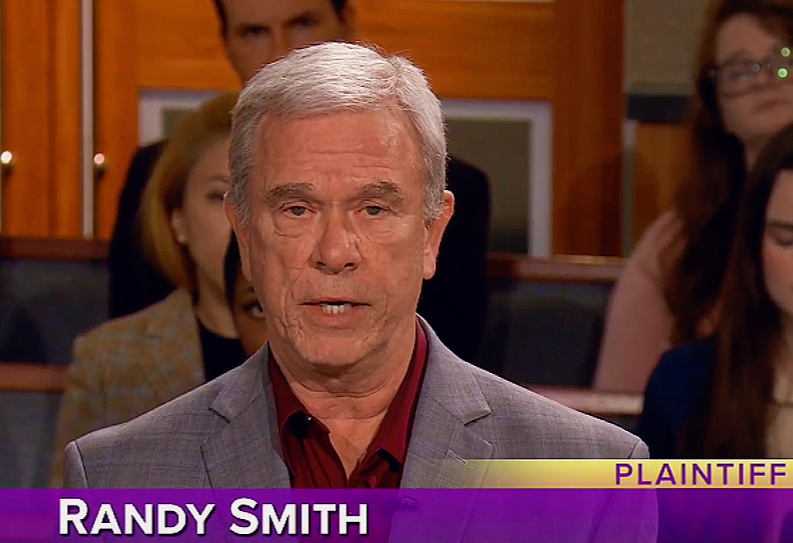
Allison explained that she had tried to pay for the treatment herself. In November 2022, she arranged a payment plan with a dentist in Alabama. That plan ended when the dentist retired and the office stopped accepting it. She then tried to obtain a credit card, but was not approved. Her parents also tried to secure a loan and were unsuccessful. Allison said Randy offered to help, but she initially refused because she did not want to borrow from family. When her teeth became worse in March 2023, he offered again, and she accepted.
The testimony also touched on Allison’s health and finances. She said she had undergone five back surgeries and considered herself disabled, but her application for government disability benefits had not yet been approved. She said her parents were supporting her. Judge Sheindlin acknowledged the surrounding circumstances but kept the hearing focused on whether Allison had accepted a repayable loan.
How a dental payment became a judgment
Randy testified that he transferred $4,080 for Allison’s root canals. Two weeks later, he paid approximately $6,930 for crowns. Later, he stated that the total amount he paid to the dentist was $6,974.40. Allison also testified about a $1,900 reimbursement check from her dental insurance. She said the check was written to her, that Brian deposited it into their joint checking account, withdrew the money, and then closed the account. When Judge Sheindlin asked Randy whether he had taken out the $1,900, he answered yes.
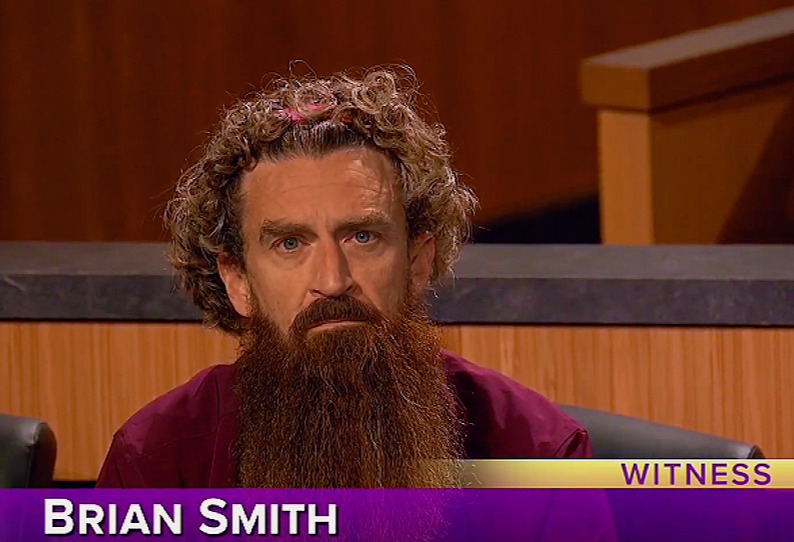
The numbers were discussed in several stages, but the courtroom judgment was clear. After considering the payments and reimbursement, Judge Sheindlin entered judgment for Randy in the amount of $9,100. The program’s narration described Randy’s claim as $9,137, so the article distinguishes between the amount claimed and the amount awarded.
Allison also filed a counterclaim over property she said remained in Randy’s home. She testified that she and Brian had lived there for about six years and that Randy would not allow her or her father inside to collect her belongings. She was unsure whether Brian had paid rent, and Randy testified that no rent had been paid.
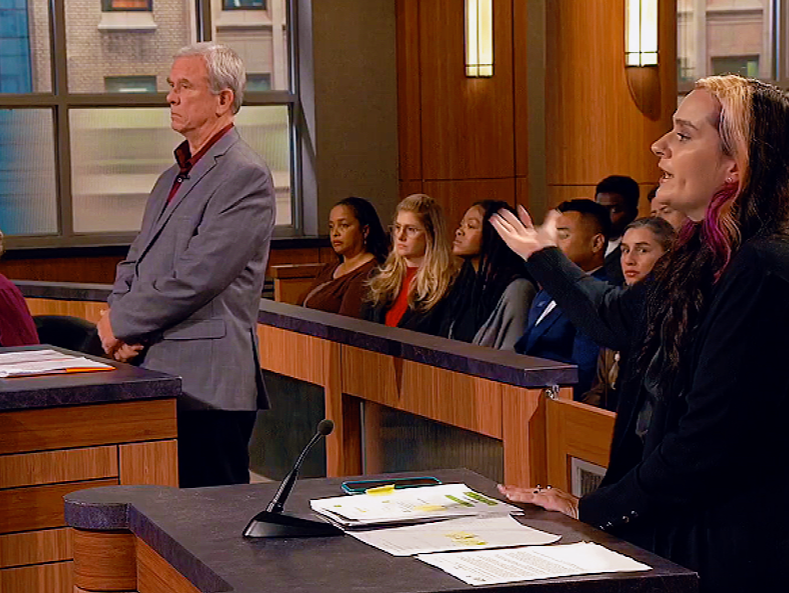
Judge Sheindlin explained that the property issue did not establish a claim against Randy. The items were connected to Allison’s marriage and to her relationship with Brian, not to a specific piece of property that Randy had been shown to be wrongfully withholding from her. The counterclaim was dismissed.
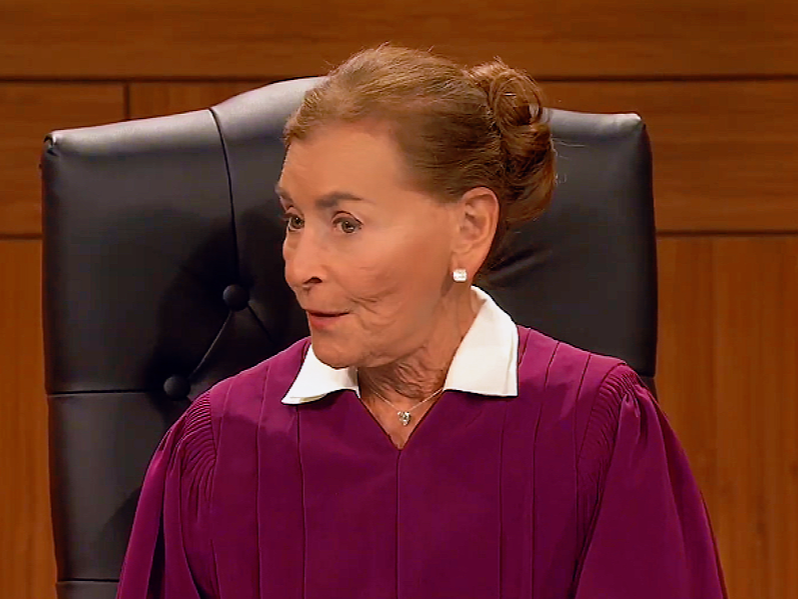
In the program’s closing commentary, the payment was described as something that might initially have looked like a gift from a father-in-law helping a woman he expected to remain part of the family. But the commentary also emphasized that Allison acknowledged the money was expected to be repaid. That acknowledgment supported Randy’s claim that the payment was a debt rather than a gift.
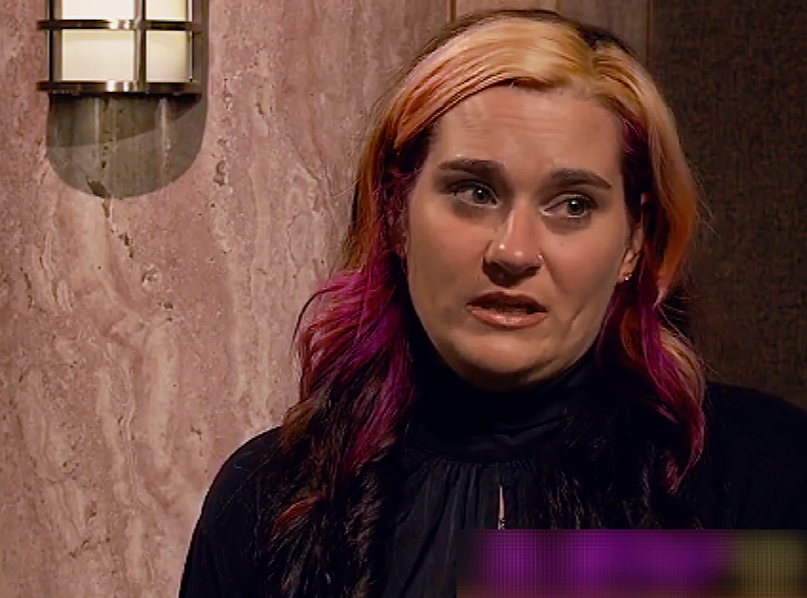
What the two rulings ultimately turned on
Although the cases involve different families and different kinds of disputes, both hearings revolve around the same courtroom discipline: an emotional story must still be matched by evidence, and the claim must be brought in the correct legal forum.
Arielle’s case was not dismissed because her circumstances were unimportant. It was dismissed because the evidence presented did not prove that she was the beneficiary of the policy at issue, while the will dispute belonged in probate or surrogate’s court. Allison’s case was not decided by the breakdown of her marriage or by her financial hardship. It turned on her acknowledgment that the dental money was a debt, the accounting of the reimbursement, and the lack of a sufficiently established property claim against Randy.
The episode leaves both disputes with unresolved personal pain. Arielle left the courtroom still insisting that the will was not genuine. Allison left owing a judgment after receiving treatment she said she had struggled to afford. But the decisions themselves were narrower than the emotions surrounding them. They followed the evidence and the limits of the courtroom—not every allegation raised by the people standing before the judge.
FAQ
What was Arielle Kresin suing Shoshanah Kresin over?
Arielle sued her sister over money she believed came from a life-insurance policy connected to their father. She argued that the insurance policy was separate from the will and that she should receive benefits if she was the named beneficiary.
What did Arielle Kresin’s father’s will say?
The portion read in court stated: “I do not leave a direct bequest to my daughter Arielle.” Shoshanah testified that Arielle’s intended share was directed to Arielle’s two sons and placed in trust.
Did the court decide whether the will was fake?
No. Arielle alleged that the will was fake, but Judge Sheindlin did not rule on its validity. She said a will challenge belonged in probate court or surrogate’s court.
Did Arielle prove that she was the insurance beneficiary?
No. Judge Sheindlin dismissed Arielle’s case because the evidence shown did not establish that the policy at issue named Arielle as beneficiary or prove the amount she claimed.
How much did Randy Smith claim Allison Hunt owed?
The program introduced Randy’s claim as $9,137. The courtroom ultimately entered judgment for Randy in the amount of $9,100 after discussing dental payments and the $1,900 reimbursement.
Why did Randy Smith sue Allison Hunt?
Randy said he paid for Allison’s root canals and crowns as a loan that she agreed to repay. Allison acknowledged that he paid for the dental work but disputed the circumstances and timing of the repayment demand.
What happened to Allison Hunt’s counterclaim?
The court dismissed Allison’s counterclaim concerning property in Randy’s home. Judge Sheindlin treated the property dispute as connected to Allison’s marriage and her relationship with Brian rather than as a proven claim against Randy.