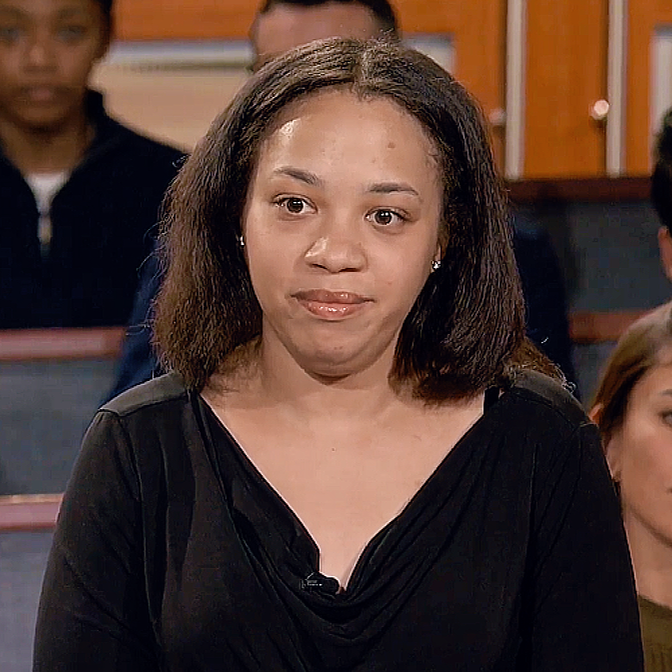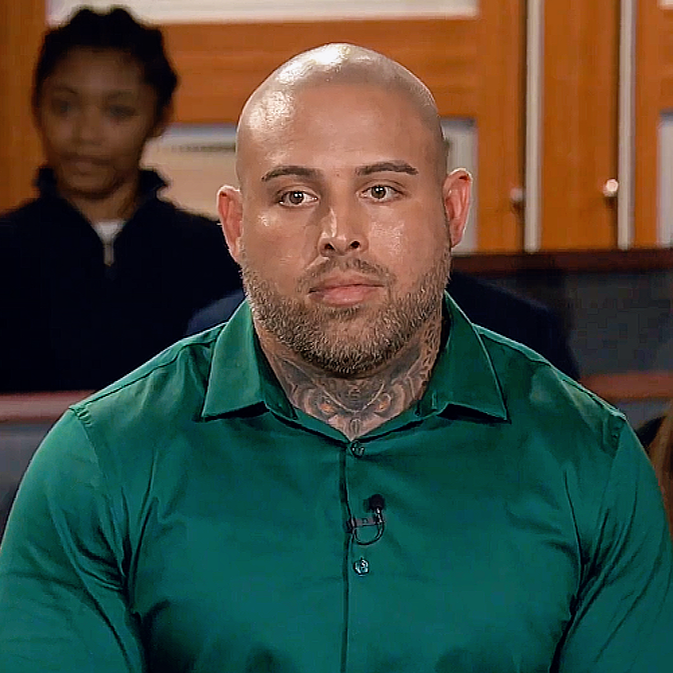
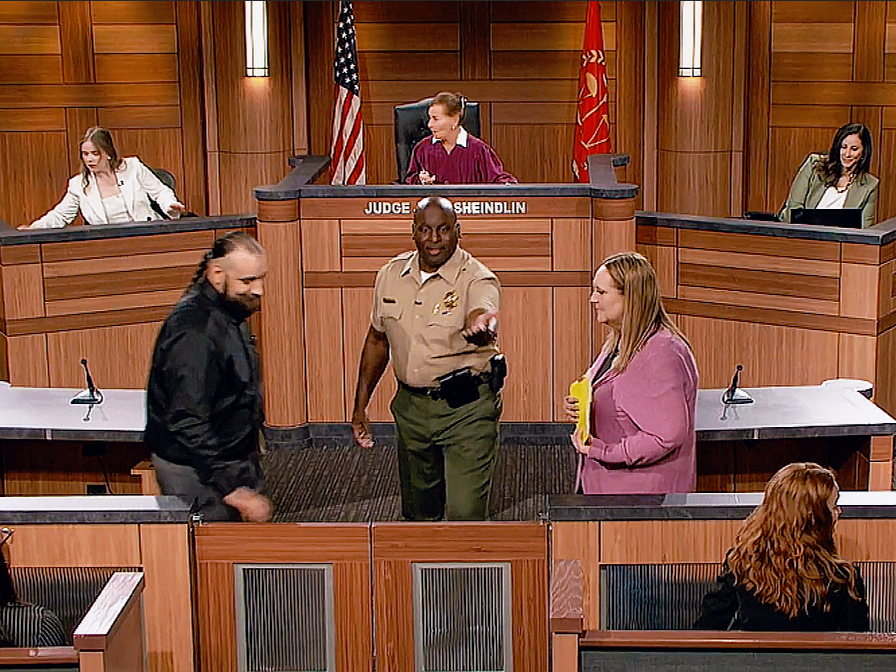
Sirens wailed. Voices rose. Somewhere on a truck-stop property, a phone was recording a confrontation that would later become part of a courtroom dispute. But when Stephanie Perez and Matthew Bowen appeared before Judge Judy, the case was decided by quieter evidence: a $2,000 bank transfer, text messages acknowledging an unpaid obligation, and a missing witness who could not connect Perez to Bowen’s job loss.
A Relationship Formed at a Truck Stop
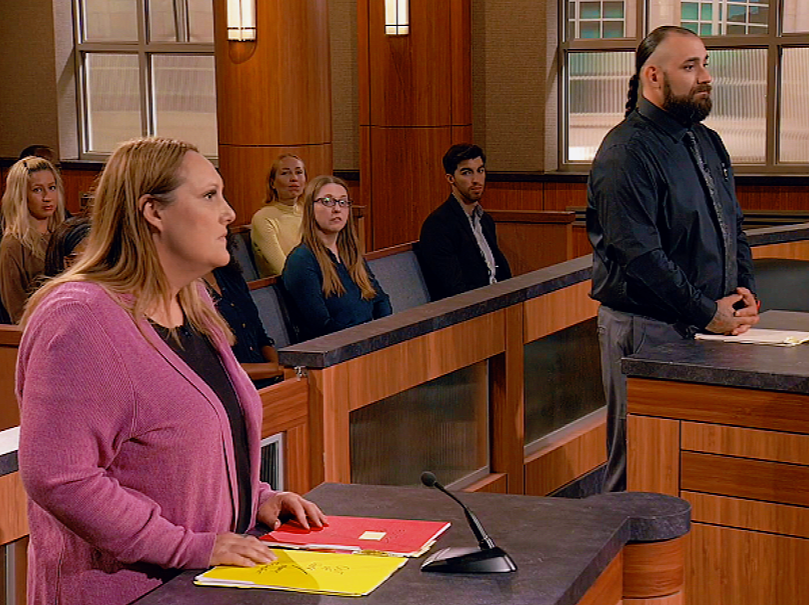
Stephanie Perez and Matthew Bowen met while working at a truck stop in January 2022. Their relationship soon moved beyond the workplace. Perez told the court that she began staying at Bowen’s home and helping with his children, although she continued to maintain her own residence. She said she remained there for the entire two-month period.
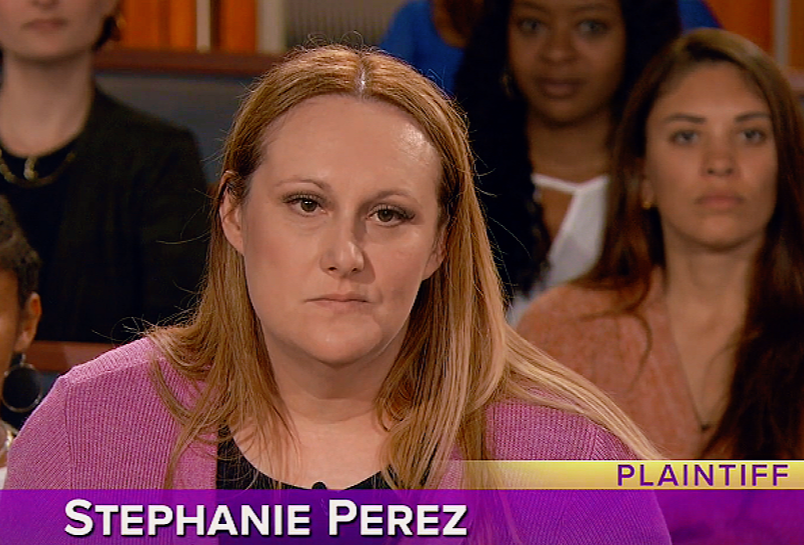
The arrangement was practical as well as personal. Perez’s own children were away in another state for the summer, while Bowen had full-time physical custody of two children. Bowen testified that he had cared for them since 2020 and had court-ordered legal custody. For a time, Perez was living in Bowen’s home, caring for the children, and still paying for her own house.
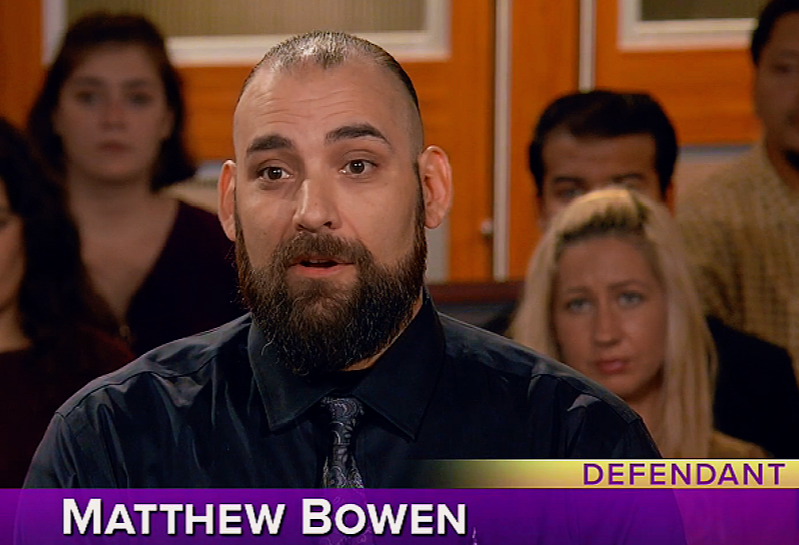
That relationship later became the backdrop to a financial disagreement. Perez said she gave Bowen $2,000 to help him pay an attorney’s fee. Bowen admitted receiving the money. The dispute was not over whether the transfer happened; it was over what the payment meant and whether Bowen was required to return it.
The relationship ended badly. Bowen agreed that the separation was unpleasant, though he said the two remained friends for a while. Perez’s account suggested that the emotional and practical arrangement had left her carrying responsibilities without receiving the repayment she expected.
The Custody Dispute Behind the Attorney’s Fee
The legal expense arose from a custody crisis. Bowen explained that one of the mothers of his children sought to take custody back. The situation escalated through ex parte applications—requests made to a judge without a regular hearing involving both sides at that moment.
Bowen told the court that he lost custody in January and regained the children in February. More specifically, he said the mother brought them back on February 12 after deciding she could not manage the situation alone. He had continued caring for them afterward, while the court paperwork was being finalized.
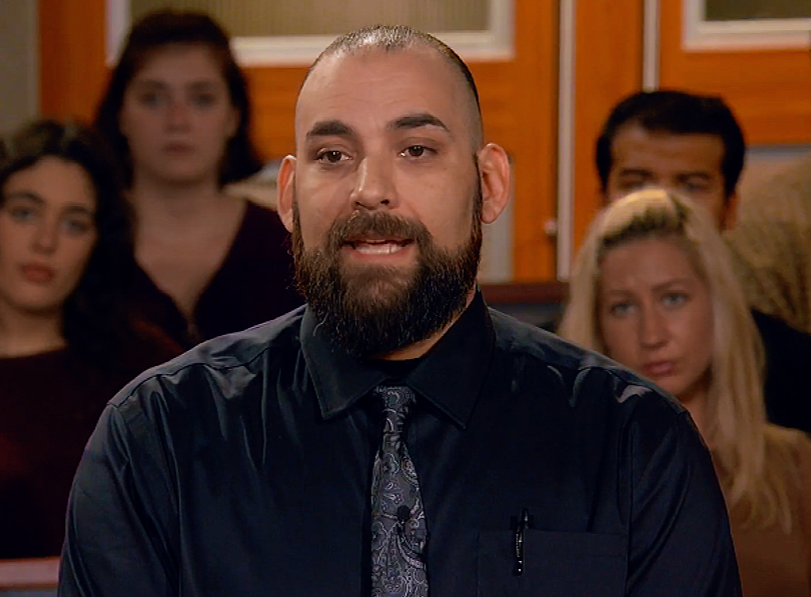
The transcript also records Bowen’s frustration with the process. He said the original arrangement had been set out for roughly eight months, a period during which he believed he would not even be heard. Judge Judy described that experience as a difficult and potentially outrageous one. The custody conflict was therefore not a minor background detail; it was the immediate pressure behind Bowen’s search for legal representation.
By June 2022, Bowen and Perez were looking for an attorney. Bowen said Perez offered $7,000 for a lawyer her mother had used, but he considered that amount too high. They found another attorney in Lancaster who quoted a fee of $3,500.
How the $2,000 Payment Was Arranged
The sequence of the payment became a point of tension in court. Bowen said he went to the Lancaster attorney alone and received the $3,500 quote. He had $1,500 available. According to his testimony, Perez supplied the remaining $2,000, allowing him to move forward with the attorney.
Perez described the arrangement in more specific financial terms. She said she was not working at the time and used her savings. She agreed to help Bowen with the attorney’s fee on the understanding that he would help her when her own bills came due. She transferred the money bank-to-bank into Bowen’s account because they used the same bank.
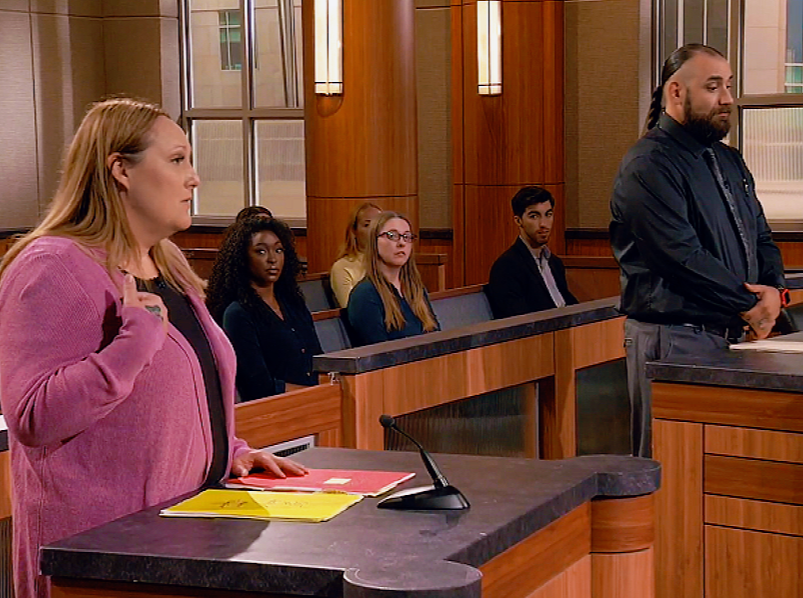
The payment was made on June 6. Perez said her mortgage, electric, and gas bills began coming due a couple of weeks later. She testified that Bowen then told her he did not have money to help her. At that point, what Perez had understood as an exchange of financial help began to look, from her perspective, like an unpaid debt.
The text messages became important. Perez said Bowen acknowledged that he owed her money and promised to try to send some when he could. Bowen agreed that the messages showed he recognized an obligation. He had also returned approximately $100, a figure Perez confirmed.
Judge Judy drew a careful distinction. The messages did not create a perfectly defined written loan contract. Statements such as “I’ll help you out with my bills” or “I’ll give you some money when I have it” did not specify every repayment term. Still, Bowen’s receipt of the $2,000, his connection of the money to the attorney’s fee, his text messages, and the $100 repayment all mattered.
The September 18 Confrontation
Bowen’s counterclaim came from a separate incident at the truck stop on September 18, 2022. He said he had worked there for approximately a year and a half and was serving as a cashier when he noticed a man take a party speaker priced at about $400, along with other electronic items.
Bowen testified that he tried to alert his co-workers, calling out that the man was stealing. When no one responded, he followed the man outside and told him to return the merchandise. Bowen said he swatted the speaker out of the man’s hand. He then claimed the man attacked him and that he defended himself. Bowen also said the man had a knife, which he estimated to be about eight inches long.
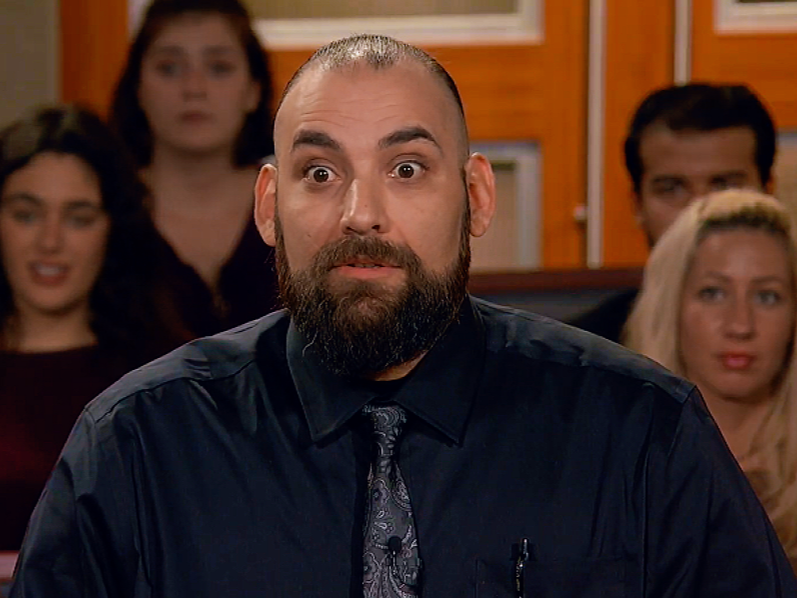
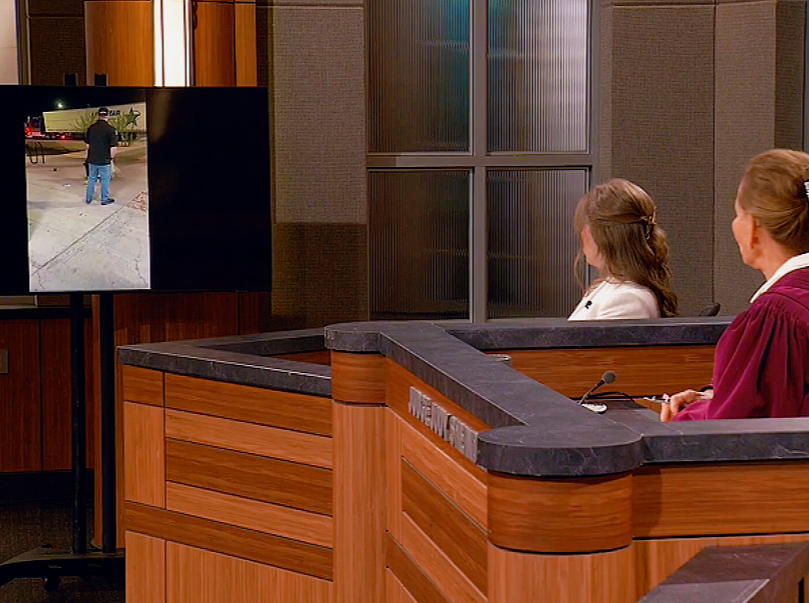
A random trucker recorded part of the encounter. Bowen said he did not know why the trucker was filming. He later received the recording from a former co-worker who had obtained it from someone shown in the video.
When the footage was played, Bowen could be heard yelling toward the camera and calling the other person “punk.” He explained that his adrenaline was pumping and that he had not realized he was being recorded. The video documented part of the confrontation, but it did not, by itself, establish what happened before the recording began or what happened afterward.
Why the Video Did Not Prove Bowen’s Counterclaim
Bowen alleged that Perez sent the video to his employer and to two mothers of his children. He claimed that the sharing of the video caused him to lose his job and helped those mothers in their custody applications. His counterclaim sought damages for lost wages and slander.
Perez denied the allegation. She said Bowen had sent the video to her, but she had not sent it to corporate, to his workplace, or to either of the mothers. When Judge Judy asked the question directly, Perez answered that she had not sent the video to his place of business.
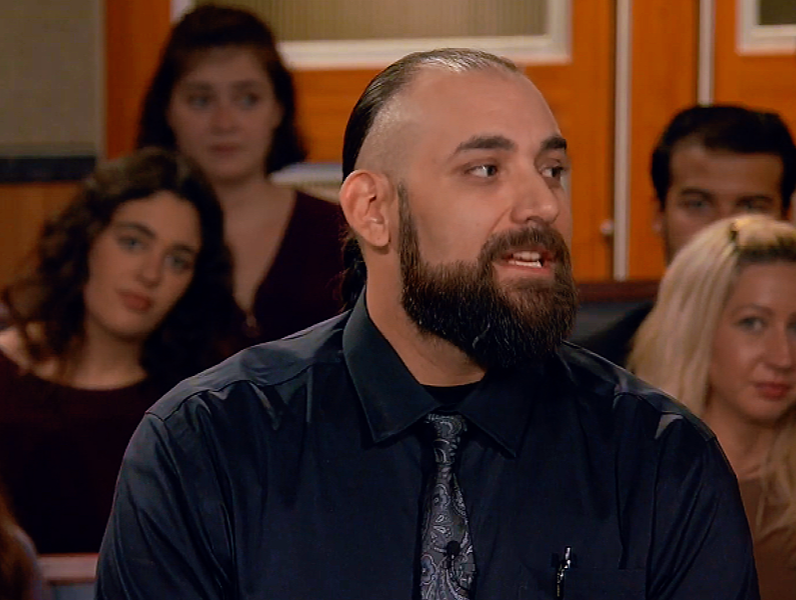
The judge then focused on what Bowen could prove. It was not enough to show that a video existed or that Perez had seen it. Bowen needed evidence that Perez sent it to his employer and evidence that the employer fired him because of it.
Bowen’s expected witness was not in court. When pressed, he admitted that he had no proof connecting Perez to the alleged distribution. He also had no proof that the video was the reason for his termination. The recording showed a workplace confrontation, but it did not establish who delivered it to the employer or what decision the employer made because of it.
Judge Judy dismissed the counterclaim. The ruling did not determine that every detail of Bowen’s account of the confrontation was false. It determined that he had not proved the specific allegations required to recover damages from Perez.
The $1,900 Judgment
The court treated the two claims separately. Perez’s financial claim was not supported by a perfect written contract, but the surrounding evidence showed that Bowen received $2,000 for the attorney’s fee, acknowledged owing money, and had repaid about $100.
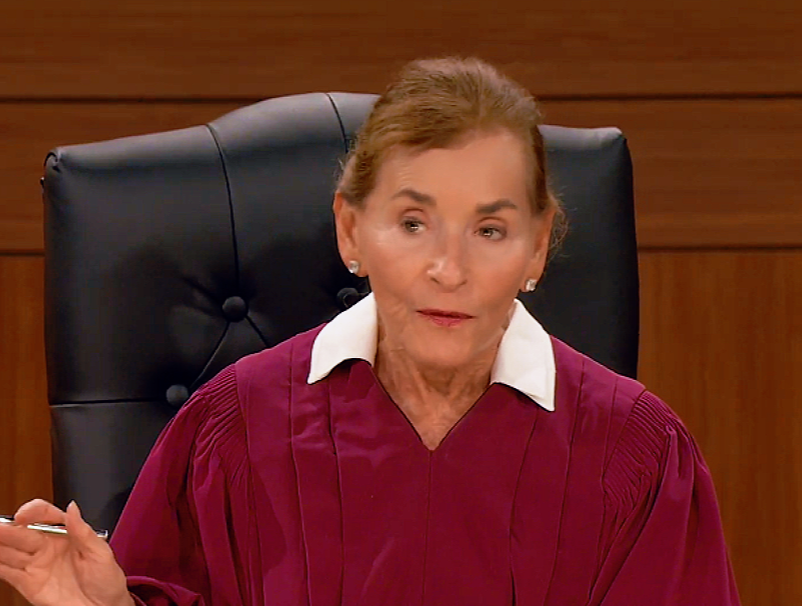
That left a balance of $1,900. Judge Judy entered judgment for Perez in that amount and dismissed Bowen’s counterclaim for lost wages and slander. The case ended not with a finding that the video was irrelevant, but with a finding that the video could not prove the chain of responsibility Bowen needed to establish.
The Evidence Lessons Behind the Ruling
The Perez-Bowen case shows how quickly money and personal relationships can become impossible to separate. Perez was staying at Bowen’s home, caring for his children, and maintaining her own residence. Bowen was facing a custody dispute and needed an attorney. In that setting, a promise to “help with bills” could be understood very differently after the relationship ended.
The case also demonstrates why informal financial arrangements benefit from clear records. A written agreement could have identified the amount, the purpose of the payment, and the repayment date. The text messages helped establish that Bowen recognized an obligation, but they did not answer every question about the original agreement.
The video raised a separate evidentiary problem. A recording can show an event, yet still fail to prove who circulated it, why it was circulated, and whether it caused a specific consequence. In this courtroom, those missing links mattered more than the emotional force of the footage itself.
FAQ
Did Stephanie Perez win her case against Matthew Bowen?
Yes. Judge Judy entered judgment for Stephanie Perez in the amount of $1,900.
Why did Matthew Bowen owe Stephanie Perez $1,900?
Perez gave Bowen $2,000 connected to an attorney’s fee during a custody dispute. Bowen acknowledged receiving the money and had repaid approximately $100, leaving $1,900.
Was the $2,000 described as a gift or a loan?
The parties disputed the nature of the payment. Perez treated it as money Bowen would repay or offset by helping with her bills. The court noted that the arrangement was not documented in a perfect loan contract.
What was Matthew Bowen’s counterclaim?
Bowen countersued for lost wages and slander. He alleged that Perez sent a video of a workplace confrontation to his employer and to mothers of his children.
Why was Bowen’s counterclaim dismissed?
He could not prove that Perez sent the video to his employer or that the video caused his termination. His expected witness was also absent.
What happened in the workplace video?
Bowen said he confronted a man who was leaving the truck stop with merchandise, including a party speaker worth about $400. He described a physical confrontation and said the man had a knife. The recording shown in court captured part of the incident and Bowen yelling toward the camera.