
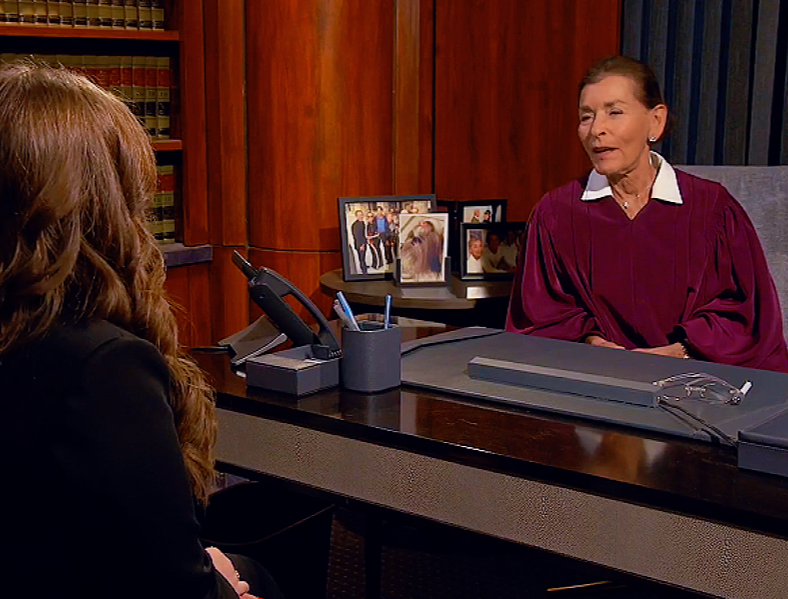
The first case began with a place to live and a chance to work. The second began with a friend paying a lawyer so a mother could spend more time with her children. In both cases, help was offered before the relationships fell apart. By the time the parties appeared before Judge Judy, sympathy had been replaced by receipts, photographs, disputed dates, missing property, and one question that shaped the entire hearing: what could actually be proved?
The First Case : A living arrangement built around work
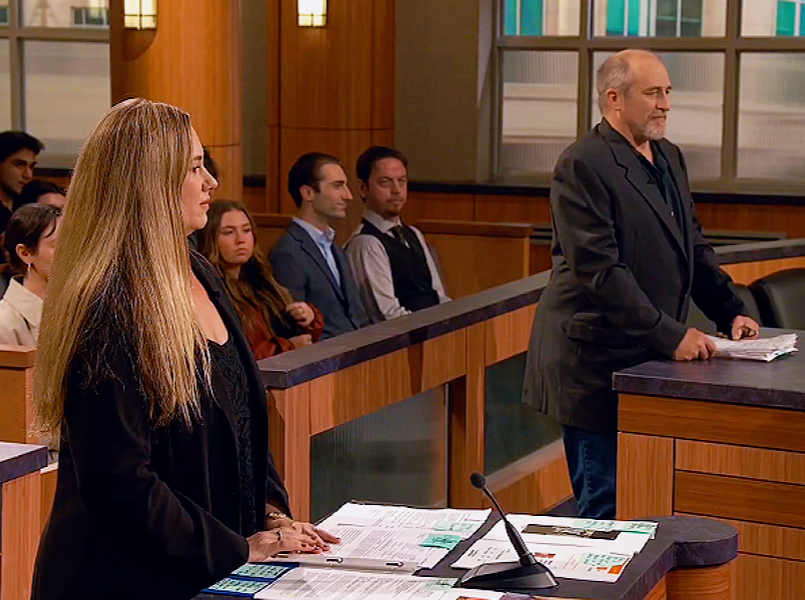
In case 4105, Lorelei Adkison v. Richard Hennig, the disagreement was rooted in an arrangement that combined housing, maintenance work, and personal trust. Adkison owned real estate and allowed Hennig to live on her property as a resident manager. He was expected to work there, and the parties described his housing as connected to the labor he performed.

Hennig said the rent was $200 a month, with yard work credited against that amount. Adkison described the arrangement differently in detail: Hennig had residential space in his RV for $200, while additional work was paid at $12 per hour. The testimony made clear that this was not a simple cash-rent arrangement. It was a barter agreement in which maintenance work could substitute for rent.

That informal structure became difficult to manage once Hennig was repeatedly absent. According to Adkison’s complaint, he was arrested three times after she hired him and was gone for periods of one to two weeks. Hennig disputed the number, saying he had been arrested twice. He also maintained that Adkison had not initially told him another arrest would end the lease.
The disagreement was not only about a tenant failing to meet expectations. It was also about whether the parties had ever understood the same agreement in the first place.

The arrests and the disputed eviction
When Judge Judy asked Hennig what led to his final arrest, he said he had been accused of filming his neighbors from his front yard. He identified the accusation as harassment and acknowledged spending time in county jail. The supplied transcript gives no final criminal disposition, so the accusation remains an allegation in this account, not a finding of guilt.
Adkison testified that Hennig was incarcerated beginning August 2, 2024. She said he contacted her repeatedly while in jail, but she did not answer until August 7, when he asked her to enter the residence and feed his cat. Hennig offered a different version of what happened next. He said he had asked Adkison to give his girlfriend a key so she could care for the cat, but that Adkison refused. Adkison disputed that account and said she had text messages from Hennig’s girlfriend.
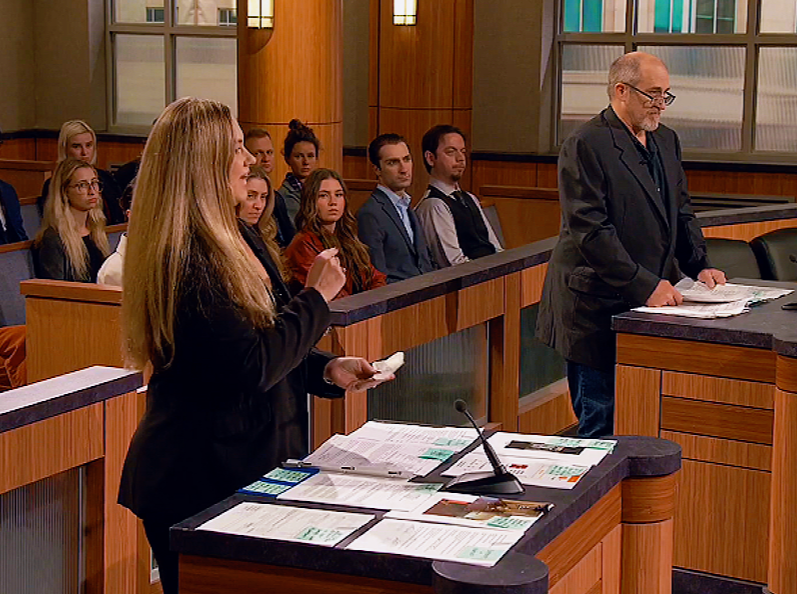
The date of Hennig’s return also became unclear during questioning. Adkison said he returned from jail on September 11 and was served with a 30-day eviction notice. During the exchange, September 12 was also identified. Later testimony referred to photographs dated September 11 and September 17, with Hennig describing those dates as connected to his return from jail. Because the transcript contains these differing references, the dates should be understood as disputed testimony rather than a single independently confirmed timeline.
What was not disputed was that the relationship had deteriorated. Adkison said she no longer needed Hennig’s services and offered him a 30-day opportunity to continue working before moving out. The proposed arrangement called for a total payment of $2,500. She testified that Hennig agreed to the terms and received $1,200 upfront, with the remaining amount due after the work was completed at the end of October.

A messy apartment, a cat, and a missing set of tools
The property claim began with the August 7 visit. Adkison said she entered the residence to feed the cat and found the apartment in disarray. She described food in the refrigerator and freezer that she removed, then arranged for people to clean the unit. She wanted compensation for the cleanup and for what she characterized as damage left behind after Hennig moved out.
Judge Judy focused on the difference between an untidy residence and documented destruction. Adkison did not take photographs during the August 7 visit. She later presented photographs associated with September 12, but the judge’s reaction was direct: the images showed mess, not necessarily destroyed property. A witness was mentioned, but the judge said she was interested in photographs rather than a general description of what someone had seen.
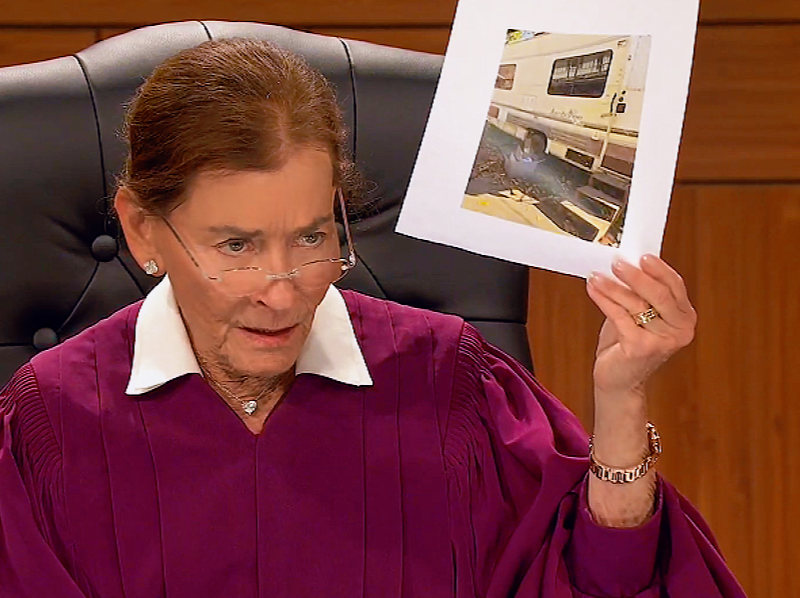
The larger claim concerned tools. Adkison said she had approximately $6,000 worth of tools at a restoration project on her property. Hennig had been using them while working on the project. After his arrest, Adkison continued the work herself and with other contractors. When Hennig returned, she said he objected to changes she had made inside the unit and then told her he would not perform further work. She subsequently discovered that the tools were gone.
The list included a Milwaukee torque drill, a Dewalt grinder, a drill-bit set, and tape measures. Hennig acknowledged that he did not have the listed items, but Adkison acknowledged that she had no direct proof he had taken them. Her evidence consisted mainly of photographs showing the tools present on September 11 and absent on September 17. She also said Hennig was the only person with a key after his return.
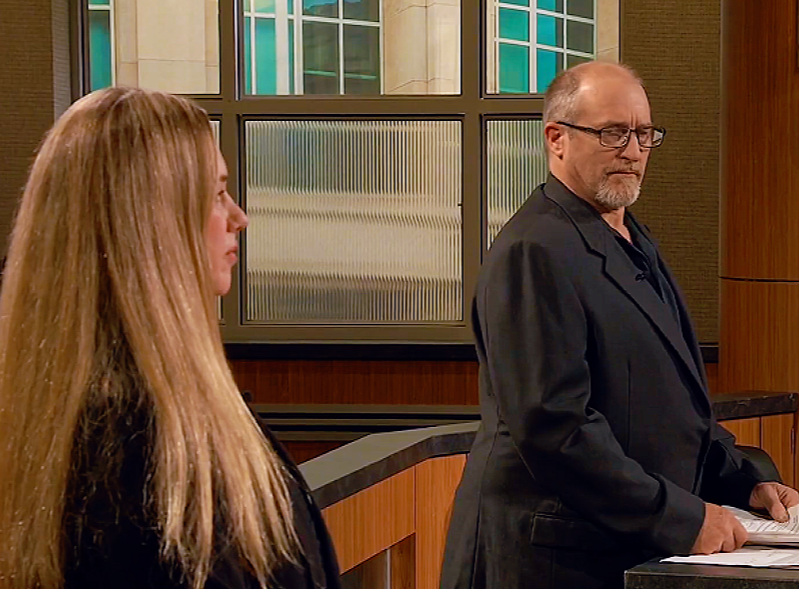
That sequence suggested when the tools disappeared, but it did not identify who removed them. Adkison confirmed that other contractors had worked at the property, although she said she was present before they arrived and that they did not have keys. The hearing therefore exposed the gap between circumstantial timing and proof of responsibility. The transcript records no finding that Hennig stole the tools.
Adkison also said Hennig had kept a moped she had allowed him to use after he lost his driver’s license. She had asked for it back about a year earlier, but Hennig said he needed to repair it first. The fact that Adkison later hired him again added another layer to a relationship that had repeatedly moved between assistance, employment, and conflict.

Richard Hennig’s counterclaim
Hennig filed a counterclaim for unpaid labor, project supplies, personal property, missing food, and harassment. He presented an agreement showing an upfront payment of $1,200 on September 14, with another payment connected to the end of October. He argued that Adkison owed him more than the amount already paid, but he had not completed the work before the eviction took effect.
Hennig said he had repaired the roof, completed interior work, and cleaned the inside of the building. He described a four-by-eight-foot hole in the roof that he said had existed for 20 years. He also confirmed that he had been living at the residence while performing the work.
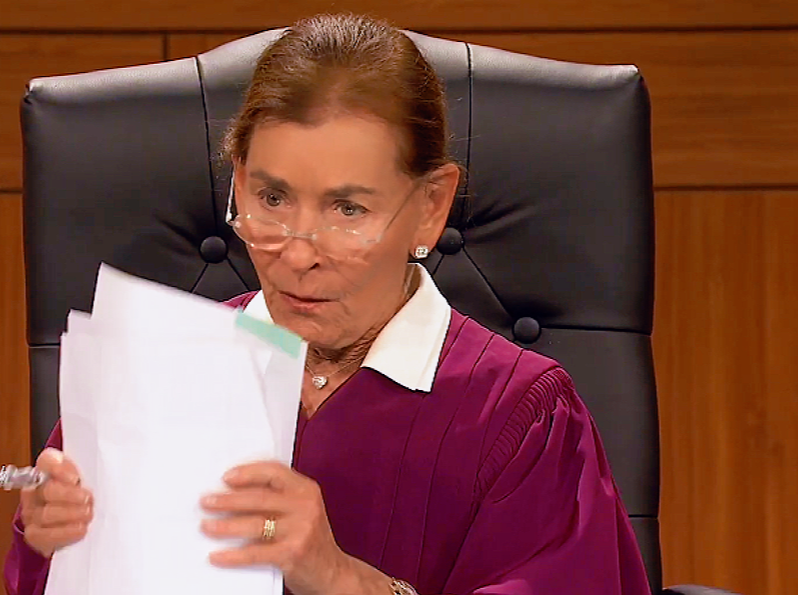
When Judge Judy asked where he lived now, Hennig said he had moved to his girlfriend’s house to get away from the situation. The court then ended the first matter. The transcript records the judge dismissing Adkison’s case and Hennig’s counterclaim as presented in the segment.
The Second Case : Dispute between former friends
The episode then moved to case 4084, Devon Reeder v. Carissa Stewart. This dispute did not involve a rental property or missing tools. It involved a friendship, a lawyer, and money advanced during a difficult period in Stewart’s life.

Reeder and Stewart said they had met in a sobriety program approximately seven to eight years earlier. Stewart acknowledged ongoing substance-abuse issues. She also testified that her children had been removed from her custody and that she had been sentenced on July 27, 2018, for child neglect involving her children. She was released from prison on April 6, 2020.

After her release, Stewart tried to regain time with her children. They had initially been removed from her care by Child Protective Services and were ultimately placed in a guardianship with Stewart’s mother. Stewart said her oldest child was 14 and her youngest was 9. Around March 2024, the guardianship arrangement changed, allowing Stewart to have the children for roughly half the week. Her mother cared for them from Wednesday until Saturday evening, while Stewart had them from Saturday evening until Tuesday.
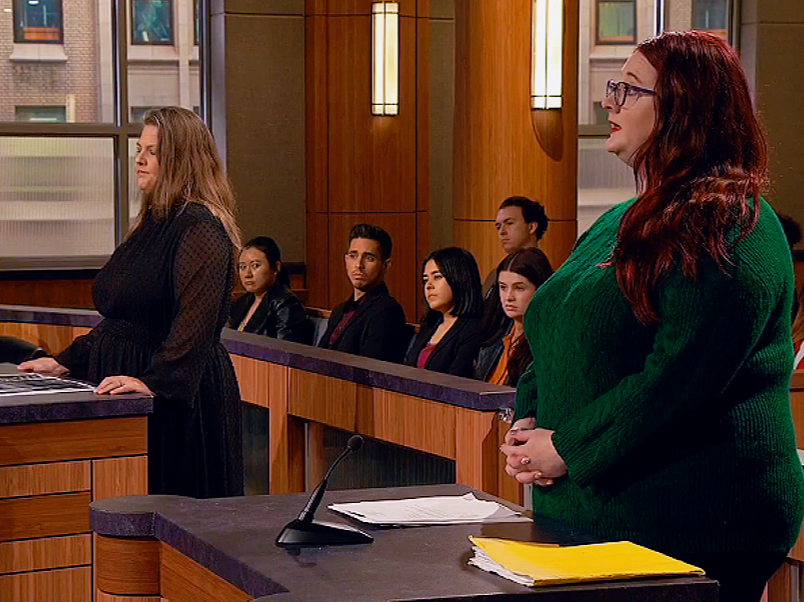
Reeder helped Stewart pursue that goal by paying $1,000 directly to Stewart’s lawyer. Stewart acknowledged receiving the benefit of that payment. The disagreement was over how much had been repaid. Stewart said she had paid approximately $300. Reeder said the amount was $200.
Stewart explained that the surrounding chaos had become difficult for her sobriety and her efforts to get her children back and keep them safe. She said she wanted to distance herself from the friendship. Judge Judy accepted that a person has the right to leave a friendship, but drew a firm distinction between ending the relationship and ending the debt.
The $800 judgment
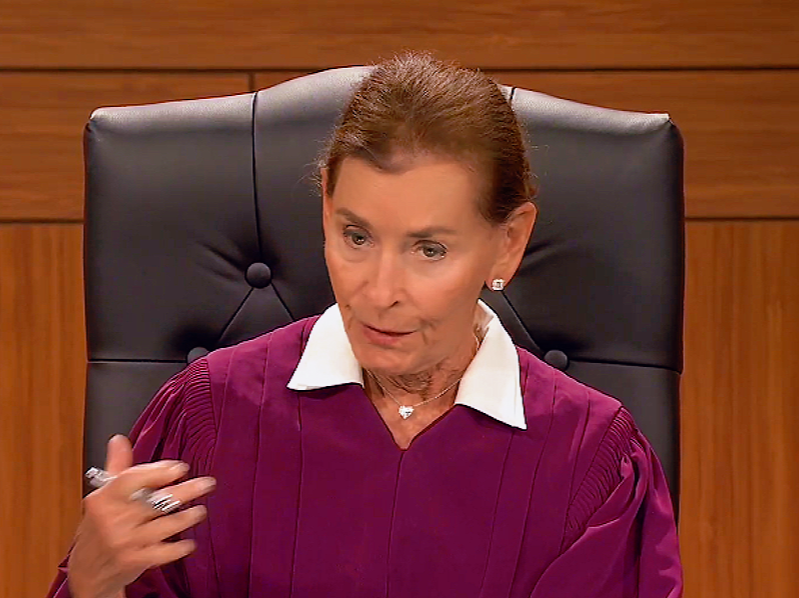
The court entered judgment for Reeder in the amount of $800. Stewart said the decision was fair. Reeder explained that she had tried to give her former friend time to repay the money, but eventually Stewart told her to take the matter to court.
The ruling rested on a simple financial calculation supported by the testimony: Reeder paid $1,000, Stewart acknowledged repaying part of it, and the remaining balance was $800 according to Reeder’s account and the judgment. The decision did not resolve every emotional issue between the women. It resolved the specific obligation before the court.
The evidence left behind
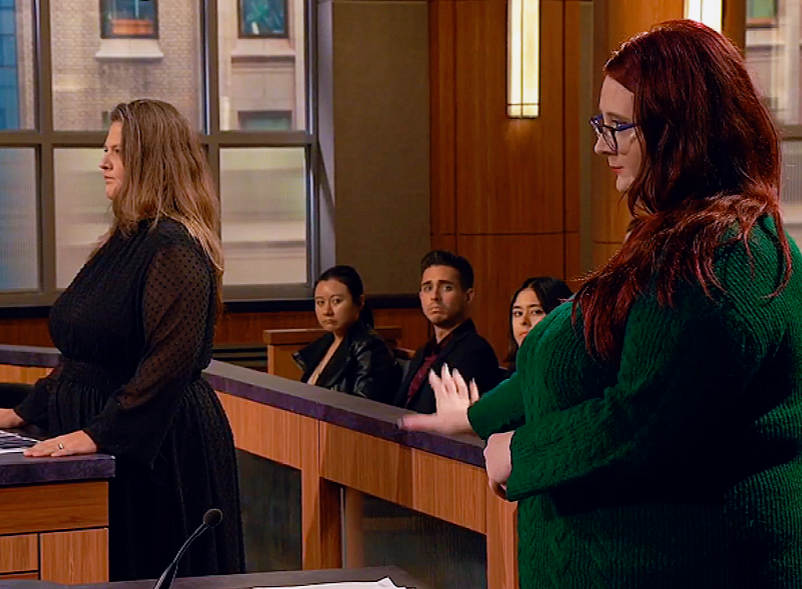
Taken together, the two cases show how quickly informal help can become a legal dispute when expectations are not documented. Adkison and Hennig disagreed about the terms of a housing-and-work arrangement, the number of arrests, the timing of the eviction, the condition of the residence, and responsibility for missing tools. The more serious the accusation became, the more the court required concrete evidence.
Reeder and Stewart presented a narrower dispute. Their friendship had a complicated history, but the financial issue was easier to isolate because the lawyer’s $1,000 payment and a partial repayment were acknowledged. Stewart’s desire to protect her sobriety explained why she wanted distance; it did not eliminate the remaining balance.
The lesson is not that compassion is a mistake. It is that compassion should be accompanied by clear terms, reliable records, and realistic boundaries. A place to live, a job, a set of tools, or a loan to a friend may begin as an act of trust. Once that trust breaks, the courtroom is left with something less personal and far more exacting: the evidence.
FAQ
What was Lorelei Adkison’s case against Richard Hennig about?
Lorelei Adkison claimed that Richard Hennig owed money for property damage, cleanup, missing tools, and personal property connected to his time living and working on her property. The transcript records her allegations but does not establish that Hennig stole the tools.
How was Richard Hennig’s rent arranged?
The parties described a barter arrangement. Hennig said yard work was credited against $200 monthly rent, while Adkison explained that residential space in his RV was valued at $200 and additional labor was paid at $12 per hour.
Did the transcript prove that Richard Hennig took the tools?
No. Adkison said the tools were present in earlier photographs and absent later, and that Hennig was the only person with a key after his return. She also acknowledged that she had no direct proof he took them.
Why did Devon Reeder sue Carissa Stewart?
Devon Reeder sued Carissa Stewart to recover money connected to a $1,000 payment Reeder made to Stewart’s lawyer. The dispute concerned the amount Stewart had repaid.
What was the judgment in Devon Reeder’s case?
Judge Judy entered judgment for Devon Reeder in the amount of $800.