The dispute began with an offer of help: plane tickets from Houston, Texas, to Sacramento, California, and a vacant rental apartment where Janet Harris could stay with her two children. Within weeks, the arrangement had collapsed. A confrontation over a dead phone battery led to a 13-year-old girl being taken from the room, a reference to Child Protective Services, and a mother-daughter lawsuit over alleged property damage. By the time Laretha Jackson and Janet Harris appeared before Judge Judy Sheindlin, the apartment was only the visible part of a much older family fracture.
A Case Built Around a Failed Rescue
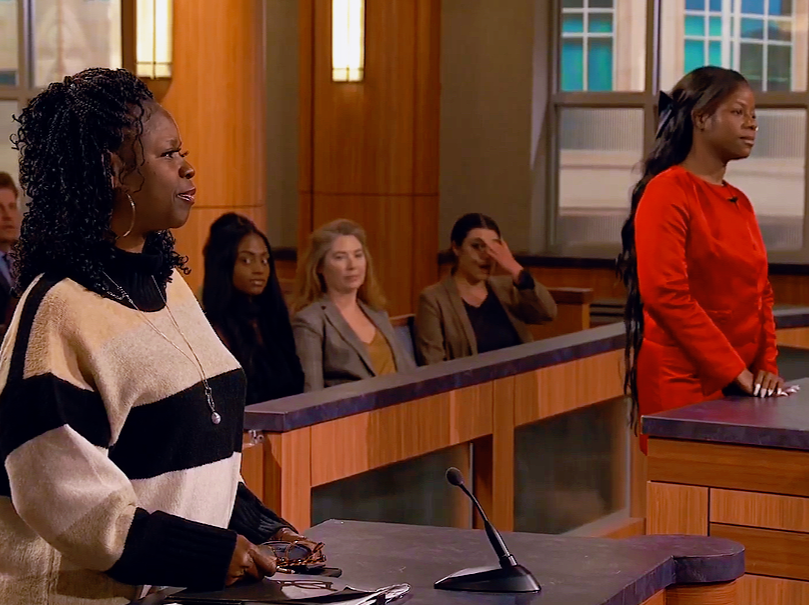
The case, identified in the transcript as Jackson v. Harris, Case 4086, placed Laretha Jackson against her daughter, Janet Harris. Jackson sued for vandalism, airfare and emotional distress.

The basic arrangement sounded straightforward. Janet had been living in Sacramento, California, while her mother lived in Houston, Texas. Janet told the court that she was dealing with serious domestic problems involving an ex-partner. After Janet’s sister contacted Laretha, Laretha offered assistance. She sent plane tickets for Janet and her two children and told them they could move into one of her rental properties in Texas.
Janet said the family arrived on January 18, 2024. The children were 13 and seven. She did not remain in Texas for long. She testified that she left around February 8 and returned to Sacramento, though she was uncertain about the exact date. The children did not return to her custody. According to her testimony, they went to live with their paternal grandmother in Sacramento, where they remained for almost a year.

The move left Janet in a precarious position. She said she quit her job and turned in the keys to her former home to travel to Houston. After returning to Sacramento, she said she spent February through August looking for work, experiencing homelessness and moving between places while trying to keep herself and her children safe. She began working as a server at Denny’s in August 2024.
The January 22 Confrontation
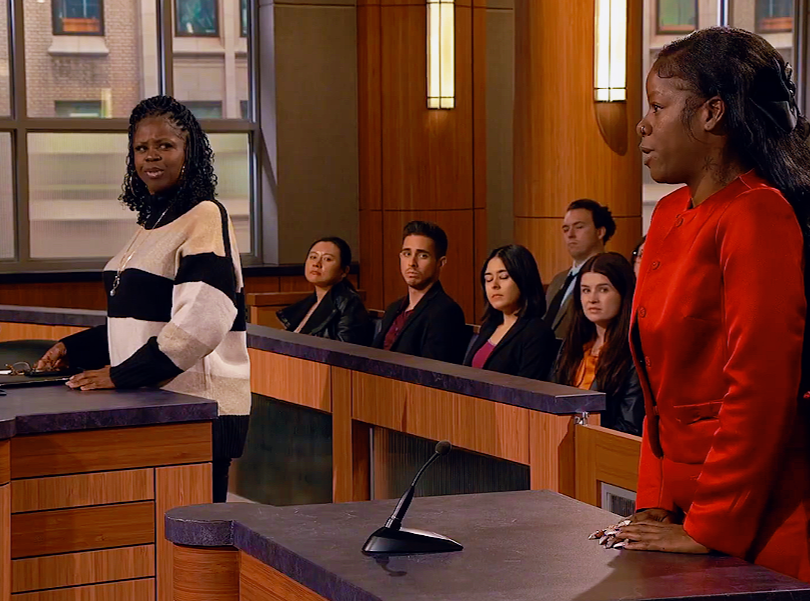
The central incident occurred on January 22, only days after Janet arrived in Texas. Laretha came to the apartment while Janet and the children were still asleep. The stated purpose was to enroll the children in school. They were never enrolled in Texas, Janet explained, because she had already decided the arrangement was failing and believed the family would leave.
The immediate dispute involved Janet’s 13-year-old daughter and a phone. In a written answer that Judge Sheindlin read aloud, Janet acknowledged that the family had overslept because her daughter had been using the phone during the night and had not put it back on the charger. The phone’s battery had reached zero, so its alarm did not wake the family.
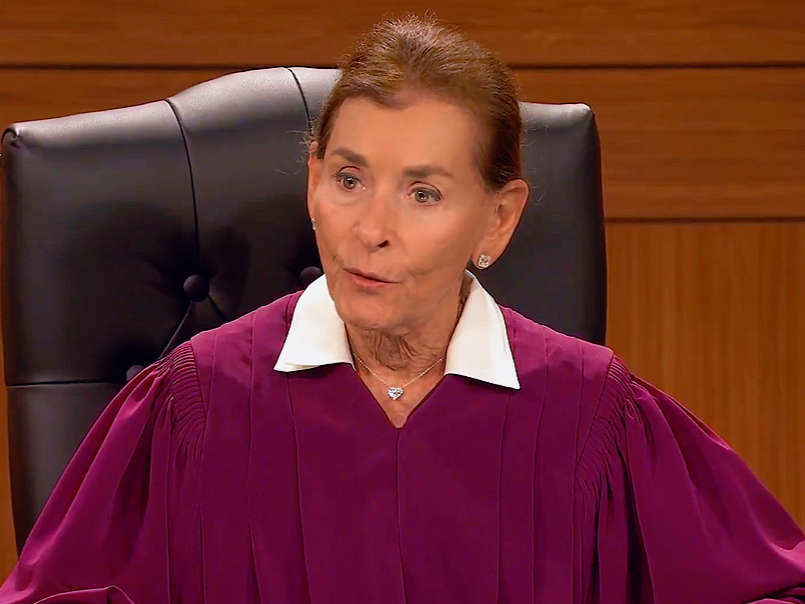
Janet also acknowledged writing that she had been upset and had given her daughter a “disciplinary whooping.” In court, however, she resisted the suggestion that the girl had been responsible for waking her. She said her anger was directed at the child’s late-night phone use, not at a failure to perform an adult responsibility.
The exchange became tense as Judge Sheindlin pressed Janet to describe what the phrase meant. Janet said she had struck the girl on the legs approximately three or four times. Laretha offered a different account. She said Janet was hitting the girl in the head and body, and that she began yelling for Janet to stop. Laretha further testified that Janet threatened her, telling her, “I’ll do something to you. I’ll get you.”
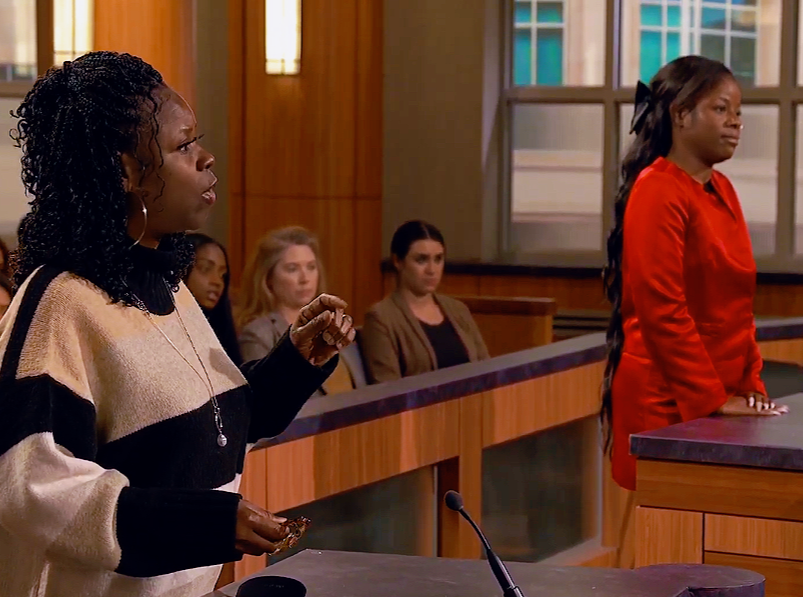
Those accounts were not reconciled in the hearing. What is clear from the transcript is that Laretha took the girl away from the confrontation. She said Janet told the child to gather her belongings and go with her grandmother. Laretha testified that she returned the girl to Janet the following morning, January 23.

CPS, Foster Care and Competing Accounts
The argument did not exist in isolation. Janet told the court that her children had previously been under the supervision of Child Protective Services in Sacramento from 2019 to 2022 and had spent that period in foster care. She said her mother knew what she had already gone through and that she could not understand why Laretha would contact CPS again.
Laretha’s view was markedly different. She regarded a report to CPS as an appropriate response to what she described as physical hitting. Judge Sheindlin also treated the earlier CPS history as important context, asking questions about the children’s placement and the circumstances surrounding Janet’s move from California to Texas.
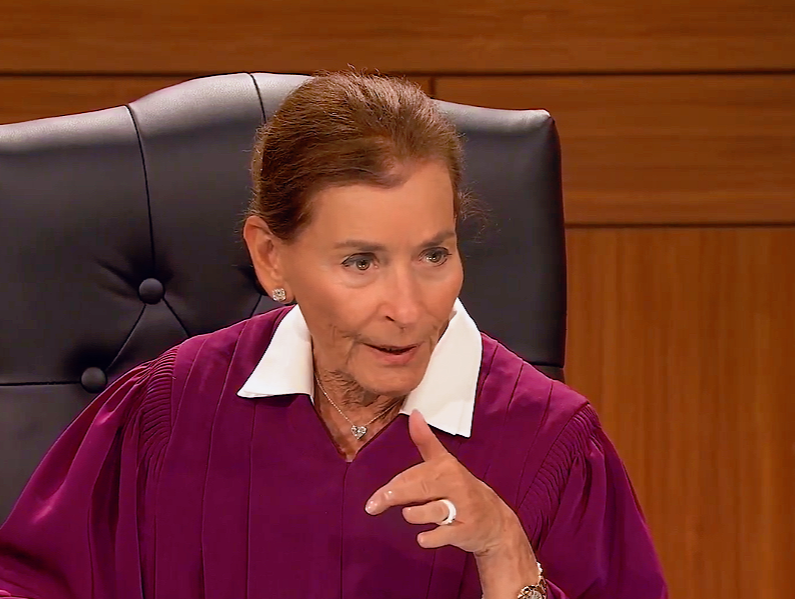
A second disagreement concerned custody. Janet claimed that Laretha had asked her to give up full custody of the children so Laretha could place them on her Section 8 housing assistance and qualify for a larger home. Laretha denied that allegation. The transcript does not establish that either account was independently proven during the hearing.
Judge Sheindlin eventually sent the 13-year-old girl into chambers for a private interview. The program’s closing discussion indicated that the judge wanted to determine whether there was any active abuse occurring. The transcript does not disclose the child’s private statements. The judge and courtroom staff later said that the interview was necessary and that the available information did not appear to show ongoing abuse.
What Happened Inside the Apartment?
The property claim introduced another layer of uncertainty. Laretha said Janet vandalized the apartment after leaving and that she had paid for repairs. She produced receipts for supplies and said two men worked for approximately nine hours to fix the apartment. The program also referred to graffiti and alleged threats in text messages.
Janet denied damaging the property. In her closing remarks, she said that squatters—not she—had damaged the apartment. Laretha rejected that explanation and said there were no squatters. The transcript records the disagreement but does not provide a police report, landlord bill, formal repair estimate, or independent witness confirming who caused the damage.
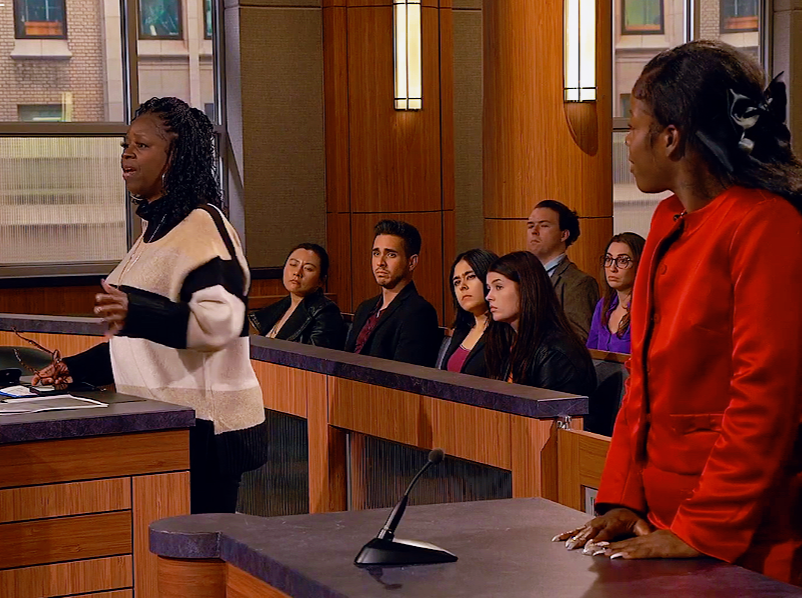
The testimony also exposed confusion about the property itself. Laretha initially described it as a rental property she owned, but later clarified that it was an apartment she rented under a one-year lease. She said it had been vacant when Janet moved in because Laretha had moved out after a dispute involving the building’s manager or landlord. She had continued paying rent and completed the lease.
Janet said she left the apartment around January 31 or February 1, before receiving government assistance money. Laretha said she visited the apartment on February 3, the day Janet received her government check, and connected that visit to the alleged damage. Janet said she did not know how the apartment had been vandalized.
The Evidence Problem
The hearing’s most revealing feature was the accumulation of contradictions. The parties disputed whether the apartment was owned or rented, whether Janet’s daughter was struck on the head or legs, whether Laretha sought custody, and whether the property was damaged by Janet or squatters.
Judge Sheindlin repeatedly returned to written statements and asked the witnesses to distinguish what they knew from what they assumed. Her questions also separated the family’s emotional history from the legal claims before the court. Janet’s homelessness, prior CPS involvement and separation from her children formed the background, but the immediate dispute still required proof of airfare, property damage and responsibility for the repairs.
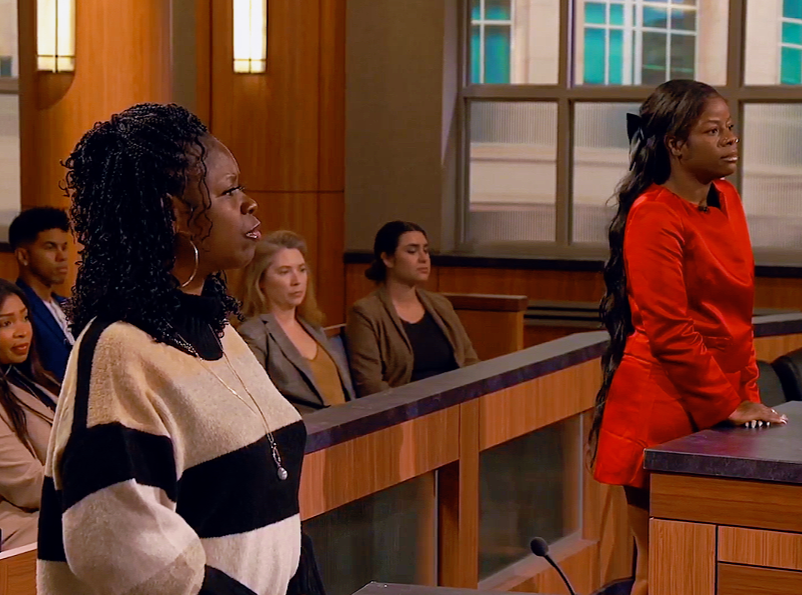
The hearing therefore became both a property dispute and an examination of family boundaries. Laretha believed her intervention protected her granddaughter. Janet believed her mother had entered a troubled situation, challenged her authority as a parent and then pursued money from her. Neither woman accepted the other’s version of events.
How the Case Ended
The case concluded without a traditional dollar judgment for the full combination of vandalism, airfare and emotional distress alleged at the outset. Judge Sheindlin asked about an appearance fee connected with Janet’s participation. Janet said the amount was $500 and agreed to give that money to her mother.
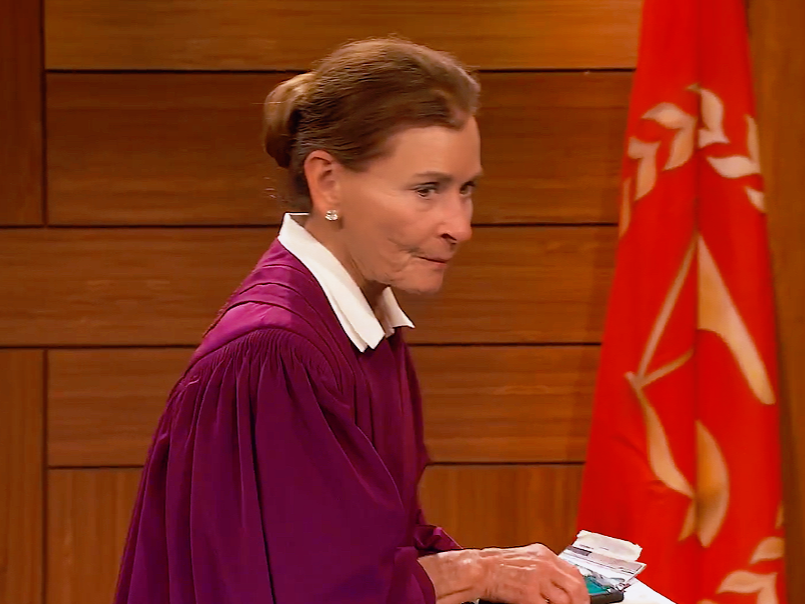
Judge Sheindlin stated that the $500 covered the expense of cleaning up the graffiti. The courtroom exchange then ended with the case described as resolved. Kevin, the courtroom official, adjourned the proceedings.
In post-hearing remarks, Janet said she had come for closure and that she did not expect to see or speak with her mother again. Laretha maintained that Janet owed her for the plane tickets under what she described as a verbal agreement. Janet said the payment arrangement had never been honored, while also continuing to deny responsibility for the apartment damage.

What the Hearing Revealed
This was not a homicide investigation or a criminal trial. It was a televised civil dispute in which allegations of physical discipline, child-welfare history and property damage collided. The SRT supports the existence of competing accounts; it does not provide enough independent evidence to declare every allegation proven.
What the record does show is a chain of decisions that escalated quickly. Janet left Sacramento after asking family for help. Laretha offered travel and housing. The children never entered a Texas school. A disagreement over a phone preceded a confrontation involving the 13-year-old girl and a CPS report. Janet left Texas, the children remained with relatives, and the apartment later became the subject of a lawsuit.
The final $500 payment brought the courtroom matter to an end, but it did not resolve the deeper questions between mother and daughter. The most lasting result was the boundary Janet stated plainly: she came to court seeking closure, not reconciliation.
FAQ
Who sued whom in Judy Justice Season 4, Episode 61?
Laretha Jackson sued her daughter, Janet Harris, in Case 4086, identified in the transcript as Jackson v. Harris. The claims involved alleged apartment vandalism, airfare and emotional distress.
What happened on January 22, 2024?
According to the competing testimony, Laretha came to the Texas apartment while Janet and her children were asleep. A dispute followed after Janet’s 13-year-old daughter had used her phone overnight and failed to put it back on the charger. Janet acknowledged striking the girl’s legs several times; Laretha said she saw Janet hitting the girl in the head and intervened.
Did Laretha Jackson take her granddaughter away?
Yes. Laretha testified that she took the 13-year-old girl away during the confrontation and returned her to Janet the next morning, January 23. The SRT does not disclose what the child said during her private interview with Judge Sheindlin.
Did Janet Harris admit vandalizing the apartment?
No. Janet denied damaging the apartment and later said squatters caused the damage. Laretha accused Janet of vandalism and presented receipts for supplies and repair labor. The transcript records the dispute but does not independently establish who caused the damage.
How was the case resolved?
Janet said the appearance fee was $500 and agreed to give it to Laretha. Judge Sheindlin said the amount covered the expense of cleaning up the graffiti, after which the case was treated as resolved.
Was this a criminal case?
No. The episode presented a civil, arbitration-style courtroom dispute. The transcript contains allegations involving child discipline and CPS, but it does not identify a criminal conviction arising from the events described.