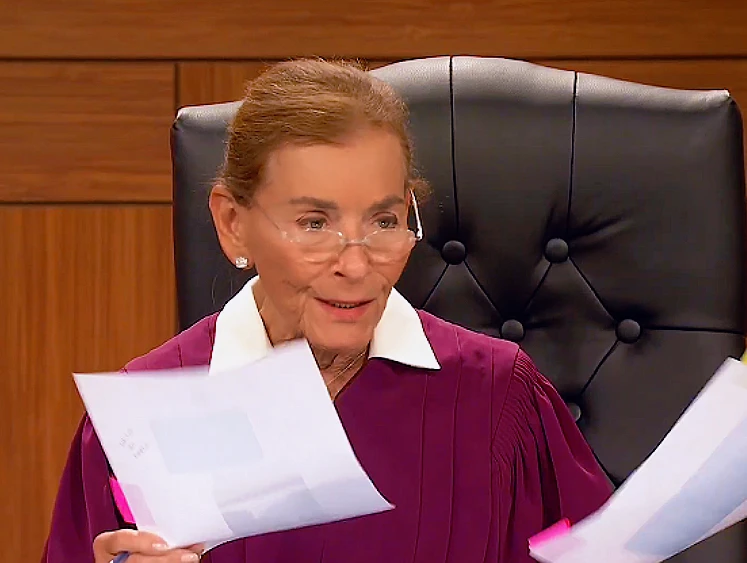
The turning point came when Judge Judy stopped trying to calculate the debt and told Gaye Giorgi to sell the machines herself. The equipment was at Giorgi’s house, the alleged loan had never been clearly documented, and the wall-painting work meant to repay it had no agreed price. In Judy Justice case 4095, a former relationship, a proposed mural business, several payments, and an unfinished arrangement collided in court—leaving the judge with no reliable way to determine what either side was owed.
The relationship before the dispute
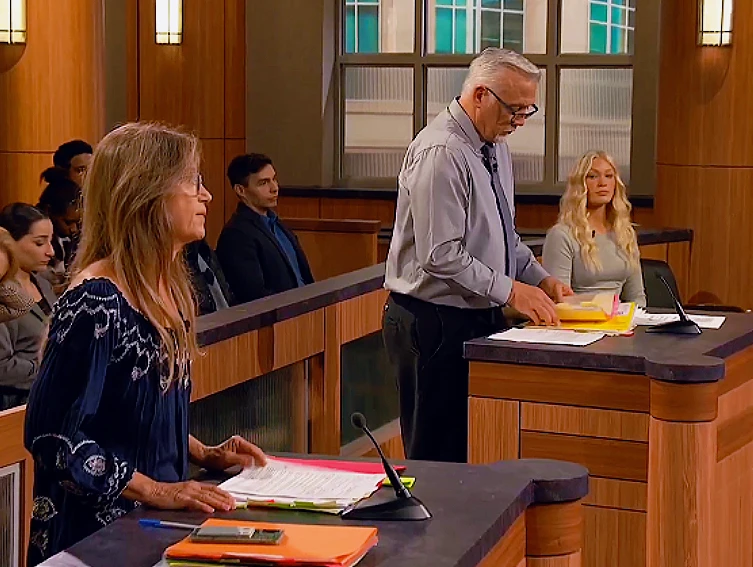
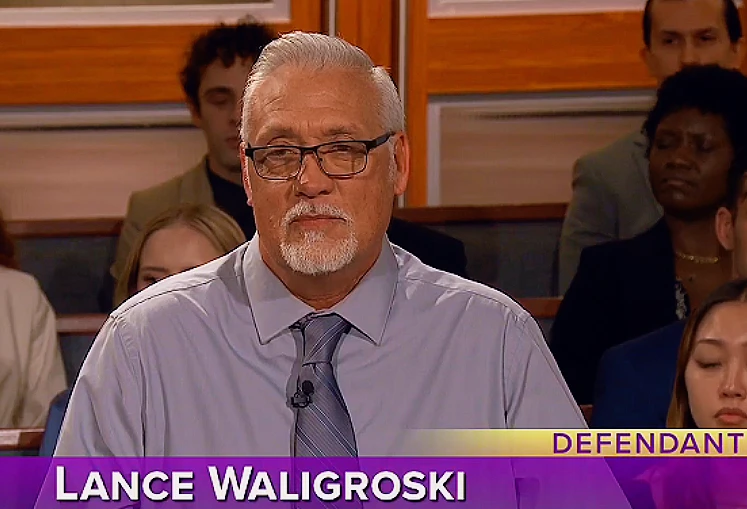
Before money, machines, and text messages became evidence, Gaye Giorgi and Lance Waligroski had dated. Giorgi told Judge Judy that the relationship lasted roughly from June to September, possibly in 2021. The dating ended, but the two began communicating again approximately one or two years later.
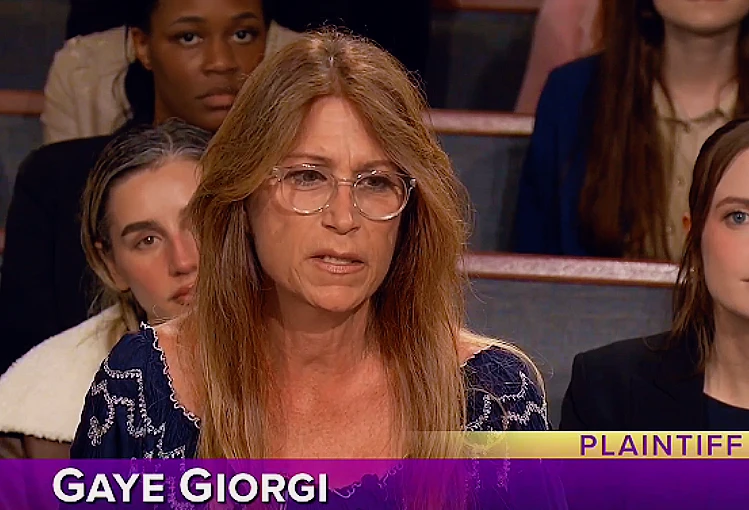
By the time they discussed the mural-machine venture, both parties told the court they were not socially involved. Their connection, as presented during the hearing, had become a business relationship. That distinction mattered because Judge Judy repeatedly directed the conversation away from the history between them and back toward the specific financial arrangements Giorgi wanted the court to enforce.
Giorgi said she was suing Waligroski for breach of contract. When asked where the contract was, she first described it as verbal, then explained that the understanding appeared in their text messages. The messages became the first test of whether their plans had moved beyond an informal conversation.
A 50/50 idea becomes a business conflict
In one exchange, Giorgi proposed that they “shoot some concepts” and hold a think tank. She said she was thinking of a 50/50 arrangement: she would provide the investment, while Waligroski could slowly or quickly meet her halfway. She ended by suggesting that they keep the arrangement fair and fun. Waligroski replied, “Sounds like a plan.”
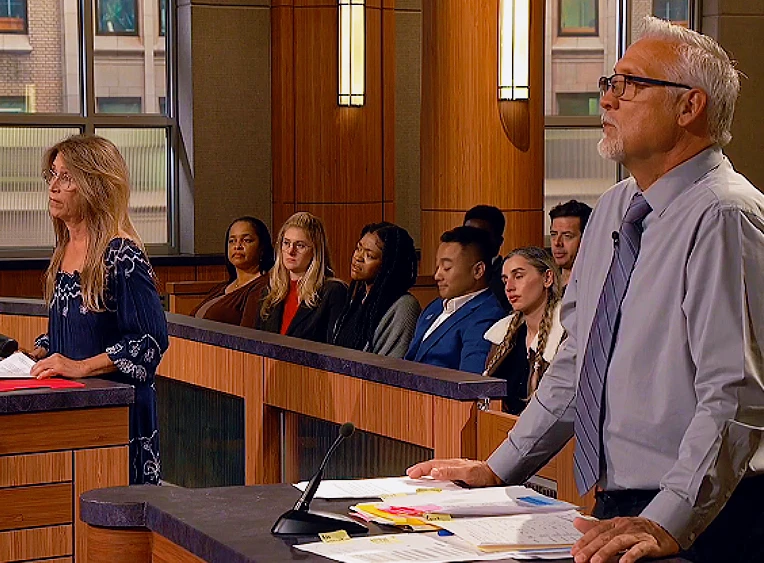
Giorgi viewed that exchange as evidence of a shared business understanding. Judge Judy saw something different. The message described an idea, but it did not set out the terms needed to determine what each person had agreed to do, when payment would be made, how ownership would work, or how the venture would be managed if it failed.
A conversation can show that two people were considering a business. It does not automatically establish the precise bargain one party later asks a court to enforce. In this case, that gap widened as equipment purchases and personal payments became entangled.
Two machines and a trail of disputed payments
The proposed business involved machines designed to paint murals on walls. Giorgi described them as new inventions that could be used for customers in businesses, homes, or other locations. She purchased two machines from different sellers on different dates.
The first machine was picked up on May 3, 2023, and brought to Waligroski’s house on May 4. Giorgi said the second machine was purchased on or about June 8, after several payments had been made. When Judge Judy asked for invoices, Giorgi did not have them available. She referred instead to bank statements showing seller names and Zelle payments, but the statements were misplaced during the hearing.
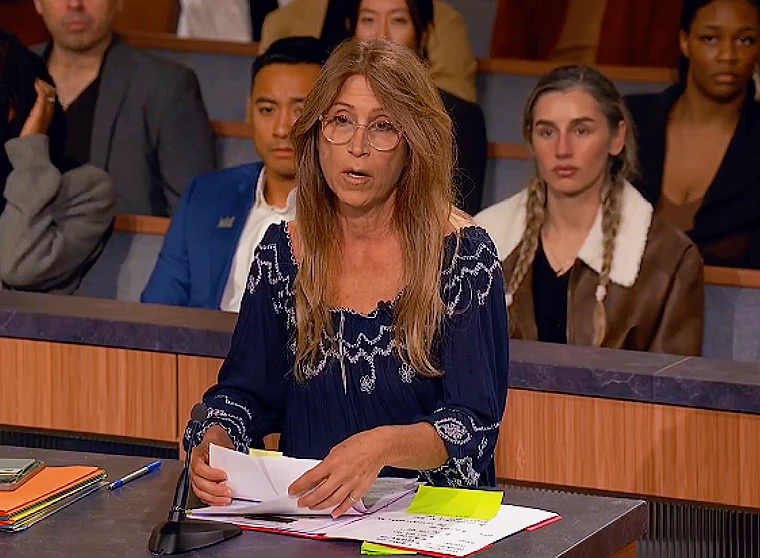
The numbers were not straightforward. Giorgi referred to amounts totaling approximately $4,489, while the testimony also covered a $300 payment and a $6,000 debit. She argued that the larger debit related to the other machine, whose price she discussed as approximately $7,000. Judge Judy noted that a debit marked $6,000 did not, by itself, establish what the payment was for.
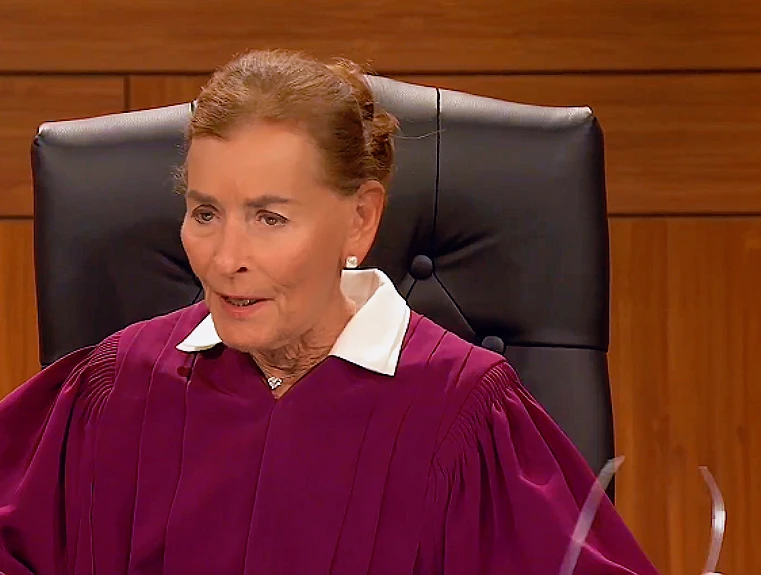
The machines remained at Giorgi’s house. When Giorgi said they were of little use if Waligroski did not operate them, she also alleged that he had broken them. Judge Judy did not pursue the allegation because Giorgi had not included the machines’ alleged condition in her court papers. Her instruction was practical and direct: Giorgi had the machines and could sell them.
When a loan was supposed to become labor
Giorgi’s separate claim concerned money she said she gave Waligroski for living expenses. She testified that he was in a difficult period and that, as a friend, she wanted him to focus on getting the machines working. On May 4, she said, she went to a Wells Fargo branch near his home, withdrew $1,300, and gave it to him.
Judge Judy immediately drew a line between proving that money was withdrawn and proving that it was a loan. Giorgi presented a text in which she wrote, “My money would be well spent by giving you a little loan.” Waligroski responded that he did not want a loan, but said he was willing to work off an amount through wall-painting jobs until the money was repaid. He also referred to working out a written agreement.
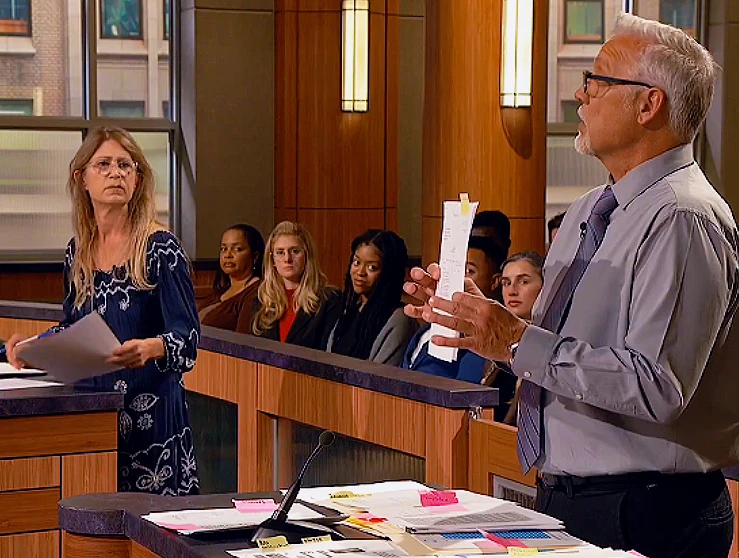
Giorgi then described additional payments: $1,000 on May 23, another $1,000 on August 1, and another $1,000 on August 22. Waligroski remembered receiving three Zelle payments totaling $3,000—one in May, one in July, and one in August—but disputed Giorgi’s description of the money as loans.
The dispute was therefore about more than the existence of transfers. The parties gave the money different meanings. Giorgi described loans. Waligroski connected the payments to work and to a possible arrangement for paying the money back. Neither side produced a complete written record resolving that difference.
The work, the invoice, and the missing price
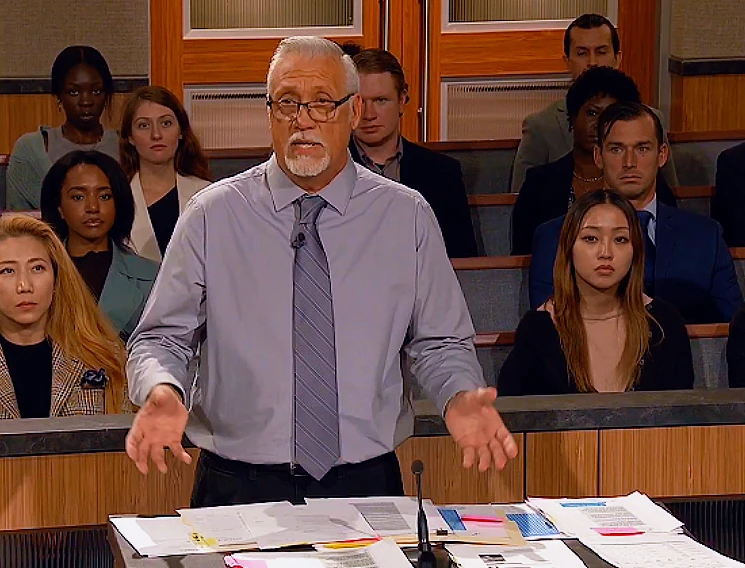
The proposed repayment method led to another disagreement: work at Giorgi’s home. Giorgi said Waligroski worked around September 17 and September 19. She described several walls, including an eight-by-fifteen wall, a seven-by-eight wall, a ten-by-eight wall, and smaller hallway sections measuring seven by eight and four by eight. She said the work was not completed.
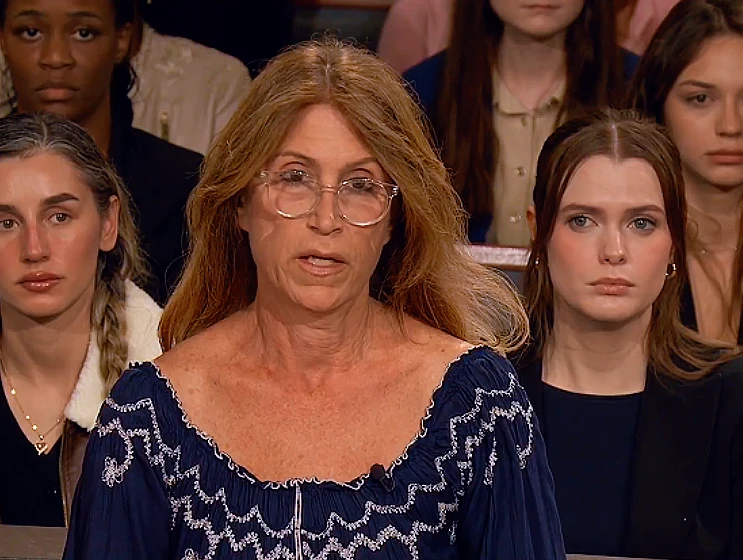
Giorgi recalled discussing the price by referring to people advertising painting work on Craigslist for roughly $300 to $400. She said the parties discussed either paying someone $300 to do the work or deducting three $400 amounts from the debt. Waligroski, she maintained, agreed. Judge Judy focused on the uncertainty: the parties had not fixed a definite price before the work was performed.
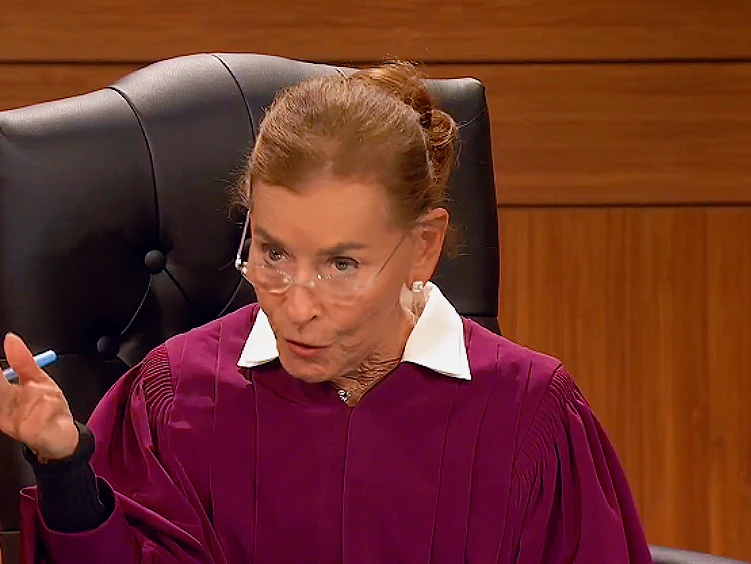
Waligroski gave a different timeline. He said he worked four days in a row in September and was almost finished, with only baseboards left. He testified that he eventually asked how much he would be paid—or how much would be written off against the money he owed. Giorgi disputed the number of days and identified two dates rather than four days.
Waligroski presented an invoice or itemized list claiming 36 hours of work. He said the list was prepared approximately a month afterward. That document did not resolve the central problem. The parties still disagreed about the number of days, the value of the work, and whether the work was payment for wages or credit against a loan.

Waligroski also filed a counterclaim for unpaid wages. But when Judge Judy asked where the agreement on wages was, he acknowledged that there had been no agreement. His position placed the same missing term at the center of both sides’ claims: each wanted the court to assign a value to an arrangement whose price had never been clearly established.
Why Judge Judy dismissed Giorgi’s case
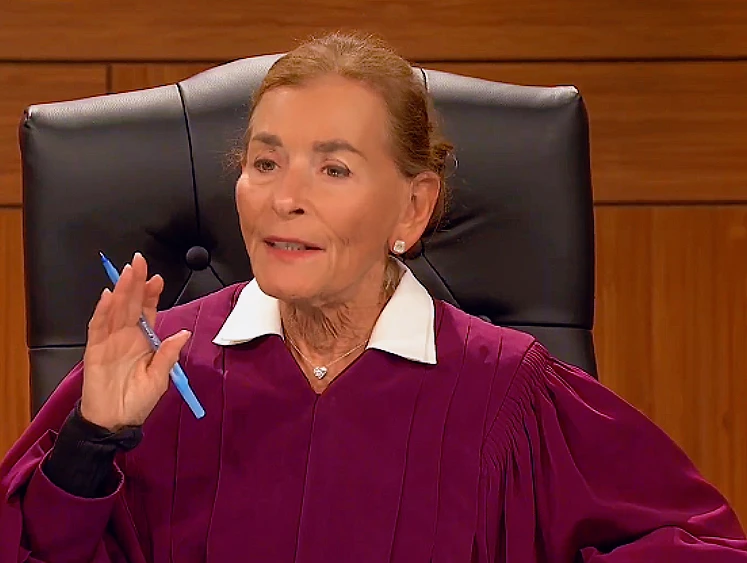
Judge Judy explained that the court could not determine whether the work had repaid half the alleged loan, a quarter of it, or the entire amount. The evidence did not establish an hourly rate, a price per job, the number of credited hours, or a final balance.
She rejected the idea that the court could solve the problem by looking at the size of a room, estimating what a painter might earn per hour, calculating the square footage, and guessing how long the work should have taken. That would not enforce an existing agreement. It would create one after the fact.
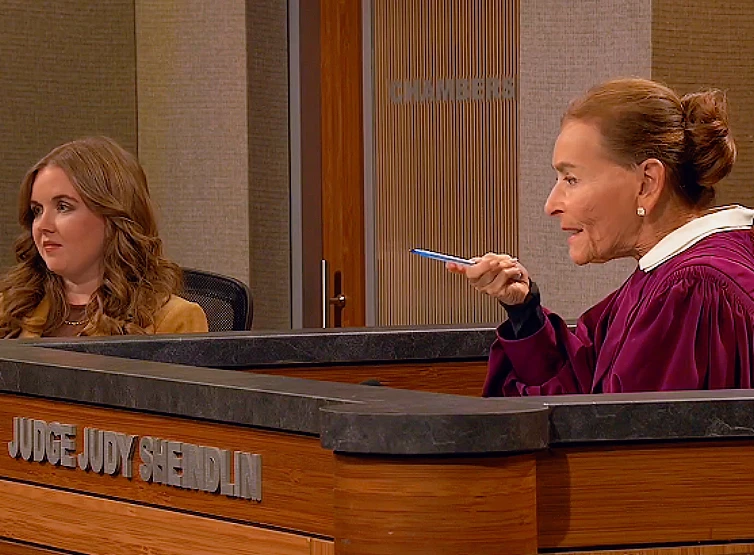
The same reasoning undermined Waligroski’s counterclaim. His later invoice did not resolve the conflicting testimony about the days worked or the amount, if any, that had been agreed. Without definite terms, the court could not reliably calculate unpaid wages or a credit against the alleged loan.
Judge Judy dismissed Giorgi’s case, and the court was adjourned. The transcript does not state a separate monetary award on Waligroski’s counterclaim. The closing lesson was not that text messages have no value. It was that messages and conversations may still leave critical terms unresolved.
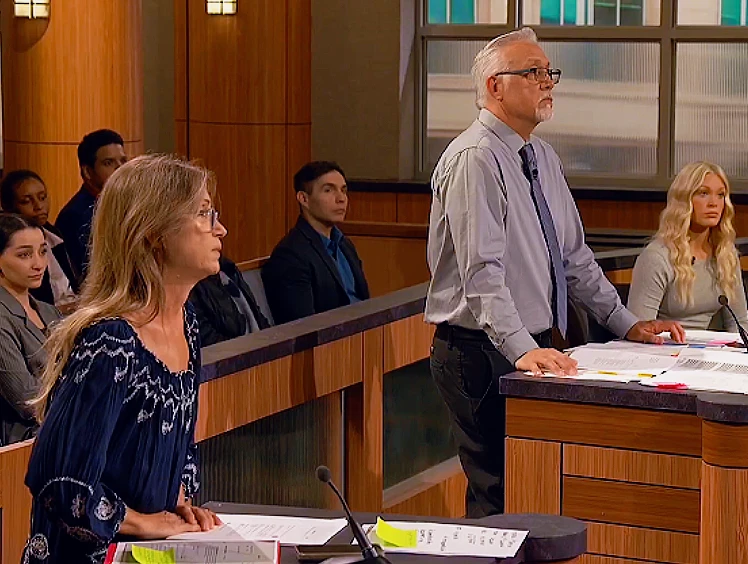
What the case shows about informal agreements
The hearing ended with a simple principle: “When in doubt, write it out.” Giorgi and Waligroski had discussed a 50/50 venture, acquired mural-printing equipment, transferred thousands of dollars, and attempted to use labor as repayment. Yet they did not clearly record whether the money was a loan, an investment, wages, or an advance against future work.
They also failed to record how the machines would be owned and operated, what the work at Giorgi’s house was worth, how many hours would count, or exactly how each payment would affect the balance. Those omissions transformed what may have begun as an informal arrangement into a dispute neither party could prove with enough precision for the court to calculate.
This was a civil courtroom dispute, not a criminal prosecution. Its lasting significance came from the paperwork that was missing: an enforceable agreement needs identifiable terms. As Judge Judy stated, courts may enforce a contract when its terms exist, but they do not create the bargain for the people who failed to write it down.
F A Q
Who sued whom in Judy Justice case 4095?
Gaye Giorgi sued Lance Waligroski, alleging multiple loans and a breach of their business agreement. Waligroski filed a counterclaim for unpaid wages.
What business were Giorgi and Waligroski discussing?
They discussed a business involving machines designed to paint or print murals on walls for homes, businesses, or other customers. Giorgi said she purchased two machines and brought them to Waligroski’s house.
How much money did Giorgi say she gave Waligroski?
She testified about an initial $1,300 payment on May 4 and additional payments of $1,000 on May 23, August 1, and August 22. Waligroski recalled three Zelle payments totaling $3,000, but disputed that they were loans.
Why was Giorgi’s case dismissed?
Judge Judy found that the parties had not established definite terms for the alleged contract or repayment arrangement. The evidence did not show a clear price, wage rate, number of hours, ownership structure, or method for crediting work against the alleged debt.
Did Waligroski win his counterclaim for unpaid wages?
The transcript does not state a separate monetary award on the counterclaim. It shows that the court also found the wage arrangement too uncertain to calculate reliably.