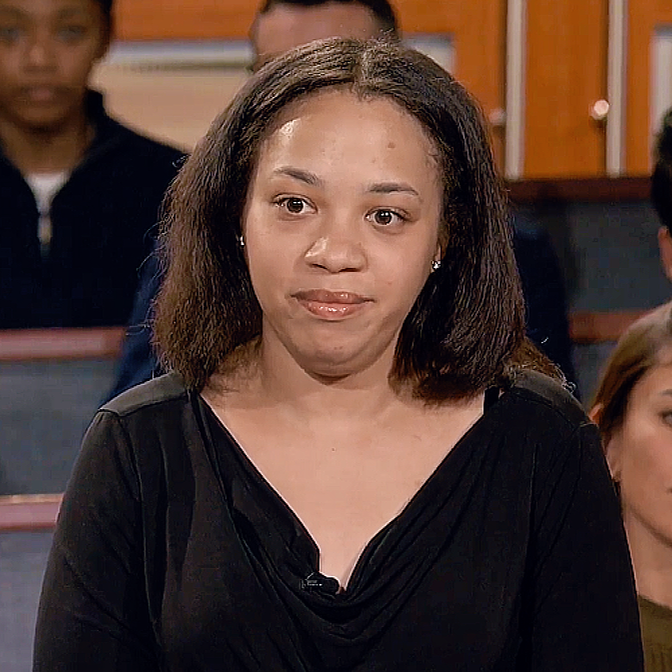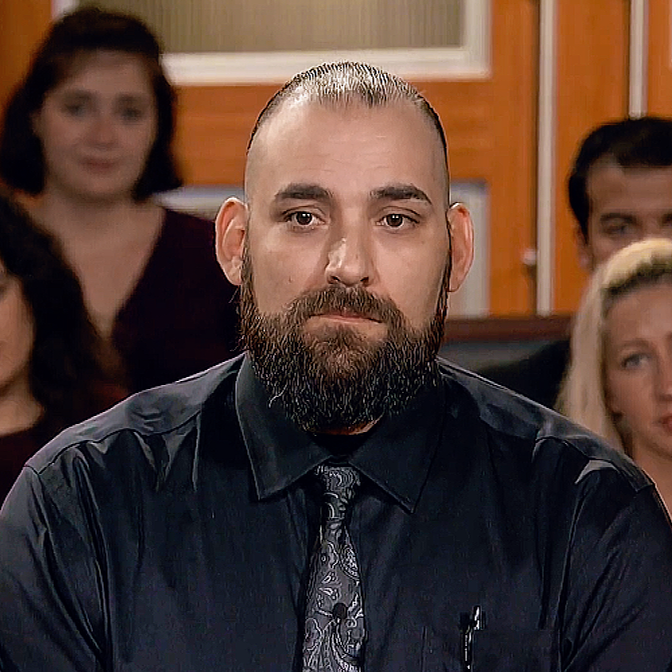
For Rachel Schattle, the day ended in a scene she could not fully remember: she woke in the snow, saw blood in front of her, and realized that her face was bleeding. David Troup remembered the same moment differently. He said he had looked up the mountain, believed the area was clear, and then collided with Rachel near a ramp. Their conflicting memories became the center of a civil courtroom fight over speed, visibility, and responsibility on a nearly flat section of trail.

A First Day on the Mountain
The story began on January 27, 2024, when Rachel Schattle went skiing for the first time in her life. Her boyfriend, Robert Elenberg, had been skiing for 25 years and was teaching her. Rachel was a beginner learning to control her turns on a day described in court as pleasant. She was trying to learn an activity her boyfriend enjoyed, even though the mountain was unfamiliar to her.

That first lesson ended without warning. Rachel said she had been skiing along and then had no memory of the impact itself. Her next memory was waking in the snow, confused and disoriented, with blood in front of her and blood on her face. She later described a severe concussion, extensive bruising, significant bleeding, and a long recovery.
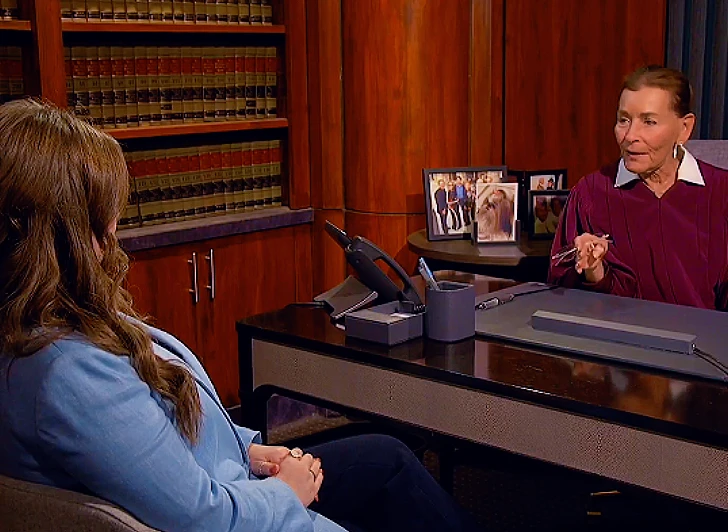
The dispute later reached Judge Judy’s courtroom as Schattle versus Troup, case 4073. Rachel sued David Troup, a snowboarder, for medical expenses and lost wages. Troup denied that he was responsible and maintained that Rachel’s position and movement had contributed to the collision.

The Collision Near the Lifts
The location was crucial because the two sides described different conditions. The collision occurred near the bottom of the hill, where the trails came back together before leading people toward the lifts. Robert described the area as almost flat. That detail challenged the suggestion that the impact occurred during a fast descent on a steep, open section of the mountain.

Robert Elenberg, Rachel’s boyfriend, testified that he had been teaching her to make slow turns so she could control her speed. His account was specific: he would stop to give her instructions, let her proceed, and then catch up before repeating the process. Immediately before the crash, he had told Rachel to make a short turn and return toward him.
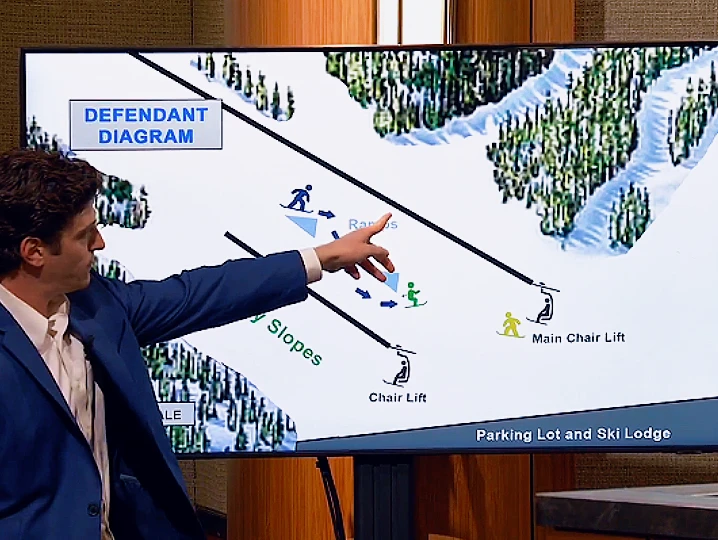
Robert said he looked up the mountain and saw that the area appeared clear. As Rachel reached the apex of her turn, he saw a black flash enter from his peripheral vision. The impact followed almost instantly. He saw David for only a fraction of a second before the collision, because his attention had been on Rachel.
Robert’s description placed the incident near the point where multiple trails converged. The area, he agreed, was nearly level. That detail mattered because it challenged the suggestion that Rachel had been struck during a fast descent on a steep slope.
Conflicting Accounts of the Scene
David Troup told the court that he had been snowboarding for approximately ten years. He said he had visited the mountain fewer than 50 times and usually went once or twice a year, depending on his work schedule. His coworker and witness, Marco Gonzalez, confirmed that he had been snowboarding with Troup that day, although it was the first time the two had snowboarded together.
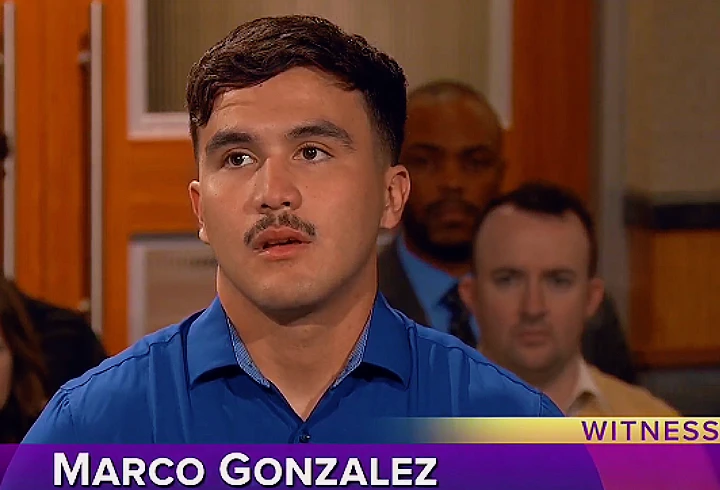
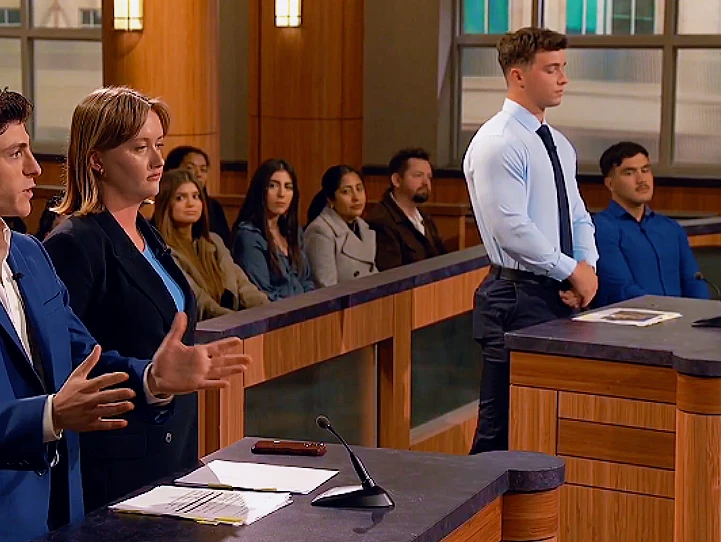
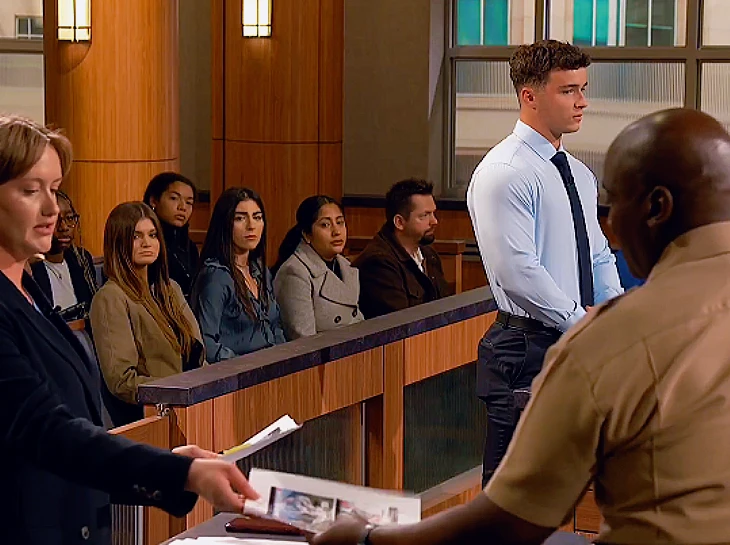
When Judge Judy asked Marco to demonstrate where Troup had come from, the witness struggled to identify the precise route. He pointed toward the upper part of the chart but could not clearly explain the ramp or the path leading to the collision. The judge eventually told him to sit down, observing that he was not providing a clear account of the scene.
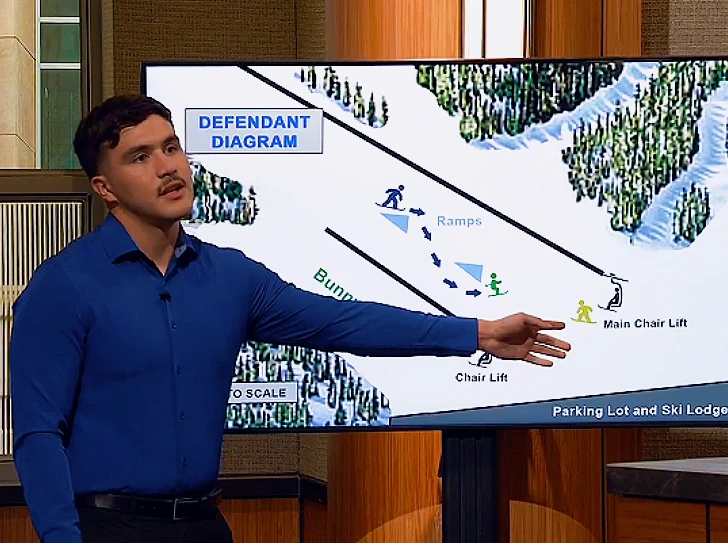
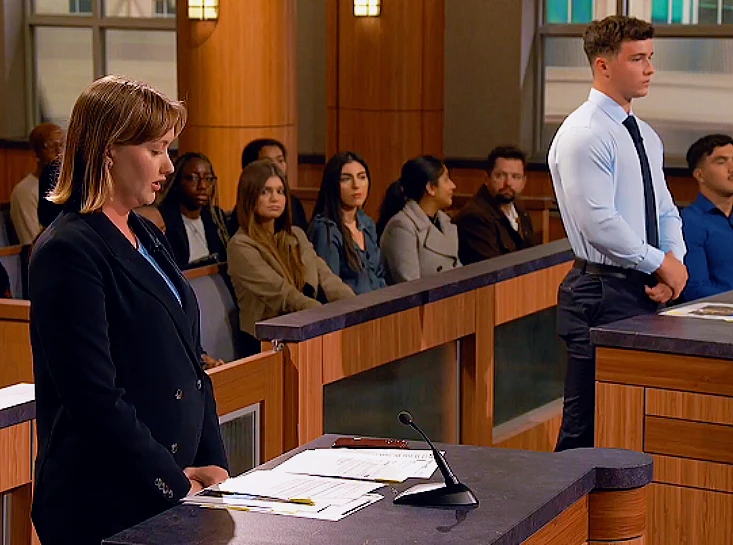
Troup then attempted to trace his own route. He said he had been coming from higher up, traveled down toward a ramp, and came around it. When asked whether he had seen Rachel while he was on the ramp, he answered no. Rachel, meanwhile, had used a photograph to mark the positions of “R” for Rachel and “D” for David, along with the location of the ramp.
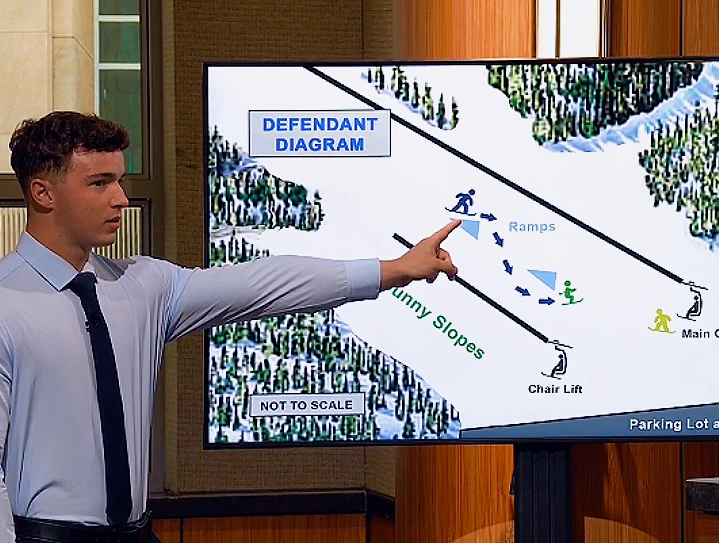
The photographs made the disagreement over the terrain concrete. When Troup identified a location near the lifts, Judge Judy repeatedly pointed out that the area appeared flat—flat enough, she said, that she could walk there. From that visual evidence and the testimony, she reached a clear conclusion: Troup had been going too fast at the bottom of the run.
Troup did not agree that speed could be inferred from the severity of Rachel’s injuries. He argued that he had emerged from the accident without injury and suggested that if he had been speeding, he would have suffered bruises or a hurt shoulder. Judge Judy challenged the implication, asking whether he believed Rachel had been faking her injuries. Troup denied saying that and pointed to her medical records.
Robert offered a different explanation for the unequal injuries: Troup was nearly 100 pounds heavier than Rachel. In his account, Rachel was following instructions when Troup entered from above and struck her.
Medical Bills and an Unanswered Message
The immediate aftermath was described as a medical emergency rather than a minor fall. Rachel said she was confused and disoriented. An off-duty emergency medical technician who happened to be nearby stabilized her head and asked basic orientation questions, including her name and the year. Ski Patrol then transported her by toboggan. After five or ten minutes at Ski Patrol, she began fully regaining consciousness; an ambulance was called, and she was taken to a hospital for CT scans.
Rachel presented medical records and a photograph of her face after the accident. She testified that the hospital bill was $2,932 and the ambulance bill was $1,496. She said the expenses were not covered by insurance and that she also lost time from work.
Rachel contacted Troup on March 18. She sent him the medical bill and asked him to pay it. Troup had previously apologized and checked on her condition, but his response changed after she sent the expenses. He wrote that, under “military standard operating procedure,” he would have to put the matter through his “chain of command.”
The explanation drew sharp scrutiny from Judge Judy. When pressed about what that chain of command meant, Troup said he had spoken with people and received advice. Eventually, he acknowledged that his mother was one of the people he consulted. Judge Judy treated the explanation as an attempt to avoid directly addressing Rachel’s request, particularly because Rachel continued asking him to explain the procedure and, according to the courtroom exchange, he stopped responding.
The Court’s Decision
By the end of the hearing, the record included Rachel’s medical records, photographs, testimony about the scene, and the two itemized bills. Rachel said her hospital and ambulance charges totaled $4,428 before considering lost wages. The court also heard testimony that the collision happened near a ramp in an almost flat area. In a post-hearing statement, Troup said he had looked up to make sure the area was clear before colliding with Rachel. Together, those details informed the court’s assessment of the collision.
Judge Judy entered judgment for the plaintiff and awarded Rachel Schattle $10,000. The award came in the context of Rachel’s medical expenses, injuries, and lost time from work. After Rachel thanked the court, the proceeding was adjourned.
In post-hearing statements, Rachel again said she remembered only waking in the snow with her face bleeding. Troup said he had stayed within his abilities and looked up before the collision. His final advice was brief: experienced riders should stay away from beginners.
What the Case Shows
This was a civil dispute, not a criminal prosecution. The hearing turned on responsibility, injury, and compensation after a recreational collision on converging trails.
The court’s reasoning centered on control. Robert described slow instruction, Rachel described an impact she did not see coming, and Troup said he had checked the mountain but did not see Rachel before taking the ramp. Judge Judy concluded that his speed and failure to avoid the collision made him financially responsible.
Rachel arrived hoping to learn an activity with someone she trusted. She left injured and facing thousands of dollars in medical costs. The $10,000 judgment carried a warning: control means seeing, anticipating, and avoiding people below.
FAQ
Who sued whom in the ski accident case?
Rachel Schattle sued snowboarder David Troup in case 4073, known as Schattle versus Troup, seeking compensation for medical bills and lost wages after the collision.
When did the ski-slope collision happen?
The collision occurred on January 27, 2024, according to the courtroom testimony in the transcript.
Where did the collision happen?
The testimony placed the collision near the bottom of the mountain, close to the ski lifts, where multiple trails converged. The area was described as nearly flat.
What injuries did Rachel Schattle report?
Rachel reported a severe concussion, bruising, facial bleeding, and a long recovery. She was assisted at the scene, transported by Ski Patrol, taken by ambulance to a hospital, and received CT scans.
How much were Rachel Schattle’s medical bills?
Rachel testified that the hospital bill was $2,932 and the ambulance bill was $1,496. She also said she lost time from work.
How much money did the court award Rachel Schattle?
Judge Judy entered judgment for Rachel Schattle in the amount of $10,000.
Was David Troup criminally charged?
The SRT presents the matter as a civil lawsuit concerning liability, medical expenses, lost wages, and damages. It does not report criminal charges.