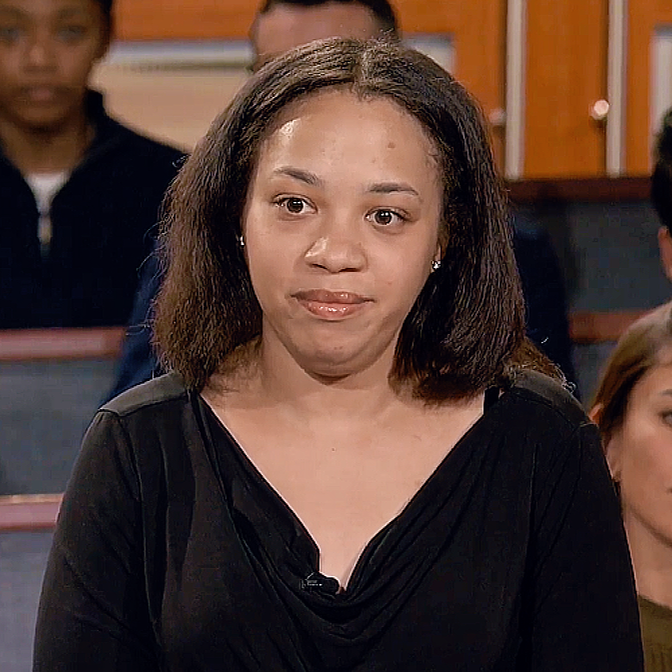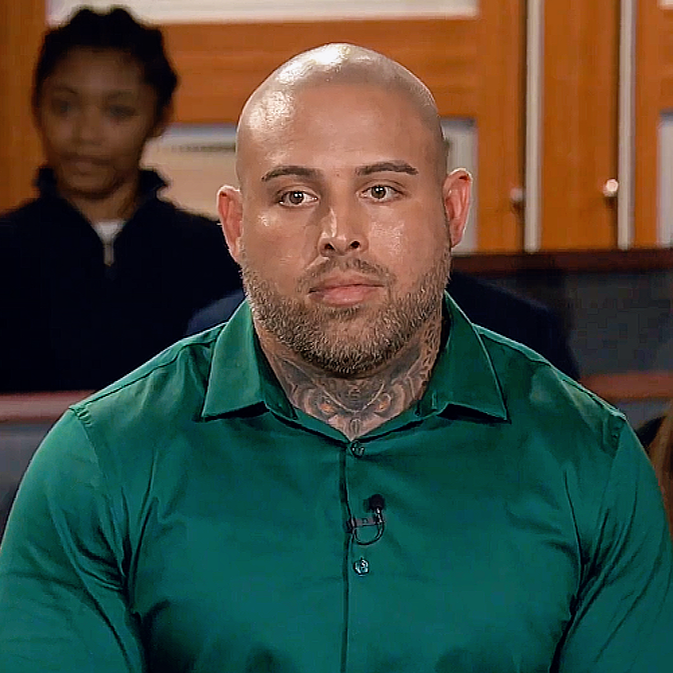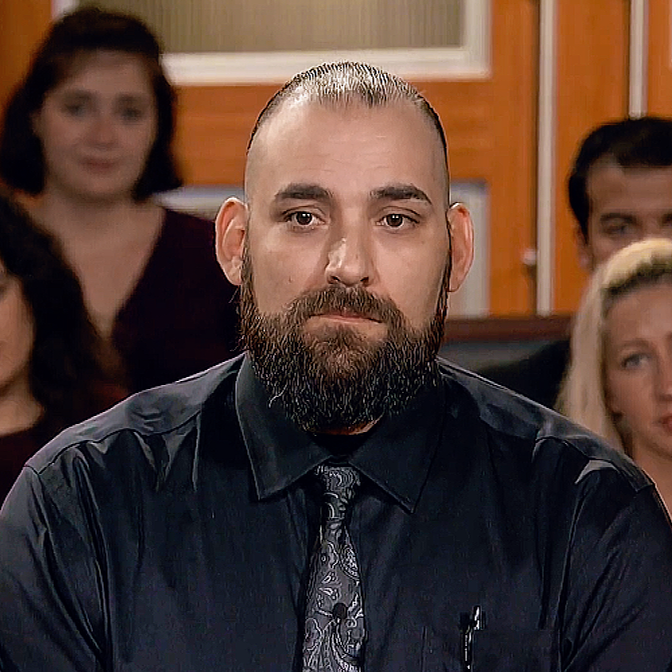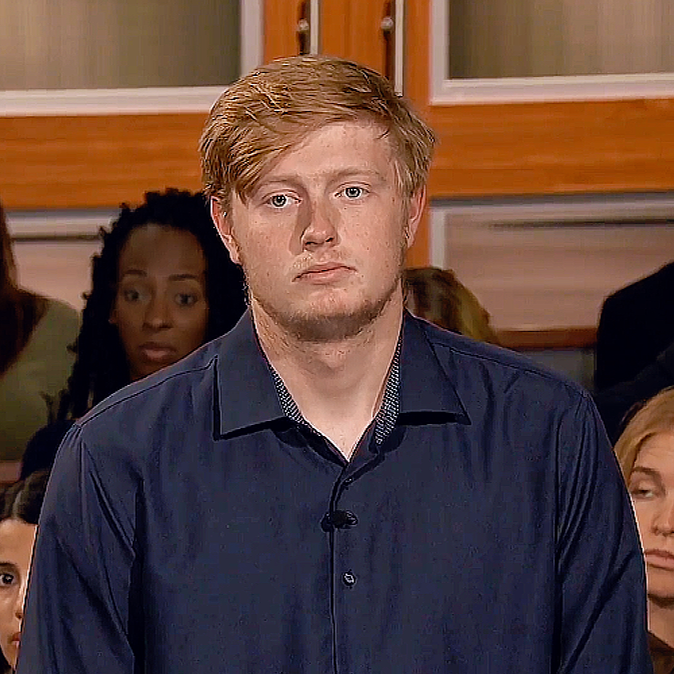
The most revealing moment in the case came before the judge reached the damaged cars. When Judge Judy Sheindlin asked Dakota Taylor where his friend Joseph was, Taylor hesitated. Joseph, he said, was not in court because he and his fiancée had just had a baby. That explanation quickly gave way to a more difficult question: if Joseph was driving ahead of Taylor, how could he later tell police that he had seen the entire collision?
What began on August 23 as a dispute over a scrape at a stop light would eventually become a courtroom examination of competing accounts, a missed repair appointment, conflicting insurance statements, and the credibility of a 19-year-old driver facing Roger and Theresa Stone.
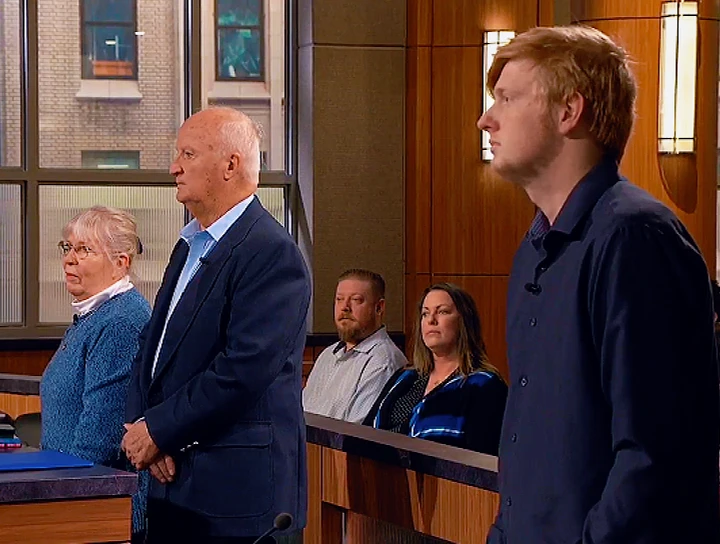
A Birthday Drive Ends at an Intersection
On August 23, Roger and Theresa Stone were driving home after celebrating Roger’s birthday the previous day. It was early afternoon. At an intersection ahead, two lanes were turning left, and traffic was already lined up.
Roger testified that he was driving a black 2017 Hyundai Elantra in the right-hand lane. Dakota Taylor was in the left-hand lane, with two or three cars ahead of him. Taylor was traveling with his friend Joseph, who was driving in front of him.
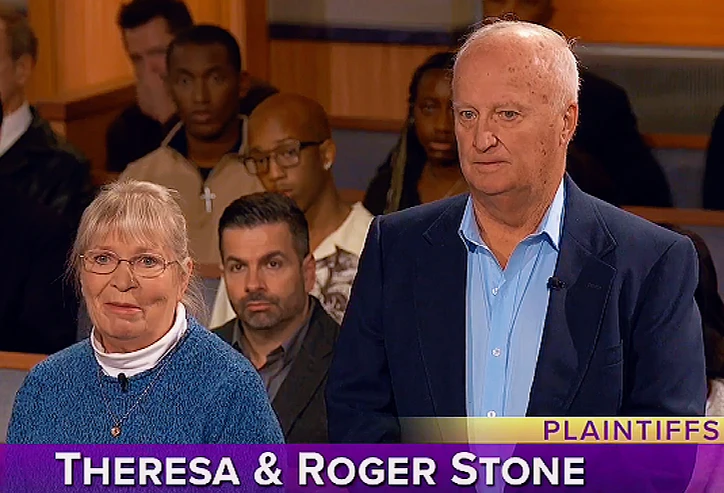
That positioning would later matter more than the make or color of either vehicle. The question was not simply who had been where. It was whether Taylor moved toward the Stones’ lane, whether the cars made contact, and what Taylor did afterward.
The police, according to the report discussed in court, observed minor damage on both vehicles. The damage to each car was described as under $1,000, and the incident was classified as a non-reportable traffic accident. The Stones were not presenting a case involving serious physical injury. Their claim was about the damage to their vehicle and the events that followed.
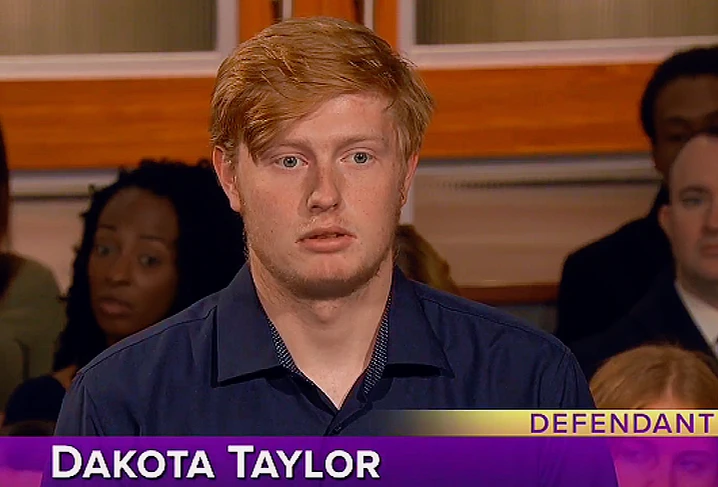
What Roger Stone Said Happened
Roger’s account began as the two cars approached the turn. He said Taylor’s vehicle appeared to be moving into the Stones’ lane. Roger looked out his window and stopped because, in his view, Taylor would otherwise have scraped the entire side of the car.
The vehicles still made contact, Roger said. Taylor’s car struck the driver’s door and a small portion of the rear door. Afterward, Taylor backed into the lane he had originally occupied.
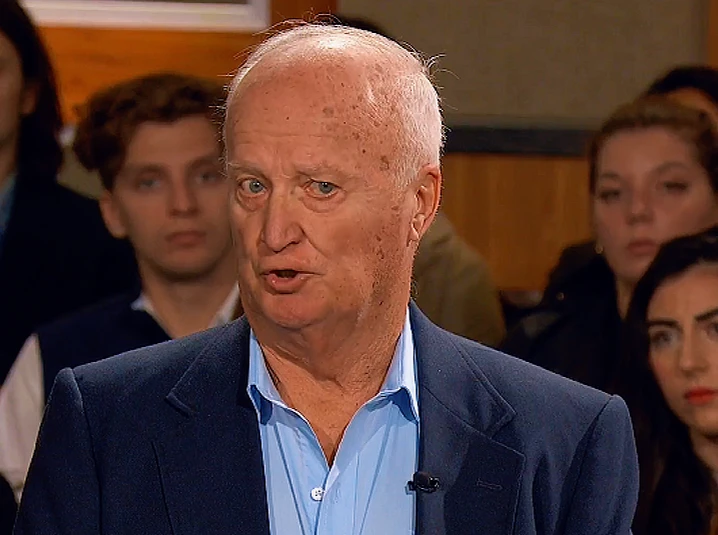
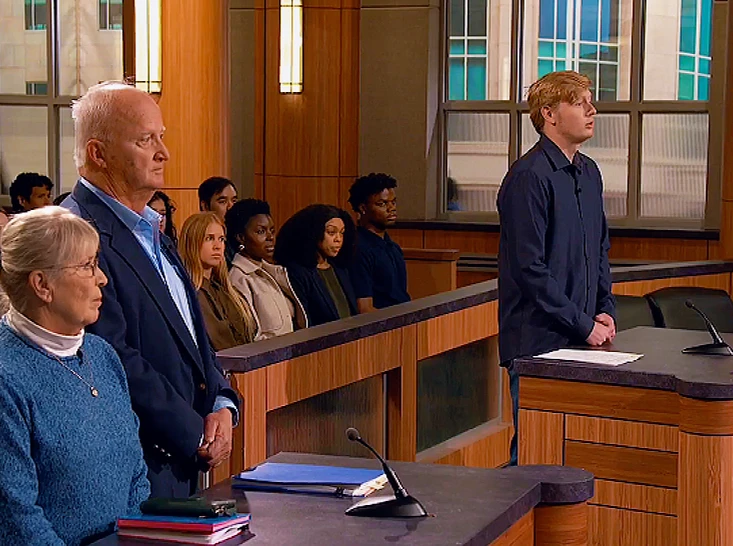
Roger testified that all three people got out of their vehicles. Taylor looked toward the Stones but, Roger said, did not appear to examine the damage and did not seem to say anything. With traffic behind both cars and the signal changing, Roger told Taylor to move around the corner. The expectation, according to Roger, was that Taylor would stop there so the drivers could address what had happened without blocking the intersection.
Both vehicles made the left turn. Taylor, however, stayed in his lane and continued forward.
The Decision to Follow the Other Car
As Taylor drove away, the Stones ended up behind him. Theresa called 911 and reported that Taylor had hit their car and was continuing down the road.
Judge Sheindlin did not treat the decision to follow Taylor as harmless. She told Roger that pursuing another driver could be dangerous and reminded him that this was not the Wild West. Roger acknowledged the warning.
The vehicles continued for approximately six miles. At that point, a sheriff’s vehicle was traveling in the opposite direction. The deputy activated the lights, turned around, and came up behind Taylor. Taylor pulled over, and the Stones stopped approximately 15 to 20 yards behind him.
Officers collected information from both sides. Roger said the drivers exchanged personal and insurance information. The police also recorded minor damage on both vehicles. Those observations became important because Taylor’s position in court was not that the damage had been misunderstood. He denied that his vehicle had touched the Stones’ car at all.
Dakota Taylor’s Version
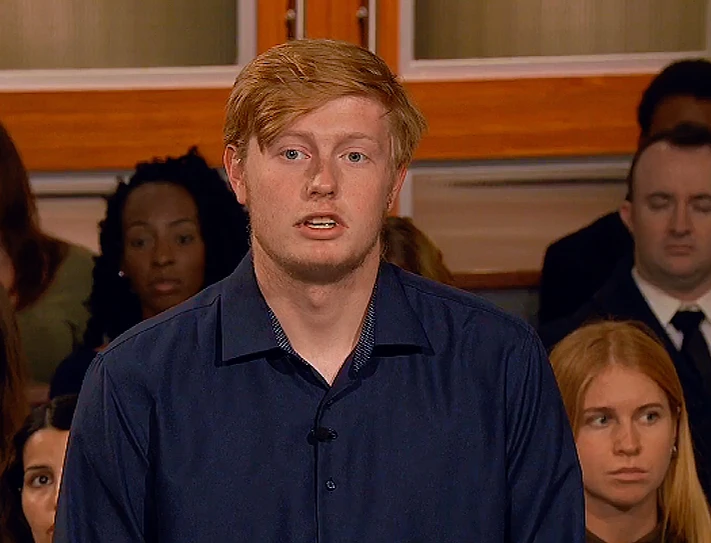
Taylor gave the court a different sequence. He said Joseph was ahead of him and that Taylor was trying to get behind him. Taylor activated his turn signal, checked over his shoulder, and began moving as if he were going to enter the other lane.
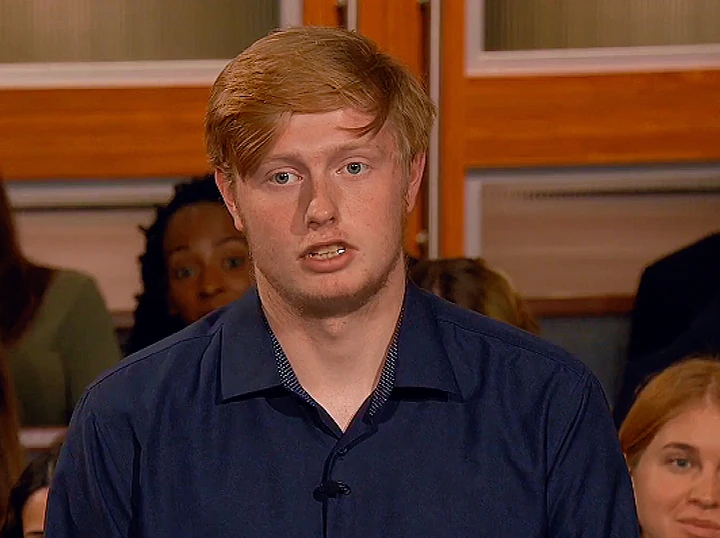
Then, he said, he saw the Stones’ vehicle. Taylor testified that he turned back, never crossed the middle line, stayed in his own lane, and never struck the Stones’ car. He also said he did not get out of his vehicle until a police officer asked him to do so.
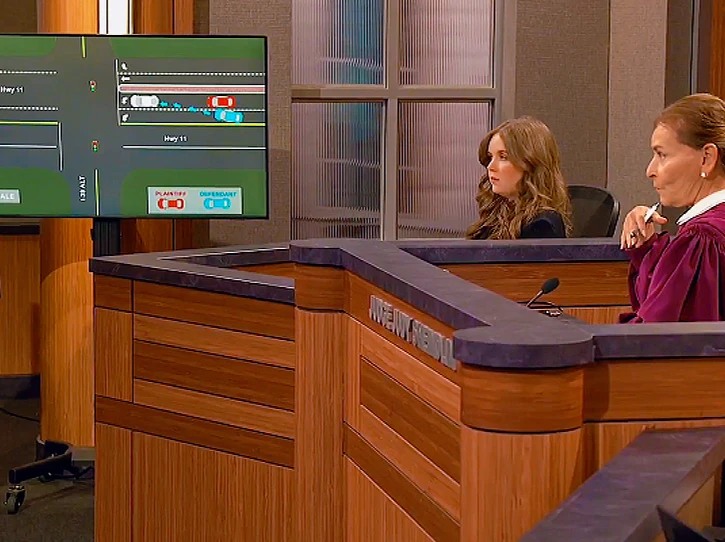
The judge returned to the physical layout of the intersection and asked Taylor to demonstrate the positions on the courtroom board. The details became difficult to reconcile. Taylor had described Joseph as being in front of him, yet he also said Joseph told police that he had observed the incident and knew there had been no contact between the cars.
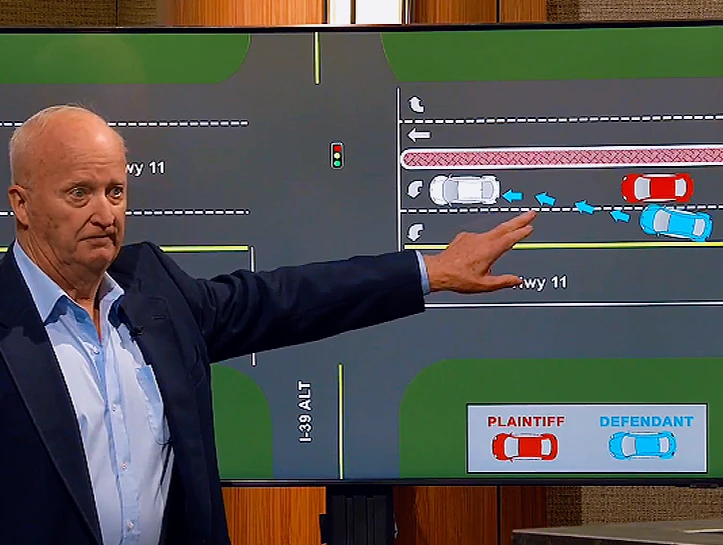
Judge Sheindlin asked how Joseph could have watched the entire event from ahead of Taylor. Taylor answered that Joseph had a direct view through the rear-view and side mirrors. The explanation became one of the points the judge weighed alongside the damage, the police observations, and the two drivers’ accounts.
The court also discussed what Taylor allegedly said after police stopped him. The police information, as read in court, stated that Taylor was apologetic if he had caused the damage and offered to fix it himself. Taylor resisted that characterization and maintained that he had never admitted hitting the Stones’ vehicle. He did acknowledge that he worked on cars both as a hobby and for a living.
The Questions About Joseph and Insurance
The case became increasingly focused on what Taylor had said and what could be supported by the record. Joseph was not present in court. Taylor explained that Joseph could not attend because he and his fiancée had just had a baby the day before.
That absence meant the court heard Taylor’s description of Joseph’s statement rather than Joseph’s own testimony. The judge questioned whether someone positioned ahead of Taylor could have seen the collision through mirrors well enough to report the entire event.
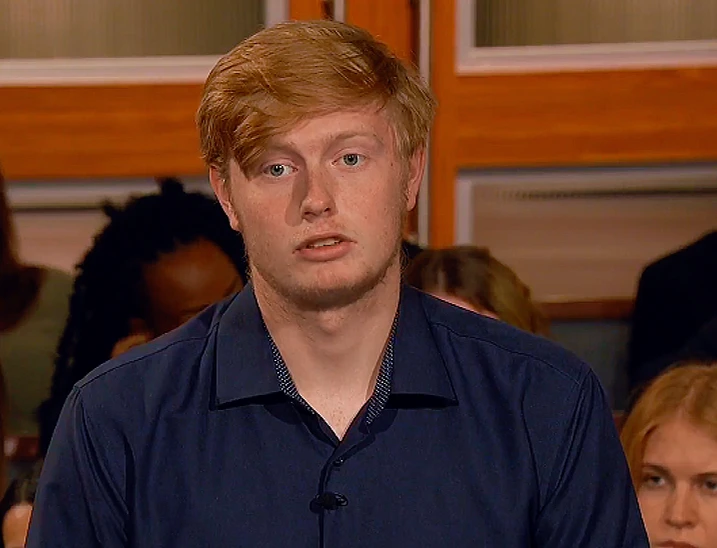
Insurance created another point of conflict. Taylor identified GEICO as his insurer and initially said the car had been insured on the date of the incident. He said he had full coverage.
Theresa later testified that she contacted the insurance company and learned that Taylor did not have insurance. Taylor disputed that. When the judge asked him specifically whether he had been insured on August 23, Taylor said he had photographic evidence and a copy of a statement showing coverage through August 31.
The distinction mattered. The question was not whether Taylor believed he should have been insured or whether he had expected coverage. The question was whether coverage was actually in place on the date of the collision. The transcript records the judge pressing him to answer that precise question.
The Missed August 26 Meeting
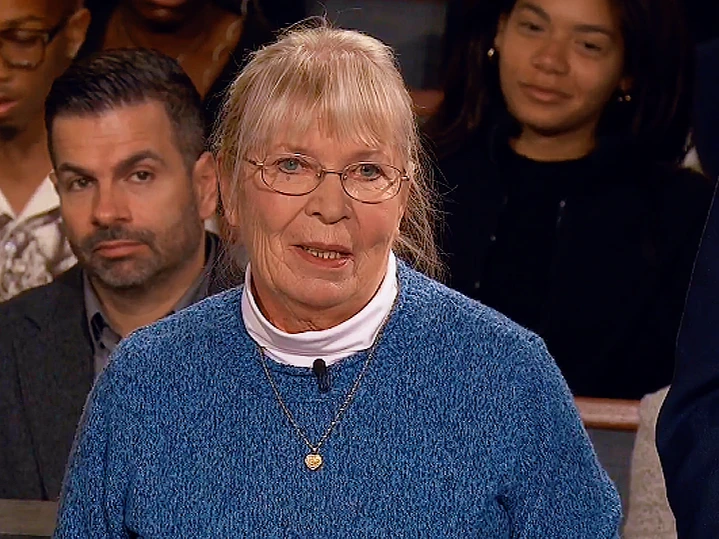
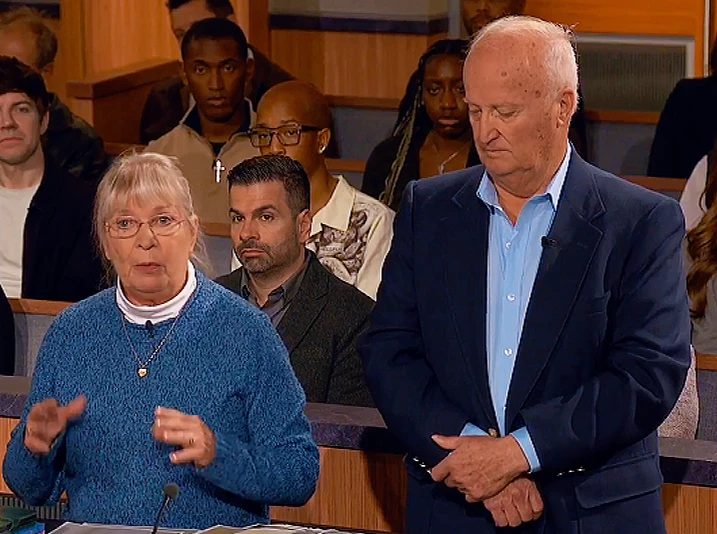
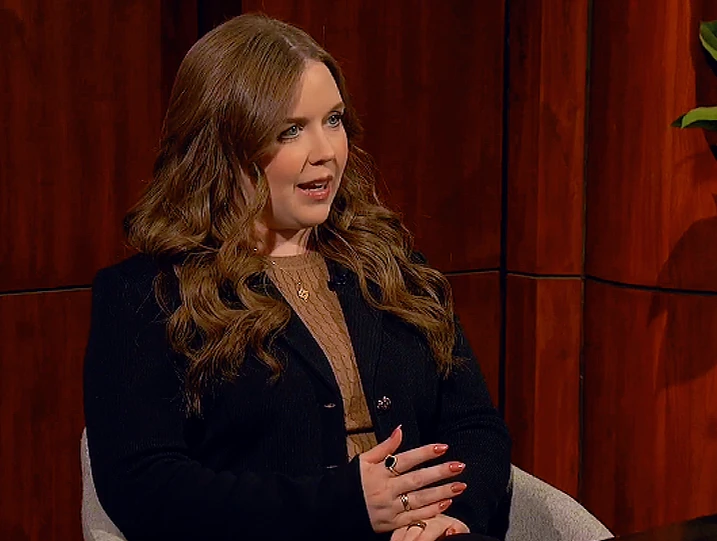
Before contacting the insurer, Theresa said she had spoken with Taylor about paying for the repair out of pocket. She explained that she wanted to avoid an increase in insurance costs or the possibility of a policy being canceled. According to her testimony, Taylor agreed to come to the Stones’ home on August 26.
The arrangement was made by phone, not by text or email. Taylor did not appear. When Theresa called him afterward, she said he laughed at her. She testified that Roger later spoke with Taylor, who hung up.
Taylor gave a practical explanation for not going: he said he did not know where the Stones lived because they had never provided an address. The judge pointed out that Taylor had received their insurance information. Taylor answered that he had lost the paper and said he had been busy with work.
By that stage, the case was no longer about one disputed movement between two lanes. The court was considering a sequence: the alleged contact, Taylor’s continued driving, the police stop, the proposed repair, the missed meeting, and the conflicting statements about insurance.
A $1,537 Judgment
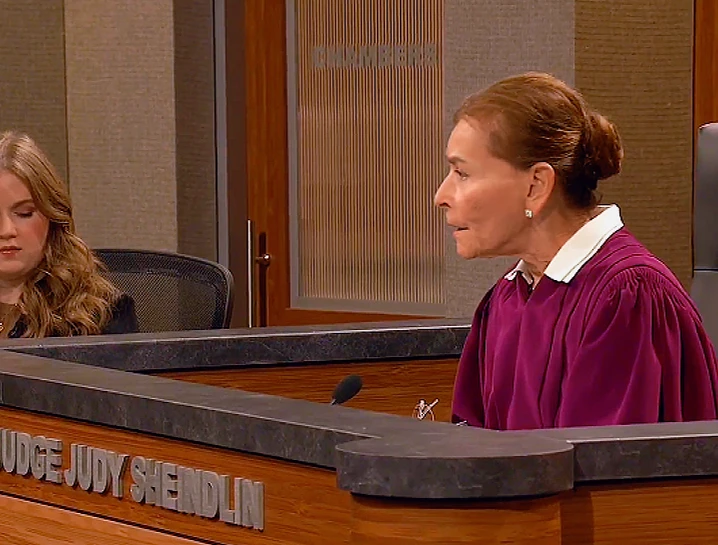
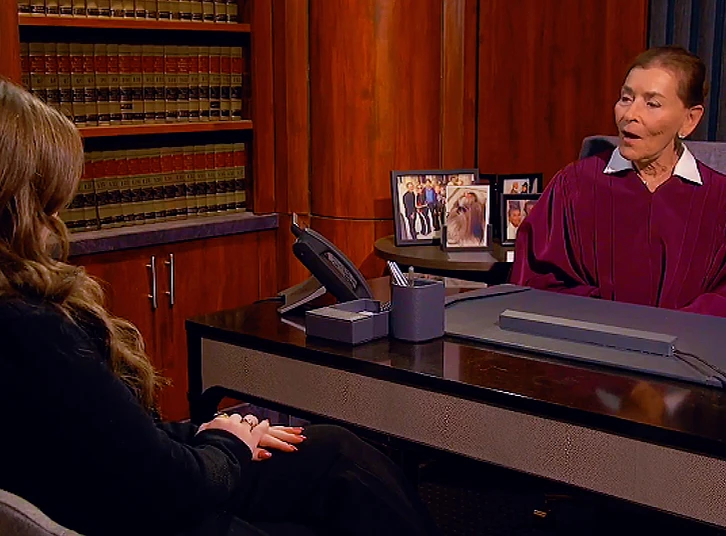
Judge Sheindlin ruled for Roger and Theresa Stone and awarded them $1,537. The amount was tied to the Stones’ claim for vehicle damage. The transcript does not establish a criminal conviction or a formal criminal hit-and-run charge; it presents a televised civil dispute and the resulting judgment.
In her closing remarks, the judge told Taylor that life is a journey and warned him not to lie to people who were smarter than he was, particularly when a stenographer was recording every word. The statement reflected the central lesson of the hearing: in a civil case, credibility can determine
Why Credibility Became the Central Issue
The Stone v. Taylor case was not defined by the severity of the damage. It was defined by the distance between the two versions of what happened.
Roger said Taylor moved into the Stones’ lane, struck the driver’s door, backed away, and continued driving after being told to pull over. Taylor said he activated his signal, changed course before crossing the center line, and never made contact. The court then heard questions about Joseph’s vantage point, an alleged offer to make repairs, a missed appointment, and Taylor’s insurance status on August 23.
The judgment did not require the audience to accept every dramatic interpretation of the dispute. It required the judge to decide which account was most consistent with the testimony and evidence described in court. A small amount of physical damage had produced a larger question about accountability.
The episode also carried a practical warning: after a collision, stopping safely, exchanging accurate information, documenting the damage, and communicating clearly can prevent a minor incident from becoming a prolonged dispute.
FAQ
What was Stone v. Taylor about?
Roger and Theresa Stone sued Dakota Taylor over vehicle damage they said resulted from a collision at an intersection on August 23. Taylor denied that his vehicle made contact with theirs.
How much did Dakota Taylor have to pay?
Judge Judy Sheindlin awarded Roger and Theresa Stone $1,537.
Did the Stones claim serious physical injuries?
No. The transcript states that they were not seeking compensation for personal injury and did not claim whiplash.
Why did the vehicles travel six miles after the collision?
The Stones said Taylor continued driving after the vehicles turned left. Theresa called 911, and a sheriff’s deputy later stopped Taylor approximately six miles from the intersection.
Who was Joseph?
Joseph was identified as Taylor’s friend and the driver who had been ahead of him. Taylor said Joseph told police that he saw the incident and observed no contact between the vehicles.
Was Taylor insured on August 23?
The transcript contains conflicting statements. Taylor said he was insured and referred to evidence showing coverage through August 31. Theresa testified that she learned from the insurer that he did not have coverage. The judge questioned Taylor about the specific date of the accident.
Was this a criminal hit-and-run case?
The supplied transcript presents a civil small-claims dispute over vehicle damage. It does not establish a criminal conviction or a formal criminal hit-and-run charge.