The courtroom fell quiet as Judge Judy examined photographs of belongings left outside a Fort Myers home. One side said the items had been removed, soaked with bleach, and damaged. The photographs, however, showed something less conclusive: property outdoors and partly covered by a tarp, but no clear proof of destruction. Behind that evidentiary dispute was a much larger family breakdown involving a crowded home, competing accounts of who had permission to live there, alleged assaults, police calls, threats, and a temporary protection order.
By the end of the hearing, neither side received the judgment they wanted. The property-damage case brought by Alud Alteme was dismissed, as was Wildane Milhomme’s counterclaim for harassment. The ruling turned not on which story sounded more painful, but on what the evidence actually established.

How a short stay became a complicated living arrangement
The case, identified in court as Alteme v. Milhomme, case 4054, began with a family connection and a house in Fort Myers. Alud Alteme, 37, told Judge Judy that he worked as a transporter. Wildane Milhomme was described as a distant relative. Their connection ran through Alud’s mother, while the property belonged to his uncle, his mother’s half-brother.

Alud said he had lived in the house since May 2021 with his twin daughters, Ezabelle and Elizabeth. He testified that he paid $300 a month for a room but did not pay the utilities. The arrangement became harder to define when the hearing moved to September 2023, when Alud and his wife were traveling for business and reconnected with his uncle.

According to Alud’s account, his uncle invited him to Fort Myers for what was initially expected to be a stay of roughly two weeks. Wildane described the arrangement differently, saying Alud was supposed to sleep in his car because he had a business trailer and nowhere to park it, then leave.
Yet Alud also acknowledged that he and his wife intended to use the Fort Myers property as their home. He said they had been moving between hotels and other locations for business. When conflict began, he said they traveled again. The central dispute was whether Alud was a temporary guest, a resident, or someone whose belongings had been kept in the house with permission.
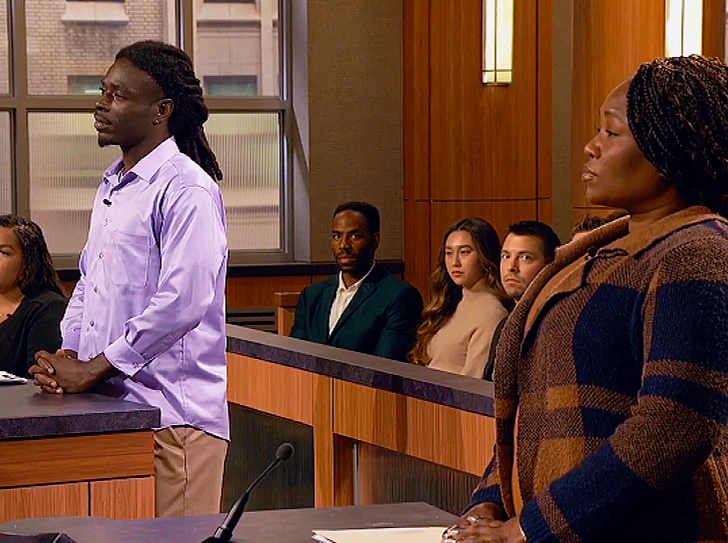
A sworn statement from the uncle was introduced during the hearing. It disputed key parts of Alud’s account, including the location of his belongings and the nature of the living arrangement. The transcript also made clear that the property was not occupied by Wildane alone. Other family members and roommates were mentioned, along with a man living in the back of the property. Judge Judy observed that three or four families living in one house was a recipe for conflict.
What happened on August 4, 2024
The most serious confrontation was alleged to have occurred on August 4, 2024, at about 10:00 a.m. Alud said Wildane assaulted his wife. Judge Judy immediately pressed him for a precise account. Alud acknowledged that he was present but had not seen the physical altercation itself.

The court reviewed a video. The discussion around the recording referred to a hand covering or reaching toward the camera or phone and to someone intervening. Wildane gave a different account of the encounter. She said Alud was forcing his wife to come and fight her, holding the camera close to her face, and provoking her. She said she told him to back off and raised her hand.
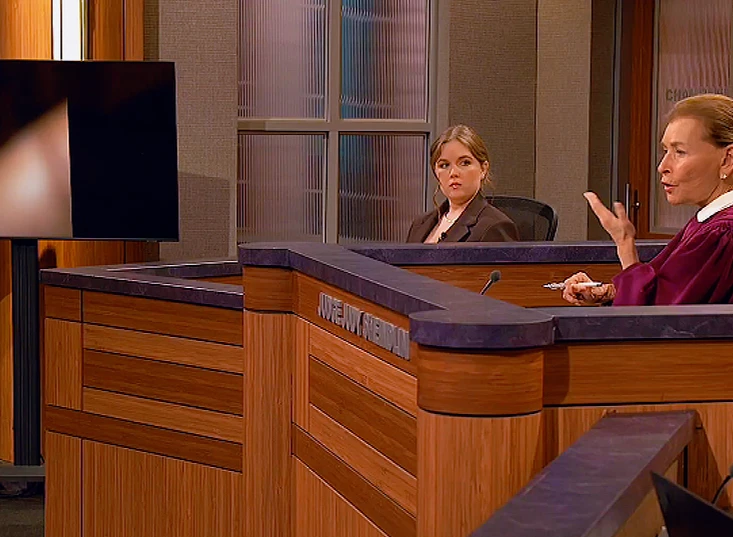
The hearing did not include photographs of an injury to Alud’s wife or a medical report documenting one. That absence mattered because the court was being asked to evaluate an assault allegation, not merely an argument. The transcript supports that a confrontation occurred and that the parties disputed what the video showed. It does not establish that Wildane legally assaulted Alud’s wife.
A second alleged assault involved Alud. He said Wildane later approached the vehicle where he was sitting and knocked on it. He refused to speak with her. When he stepped out during another confrontation, he claimed that Wildane pushed him and that the push dislocated his shoulder.

Again, Judge Judy asked for objective evidence. Alud did not have photographs of the injury and did not bring a medical report. He presented messages dated August 5, including a message attributed to one of Wildane’s daughters saying she had not realized Wildane pushed him that hard and that he was in pain. The messages formed part of the material shown to the court, but they did not provide the medical documentation Judge Judy requested.
The police calls and temporary injunction
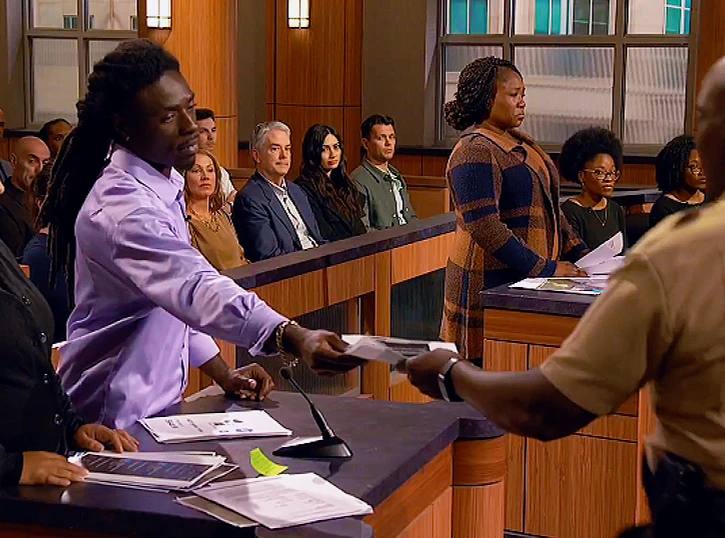
Alud testified that he called police three times. He said the first call concerned the alleged assault of his wife. The second followed the confrontation at the vehicle and his claim of a shoulder injury. The third came after an injunction had been served, when he said Wildane was parked in front of the house as he returned with children from a bus stop.
The parties also discussed a protection-related document. Judge Judy identified it as a temporary ex parte order to appear, not a final protection order. It had been extended because of a hurricane, but the related case was still ongoing. The document therefore showed temporary relief, not that the allegations had been finally proven.
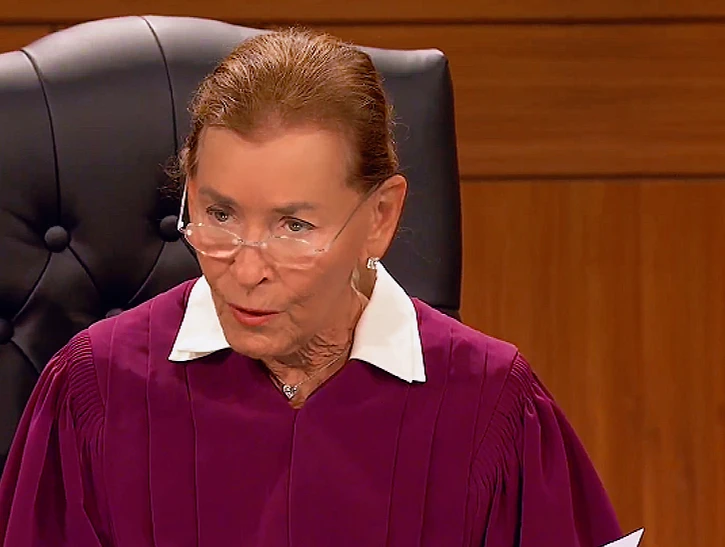
Wildane said she and her daughters had left the house because of the conflict and that she had been staying in a hotel. She also alleged that Alud threatened her life and her children, including threats to put “two bullets” in her head and to set the house on fire. Those allegations were serious. However, the civil hearing’s final decision focused on the claims before Judge Judy and did not make a separate finding that every alleged threat had occurred.

The property photographs at the center of the case
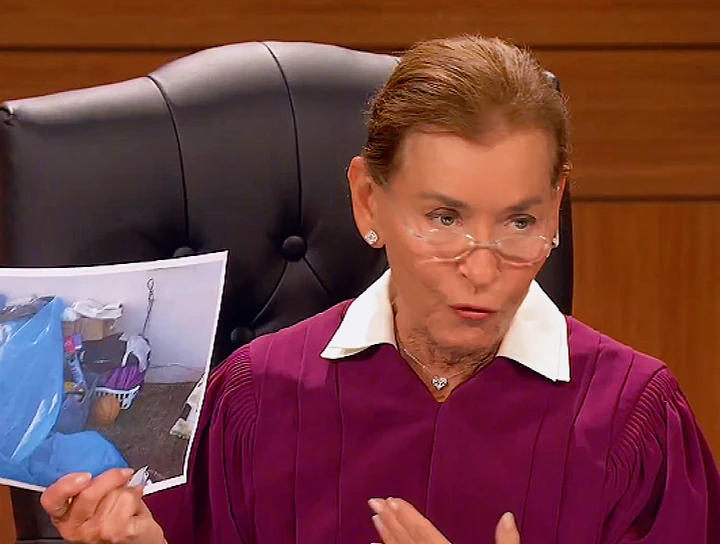
Alud’s principal claim was that Wildane had put his belongings outside the home and damaged them. He referred to bleach being poured over the property and said cameras he had installed were broken. The photographs he presented showed belongings outdoors, with some items covered by a tarp.
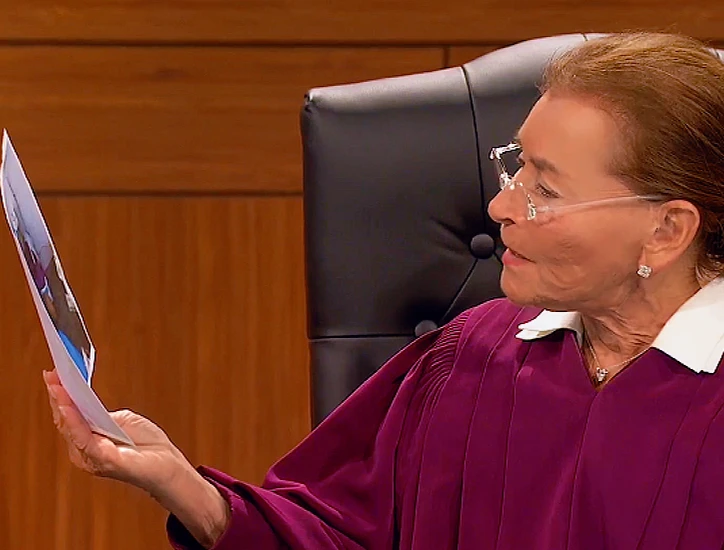
Judge Judy did not see what Alud said the photographs showed. She saw evidence that belongings had been moved, but not clear evidence of bleaching, cutting, or destruction. The distinction was crucial. Moving someone’s property can create a serious dispute, but a property-damage claim still requires proof that the items were actually damaged and that the defendant was responsible.

The police report made the gap even more visible. As read in court, it stated that the complainant’s articles had been moved by an unknown party, but that nothing had been destroyed or stolen. The officer classified the call as civil in nature because no crime had been established. The report also stated that the officer could not locate the claimed injunction at that time.
Alud argued that the report described a different occasion and that the destruction happened later. Judge Judy asked for photographs from that later event. None were produced. The judge then pointed to the central weakness in the case: Alud had photographs from a moment when the property was outside, but not photographs from the moment when he said the property was destroyed.
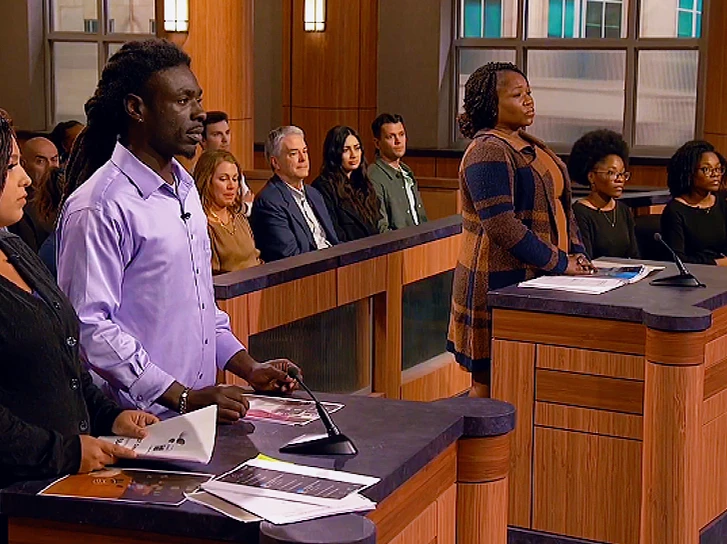
That missing record became more important than the intensity of the family dispute. A timestamped video or photograph showing the condition of the belongings before they were moved, during the alleged damage, and afterward could have created a clearer timeline. Without it, the court had an allegation, photographs of moved property, and a police report saying that nothing had been damaged or stolen.
Why Judge Judy dismissed both claims
Judge Judy dismissed Alud’s property-damage case. The ruling reflected the lack of proof that the belongings were destroyed or stolen. The police report supported the conclusion that the items had been moved.
Wildane’s harassment counterclaim was dismissed as well. The court did not find that Alud’s calls to police, by themselves, amounted to harassment. Judge Judy said he had a reason to contact police because there had been repeated conflicts in the house. At the same time, she did not declare that every allegation made by either side was true.
The final decision was narrower than the emotional arguments heard in court. It did not resolve the family relationship or prove every accusation of assault or threats. It found that neither legal claim had been sufficiently supported in the case before the court. Both claims were dismissed, and the court adjourned.
Afterward, Alud said he was satisfied with the judge’s decision and believed she could see that the other side had been lying. Wildane said the verdict was painful because her children’s belongings remained out of the house. The program’s closing discussion returned to the same issue Judge Judy had emphasized: when the dispute turns on damage, the strongest evidence is usually a clear, time-stamped record of what the property looked like before and after the alleged event.
This case is about more than a family argument. It shows how an uncertain living arrangement can produce competing versions of the truth—and how emotional force cannot replace proof.

FAQ
What was Alud Alteme suing Wildane Milhomme for?
Alud Alteme sued Wildane Milhomme over alleged damage to his personal property. The hearing also addressed his allegations that Wildane assaulted his wife and later pushed him, while Wildane filed a counterclaim alleging harassment and emotional distress.
When did the alleged assault take place?
Alud said the first alleged assault occurred on August 4, 2024, at approximately 10:00 a.m. The transcript records competing accounts and does not establish the allegation as proven fact.
Did Alud provide a medical report for his shoulder?
No. Judge Judy asked for photographs and a medical report concerning the claimed dislocated shoulder. Alud said he did not have photographs and had not brought the report.
What did the police report say about the belongings?
The report, as read in court, stated that the belongings had been moved by an unknown party and that nothing had been destroyed or stolen. It described the call as civil in nature.
Was the protection order final?
No. Judge Judy described it as a temporary ex parte order to appear. She said it had not been granted finally and that the related case was still ongoing.
What was the outcome of Alteme v. Milhomme?
Judge Judy dismissed Alud’s property-damage case and dismissed Wildane’s harassment counterclaim. Neither side received a judgment in their favor.