Across the courtroom, a mother sat beside the man she was no longer with while her own mother faced him as the plaintiff. At the center of the dispute was a one-year-old child, a pair of diamond studs, and a family relationship already under strain. The grandmother said her former son-in-law owed her for the earrings, a laptop, and alleged harassment. Then Judge Judy began checking the dates—and the central accusation met an immediate problem: the earrings were said to have disappeared before they were placed in the child’s ears.
A Family Dispute Enters the Courtroom
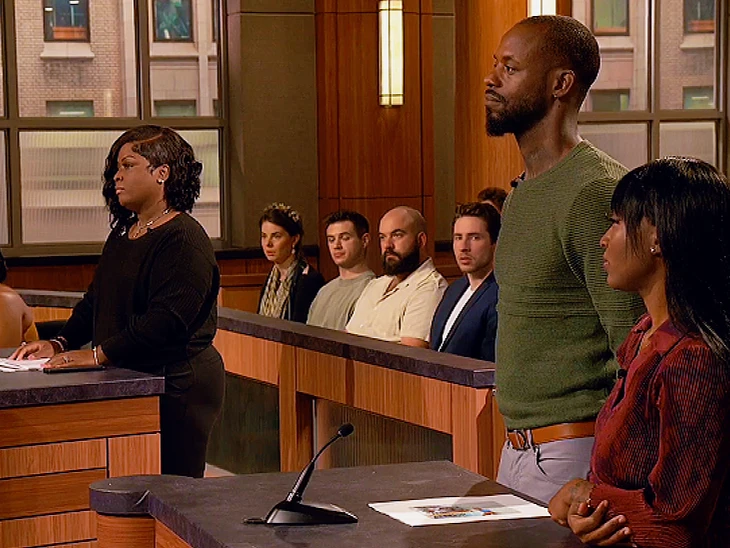
Latoya Clemons Mosley sued her ex-son-in-law, Ronald Council, over three connected claims: the cost of diamond earrings, the value of a laptop, and alleged threats and harassment. Her daughter, Jamiesha, was also present, seated on the defendant’s side of the courtroom. That arrangement immediately suggested that the case was not only about property. It was also about a strained family relationship surrounding a young child.

The child was approximately one year old and had been born on August 3, according to the testimony. Jamiesha and Ronald were separated, although they were still married, and their arrangements for seeing the child had become difficult. At the time of the events discussed in court, Jamiesha was living with the child at her own grandmother’s residence—Latoya’s mother’s home—while communication among the adults had deteriorated.

Judge Judy quickly narrowed the hearing. The history between Jamiesha and Ronald, including the disturbance that Latoya said had contributed to the separation, was not the issue before her. The court was focused on three narrower questions: whether Ronald had taken Latoya’s property, whether the laptop could be identified as hers, and whether Latoya could prove harassment directed at her personally.
The Earrings and the First Broken Timeline
The central dispute can be understood through the dates presented in court:
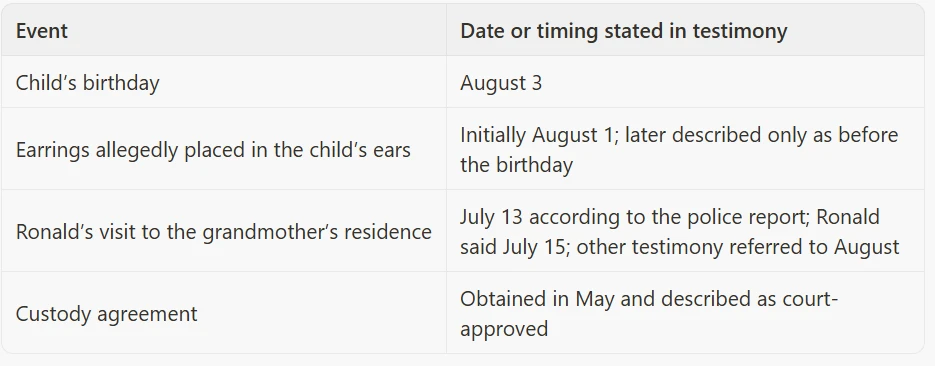
The dates determined whether Ronald could have been responsible for the missing earrings. Latoya said she placed small diamond studs in the child’s ears to keep them open after piercing. She initially identified August 1, when Jamiesha brought the baby to her home before the birthday. Latoya said she gave permission for the earrings to remain until photographs were taken or another pair was purchased. Jamiesha confirmed that the earrings were present in photographs from the August 3 birthday celebration.
The difficulty began when the court examined the date on which Ronald took the child from the grandmother’s residence. Ronald identified July 15. The police report attached to the case referred to July 13, a Saturday. Latoya had also mentioned August 4 when discussing the report, while other answers placed the incident in August. The dates did not align, and the record became even harder to follow when Latoya continued to say that the earrings had been put in before the birthday.

Judge Judy returned to the contradiction directly. If the earrings were placed in the child’s ears on August 1, she asked, how could they have gone missing when Ronald took the child on July 13 or July 15? July comes before August. Latoya acknowledged that the dates had been mixed up and moved back to the broader claim that the earrings had been placed before the child’s birthday. That explanation preserved the general sequence, but it did not establish the date of the alleged loss.
The issue was not whether a one-year-old could remove earrings. It was whether the evidence showed when the earrings were inserted, when the child left with Ronald, and whether he had taken the studs at all.

Ronald said he did not remember the child wearing earrings when he picked her up. He described taking her to buy clothing and later noticing that the earrings were gone. He bought new gold hoops, but the testimony also showed that the child had received several pairs during the year, including earrings bought for Easter. The adults could not consistently identify which pair was being discussed.
Latoya ultimately acknowledged that she had no proof Ronald possessed the diamond studs. Judge Judy concluded that there was no persuasive basis to find that he had stolen them.

A Custody Agreement Changes the Context
The hearing also examined Ronald’s visit with the child. Jamiesha testified that a custody agreement had been obtained in May and approved by a judge. Ronald was expected to complete classes and have a supervisor involved. Ronald confirmed that supervised visitation had been part of the order, but said he understood the matter had later been closed out. He went to the grandmother’s house in July without arranging the visit, explaining that Jamiesha had blocked him.

Ronald maintained that he was allowed to have the child and said his sister accompanied him as a supervisor. Jamiesha, however, said she did not know he was coming and described the visit as unexpected. Judge Judy did not rule in this hearing that Ronald had no right to see his child. Instead, she focused on the manner in which he went to the residence and told him that arriving without coordinating the visit was probably not a smart decision.
The property dispute therefore unfolded inside a custody conflict. Ronald’s visit occurred under a court-approved arrangement amid a breakdown in communication.

The Laptop Claim Remains Unproven
Latoya’s second property claim involved a laptop. She said the computer had been in Jamiesha’s home when Jamiesha went into labor. According to Latoya, Ronald later left the residence and took everything from the house. She argued that the laptop was among those items.

The testimony complicated ownership. Latoya said the laptop was hers, but it had been in the possession of her nineteen-year-old son, who had been staying at Jamiesha’s home. Jamiesha described a family laptop that might have been shared by her mother and brother, and recalled that her brother had a bag of belongings when he took her to the hospital.

Ronald denied taking the laptop. Jamiesha testified that Ronald removed items from the home when he decided to leave, but she did not establish that the laptop was among the property he took. Judge Judy repeatedly separated the broad claim that “everything” had been removed from the specific allegation that Ronald took this particular computer.
A police report did not solve the problem. Judge Judy reviewed one document that referred to events from 2023, including an August 4 incident, and said it did not concern the 2024 matter being discussed. A second report was connected to the July incident, but it still did not specifically identify a computer. Without evidence linking Ronald to the laptop, the claim remained an assertion rather than a proven loss.
The Harassment Allegation Turns Toward Family Boundaries
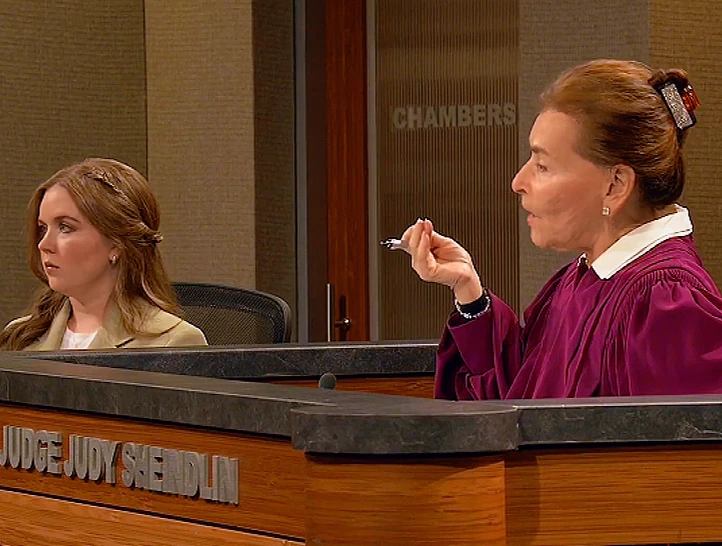
Latoya also requested punitive damages for threats and harassment. When asked whom Ronald had threatened, she answered that it was her whole family. Judge Judy redirected the question: the plaintiff had to explain how Ronald threatened or harassed her, with a specific date, time, and place.
Latoya identified August 3, 2023, at her daughter’s home, but she could not provide a specific time. The date was also the child’s birthday. Judge Judy made clear that the 2023 incident was not the subject of the property claims being heard and pressed Latoya to separate her concerns about the family from conduct directed at her personally.

The judge then addressed the broader family dynamic. Latoya clearly cared about her granddaughter, but Judge Judy warned that interfering in the relationship between the child’s parents could jeopardize the grandmother’s ability to remain connected to the child. The warning was framed as a practical consequence, not as a finding that Latoya’s affection for the child was improper. A grandparent seeking a continuing relationship with a grandchild, the judge explained, must maintain workable relationships with both parents whenever possible.
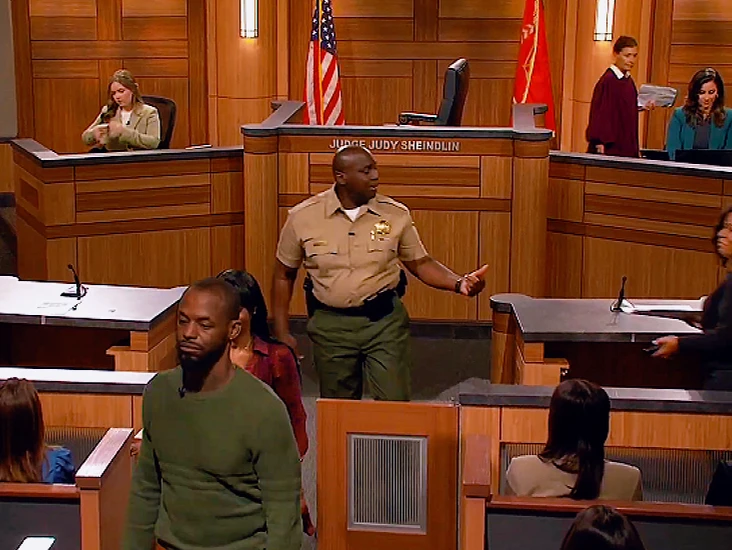
The hearing ended without persuasive proof that Ronald had stolen the earrings or the laptop, and without a sufficiently specific harassment account against him. Judge Judy told Latoya to stay out of the couple’s domestic affairs, warning that she could put her relationship with her granddaughter at risk by taking sides in the parents’ conflict. The bailiff then announced that the court was adjourned.
What the Case Ultimately Revealed
The courtroom dispute was framed around objects, but its deeper conflict involved access, control, and fractured family communication. Latoya said she wanted compensation for earrings her husband had bought her and for a laptop she said belonged to her. Jamiesha described the separation and the custody arrangement from her position as the child’s mother. Ronald insisted that he had not taken the disputed property and explained that he had been focused on seeing his daughter.

The strongest lesson from the testimony was evidentiary. A claim required a coherent timeline, clear ownership, and proof connecting Ronald to the alleged loss. None of those elements was established convincingly. The post-hearing discussion added a personal warning: when relatives move into a conflict between parents, they may place their relationship with the child at risk. Neutrality and restraint could matter more than the value of either disputed item.
FAQ
Did Ronald Council steal the diamond earrings?
The testimony did not establish that Ronald Council stole the diamond earrings. Latoya Clemons Mosley admitted that she had no proof he possessed them, and Judge Judy found the timeline inconsistent.
Why did the earrings timeline matter?
Latoya said she placed the earrings in the child’s ears on August 1, while Ronald’s visit to the grandmother’s home was linked to July 13 or July 15. Because July precedes August, the dates could not support the claim as presented.
What happened to the laptop?
The hearing did not determine that Ronald took the laptop. The testimony raised uncertainty about whether the computer belonged to Latoya or her son, and no evidence specifically connected Ronald to its removal.
Was there a custody agreement?
Jamiesha testified that a custody agreement had been obtained in May and approved by a judge. She said Ronald was expected to complete classes and have supervised visitation or an intermediary involved.
What was the main lesson from the case?
The case emphasized the importance of proof, accurate dates, and maintaining reasonable communication between adults when a child is involved. The court also warned against interfering in the parents’ relationship.