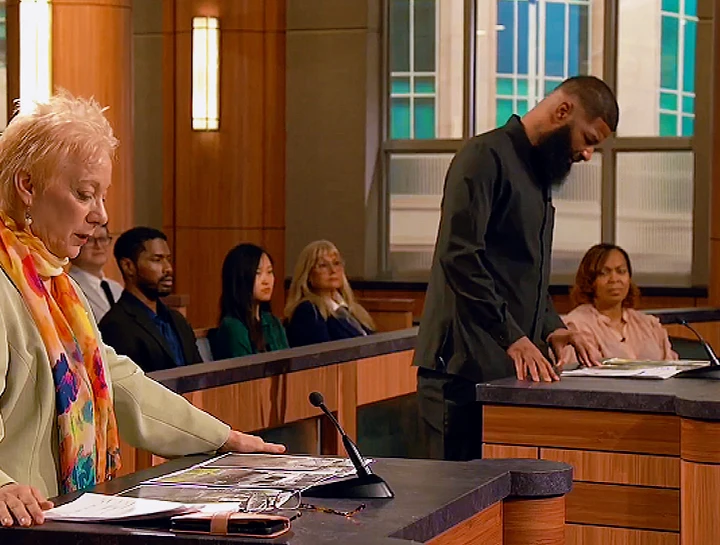
In a photograph shown to the court, Marice Johnson’s daughter appeared to look toward the front yard, unable to play there because of the conditions her father described. For Johnson, the problem was not cats in the abstract; it was feces on his property, the disruption to his family, and a neighborhood dispute that had moved from adjoining yards into court. For Jean Galliano, the cats were animals she had spent years feeding, sheltering, treating, and trying to relocate. In Judy Justice case 411, those competing claims collided over a basic question: when does compassion for animals become a burden imposed on a neighbor?
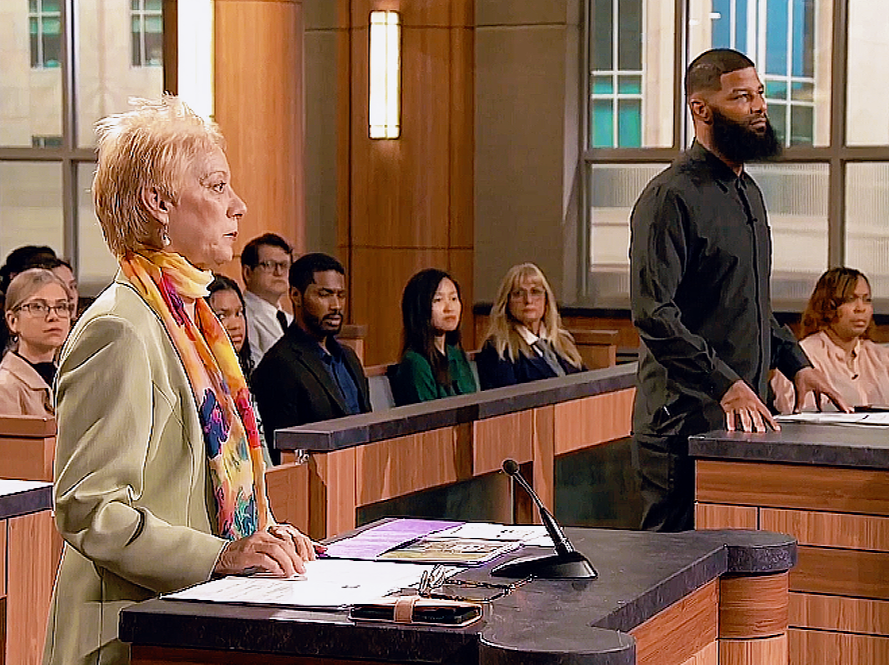
A dispute between adjoining Philadelphia homes
The case began with a property history that mattered to both sides. Jean Galliano told the court that she inherited her Philadelphia home from her father in 2005. Marice Johnson said he bought the neighboring home on December 18, 2019. The properties were row homes, close enough that activity in one outdoor space could affect the other.

Galliano lived alone. She acknowledged having two cats indoors and nine outdoors. The outdoor animals, she said, were feral cats associated with a community-caretaker effort rather than pets that belonged to her personally. She described herself as a registered caretaker and said the animals had been treated and released through animal-control efforts.
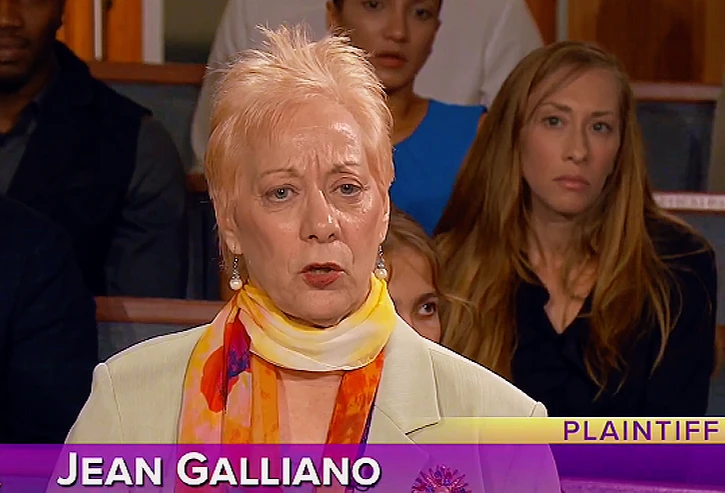
The distinction became central. Galliano maintained that the outside cats were not hers. But she also acknowledged that she provided them with outdoor housing and food. Judge Judy’s reasoning was direct: if someone feeds cats and builds shelters for them, that person may not be able to avoid responsibility for the effect those animals have on nearby property simply by calling them feral.
The cats, the shelters, and the complaint
Galliano’s complaint accused Johnson of property damage, trespassing, and harassment. She said he damaged some of the outdoor cat houses and attempted to dig up a tree. She also objected to his entering her property and dismantling structures connected to the cats.
Johnson filed a counterclaim. He sought compensation for fencing costs and property damage, including the removal of a tree and the destruction of cat shelters. The conflict was therefore not only about animals. It involved the physical boundary between two homes, the use of shared-looking outdoor spaces, and the question of who had the authority to alter objects near the property line.

Galliano told the court that she cleaned up after the cats, raked the lawns, and swept the area. She said Johnson never sat down with her to explain that he had a problem. In her account, his first meaningful response was to tear up the area rather than speak to her.
Johnson gave a different timeline. He said he had spoken to Galliano about the cats, explaining that his family did not want them on their property. He mentioned that he had a newborn at the time and wanted his daughter to be able to enjoy the front lawn as she grew older.

When the lawn became the center of the conflict
Johnson described the practical impact of the cats in stark terms. While mowing his lawn, he said, the machine stirred up cat feces and turned the area into what he called a dust field. He said he contacted L&I, the authority he identified during the hearing as involved in the complaint. According to his testimony, Galliano was ordered to remove the feces from his yard every day or face fines.
Galliano confirmed that she had begun cleaning both lawns. That admission created an uncomfortable moment in court. Judge Judy pointed out that raking and cleaning Johnson’s lawn meant Galliano had been on his property. Galliano responded that she had been asked to do so, but the judge still treated the admission as evidence that the boundary between responsibility and trespass had become blurred.
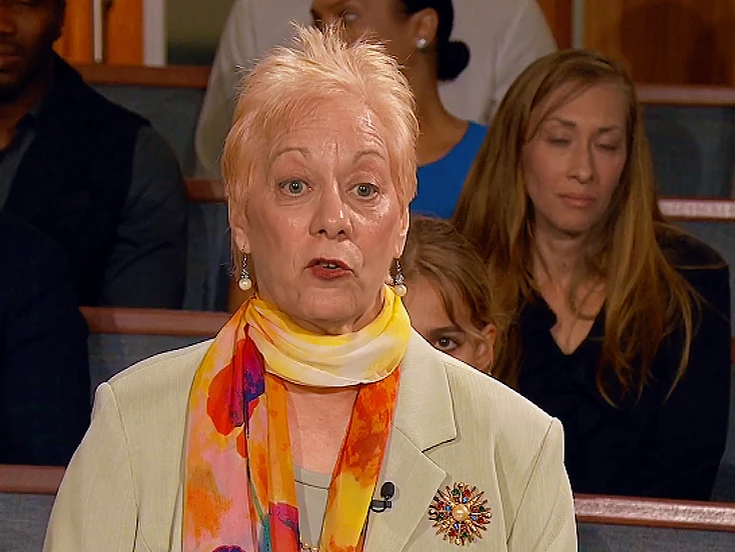
The dispute also involved a young child. Johnson said his four-year-old daughter, who would soon turn five, could not play outside because of the feces. Judge Judy framed the issue as a conflict between animal care and a family’s ability to use its own property.
“As soon as your passion starts to impact somebody else, it becomes a community problem.” — Judge Judy, as transcribed in the episode SRT.
Galliano said she had contacted shelters, sanctuaries, working-cat programs, and animal-control resources to move the cats. She said she had found homes for some, arranged adoptions, and taken many to animal control. She also said she had been feeding them since 2005 without complaints from other neighbors.
For Johnson, that effort did not resolve the immediate problem. The court returned to the same point: good intentions did not give Galliano the right to allow conditions that interfered with another family’s property.
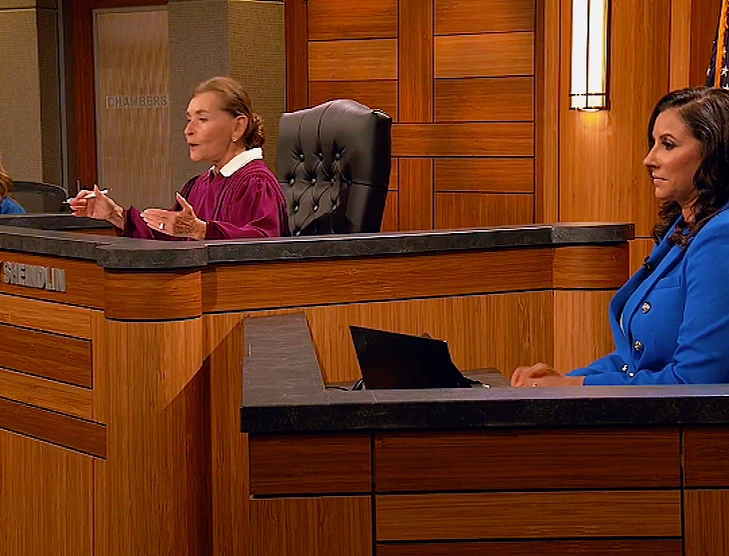
Video evidence and the property-line dispute
Galliano said Johnson had entered her property and broken things apart, and offered video proof. The court viewed footage of him banging on and breaking up cat houses, along with “before” and “after” images.
Judge Judy challenged Galliano’s description of the shelters. If the cats were not hers, why did she have shelters for them? Galliano answered that she was part of a community-caretaker program. She maintained that some shelters were insulated and made of solid wood.
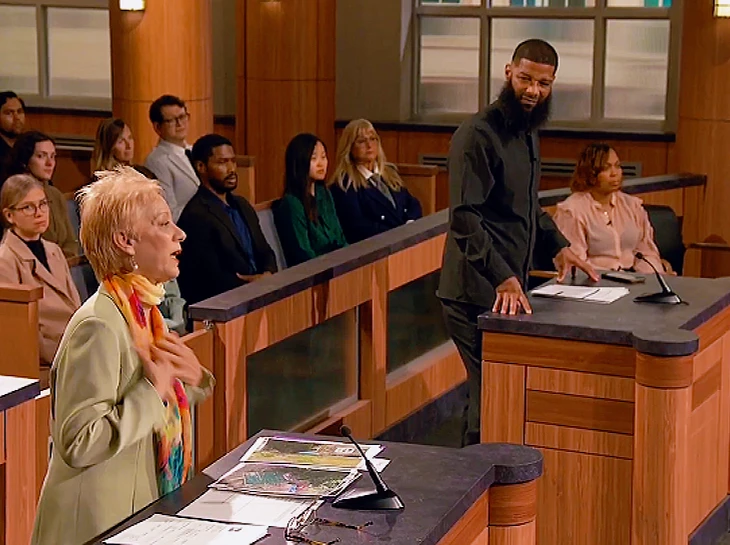
The property-line issue became even more complicated when the parties discussed a tree. Johnson said he paid to have a tree removed because it stood in front of his house, near a dumpster. Galliano argued that the tree had originally been planted on her property, later grew toward the boundary, and became situated on the property line. Johnson acknowledged that he did not have documentation establishing the exact line; he had records of what he paid for.
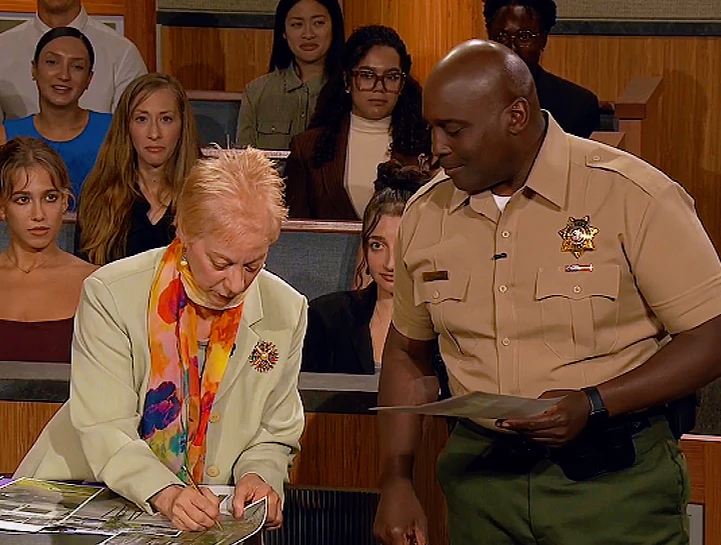
Judge Judy asked Galliano to mark the alleged boundary on a diagram. The exchange grew tense as Galliano tried to explain the placement of the tree and a replacement tree. The judge repeatedly instructed her to answer the narrow question about the line.
The ruling: 50 cents and $2,000
In the final stage of the hearing, Judge Judy said Galliano had been placed on notice that Johnson did not want the cats on his property. The judge acknowledged that Galliano appeared to care about the animals, but said five years was too long for an unresolved problem affecting a neighboring family.
Judge Judy suggested that Galliano move to a larger, more rural property where she could continue her work without imposing the same conditions on adjacent homeowners. The judge emphasized that caring for animals was not the issue by itself. The issue was allowing that passion to become another person’s burden.
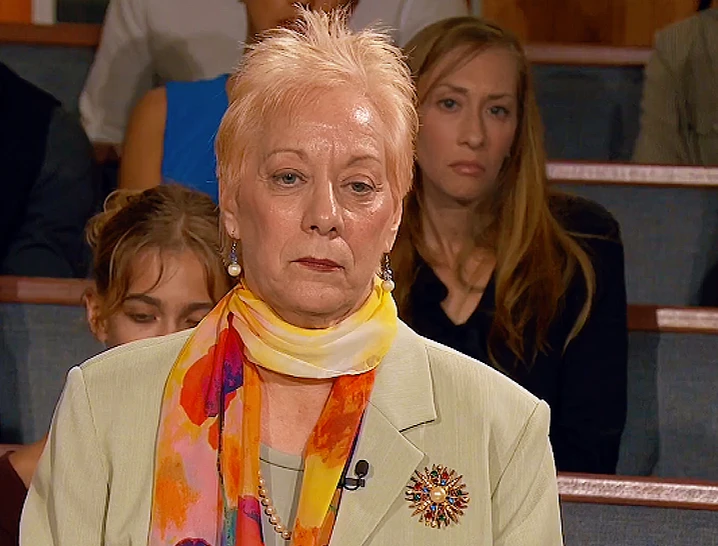
On Galliano’s complaint, the court awarded her 50 cents. On Johnson’s counterclaim, the court awarded him $2,000. In the post-ruling comments, Johnson said he did not object to cats generally; he objected to nine or ten cats on his property and feces on the front lawn. He and his wife described the result as a victory for common sense. Galliano said she had compassion for the animals and had taken responsibility because she wanted them to survive. She also said she had not understood the extent of the neighbors’ problem because other neighbors had not complained.
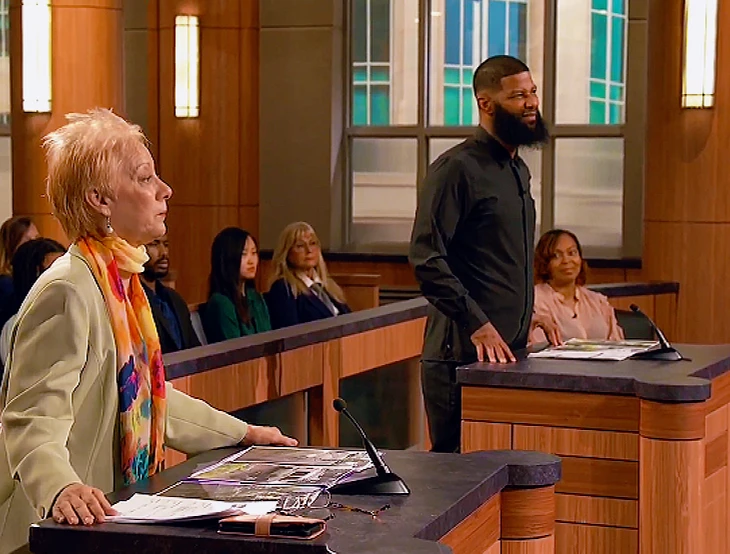
The case did not present a simple villain. It showed a caretaker who believed she was helping vulnerable animals and a family that wanted to use its own yard without contamination or disruption. But the ruling made the court’s priority clear: private property and a child’s access to a safe outdoor space could not be subordinated indefinitely to an animal-care mission.
What the case revealed
The Galliano-Johnson dispute escalated because the parties appeared to experience the same space in fundamentally different ways. To Galliano, the outdoor area was part of a long-running effort to shelter and relocate cats. To Johnson, it was part of his home, where his daughter should have been able to play.
The court’s resolution rested on impact rather than intention. Galliano’s motives may have been compassionate, but the testimony established that the cats entered Johnson’s property and left feces there. The court also heard that authorities had required cleanup. Those facts moved the dispute beyond a disagreement over aesthetics or personal preference.
A good cause does not erase a neighbor’s rights. In a dense row-home setting, responsibility must account for neighbors as well as animals.