This article examines two separate cases, presented one after the other in the same courtroom episode. The first began with an evening that was supposed to preserve a milestone: four young women dressed for a formal debutante ball, surrounded by family, ceremony, and the promise of photographs they could keep. Instead, the event became the center of a dispute over dark video, a missing winter-wonderland backdrop, and a $500 payment.
The second case involved a former relationship and a different kind of record: a used car, a bill of sale, vehicle registrations, years of unpaid work, and a $4,200 counterclaim. Although the disputes were unrelated, Judge Judy had to apply the same basic approach in both: look past frustration and personal history to determine what the documents and testimony actually established.
Case One: A formal event and an unhappy client
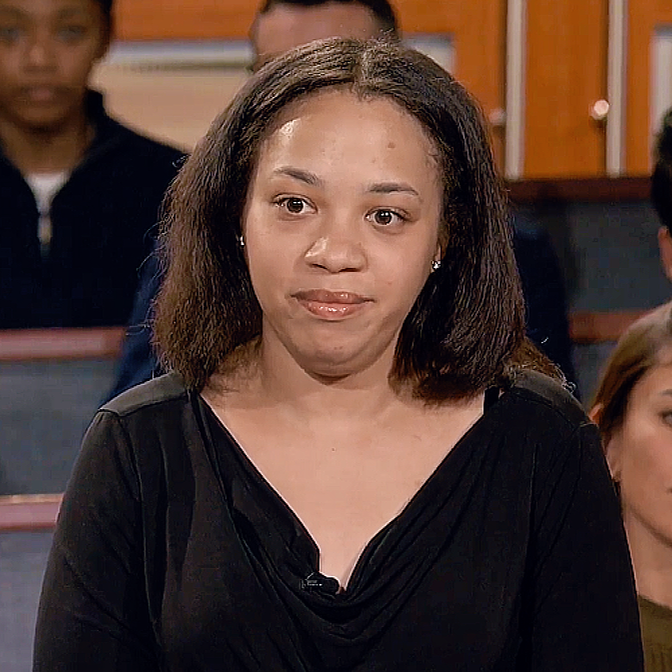
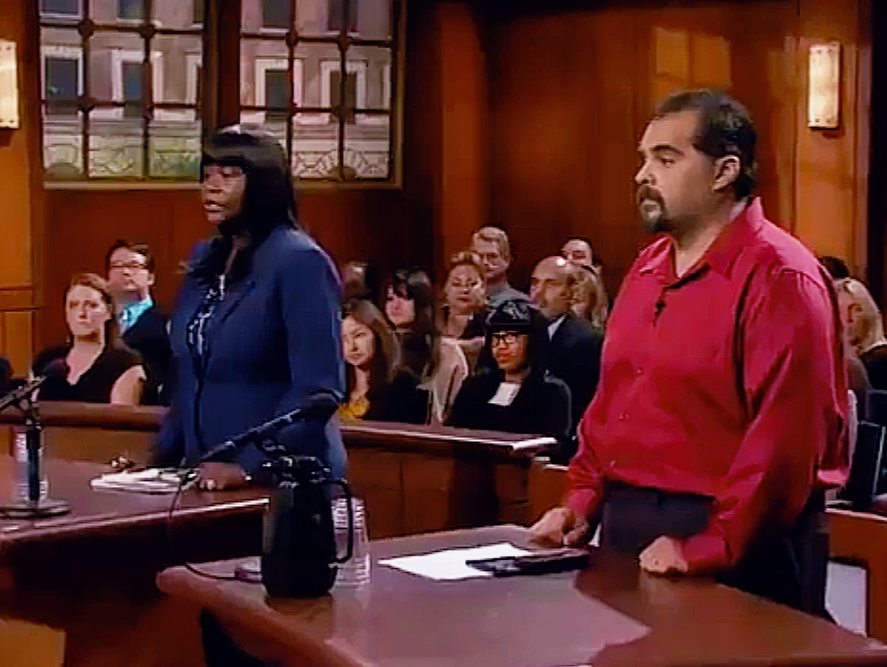
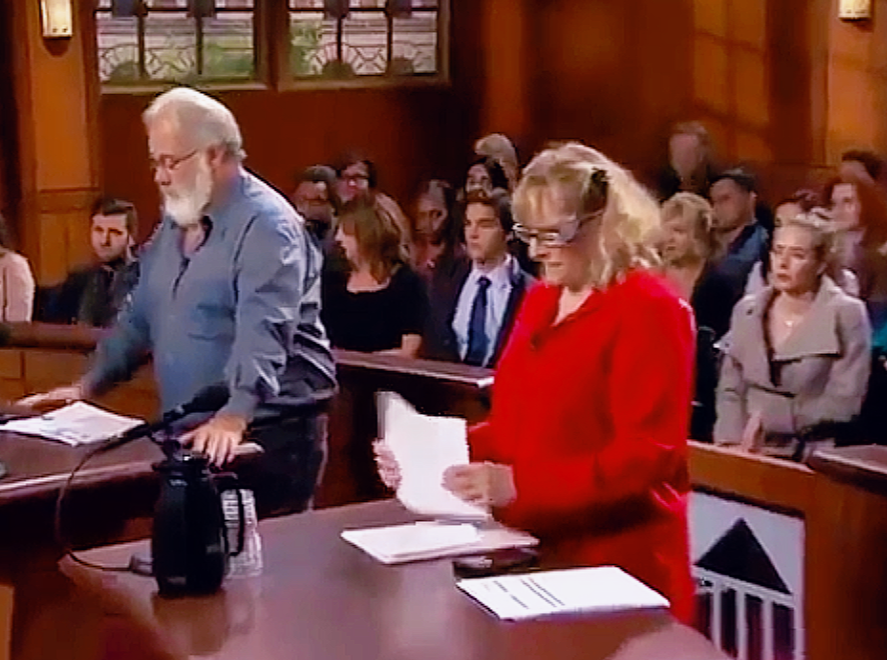
The first case began with Kimberly Williams explaining the purpose behind the event at the heart of her complaint. She ran a nonprofit 501(c)(3) program for high-school girls. The program included academic workshops, etiquette instruction, and scholarships. It lasted through the school year and ended with a formal ball at which the participants were presented.
The previous year, four girls had enrolled. Each had paid a $400 registration fee. For Williams, the ball was not simply a party. It was the culmination of a year-long program and an occasion that families would want to remember.
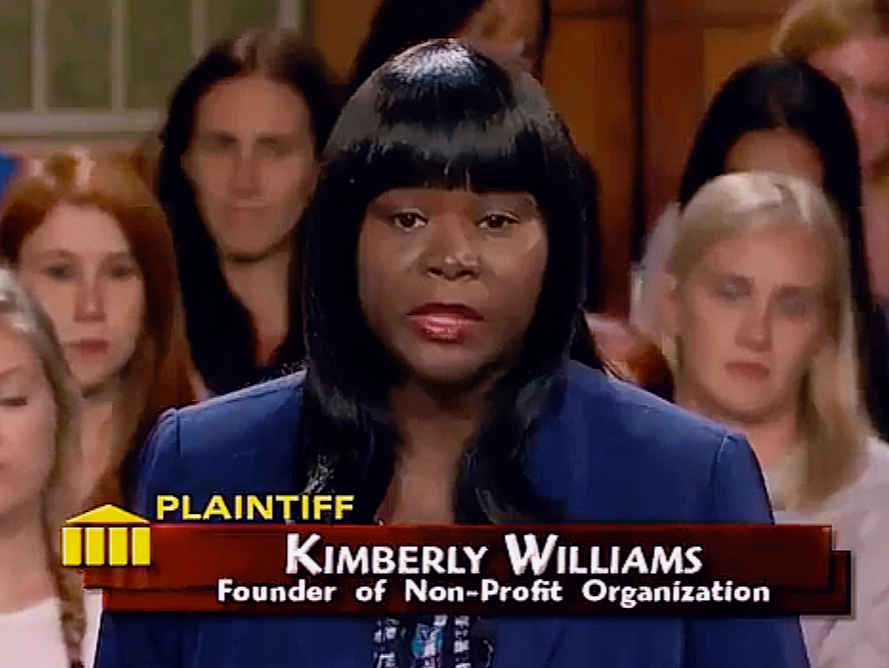
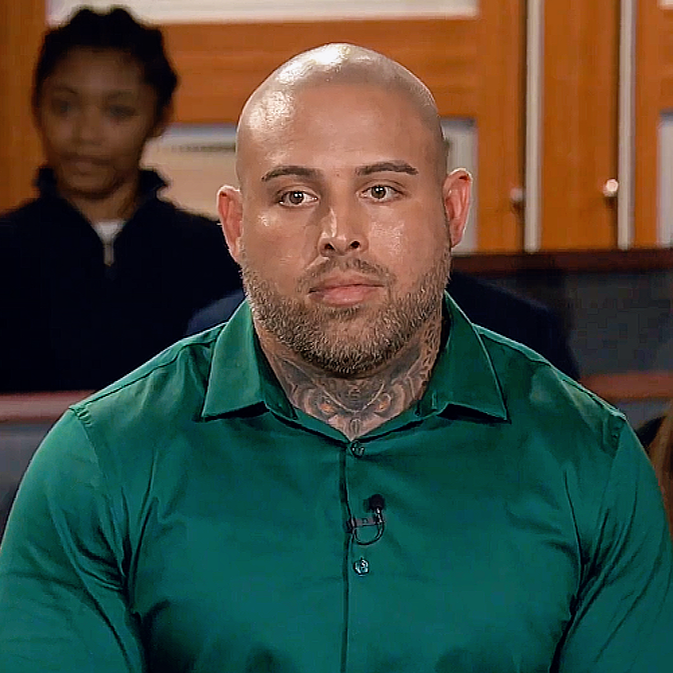
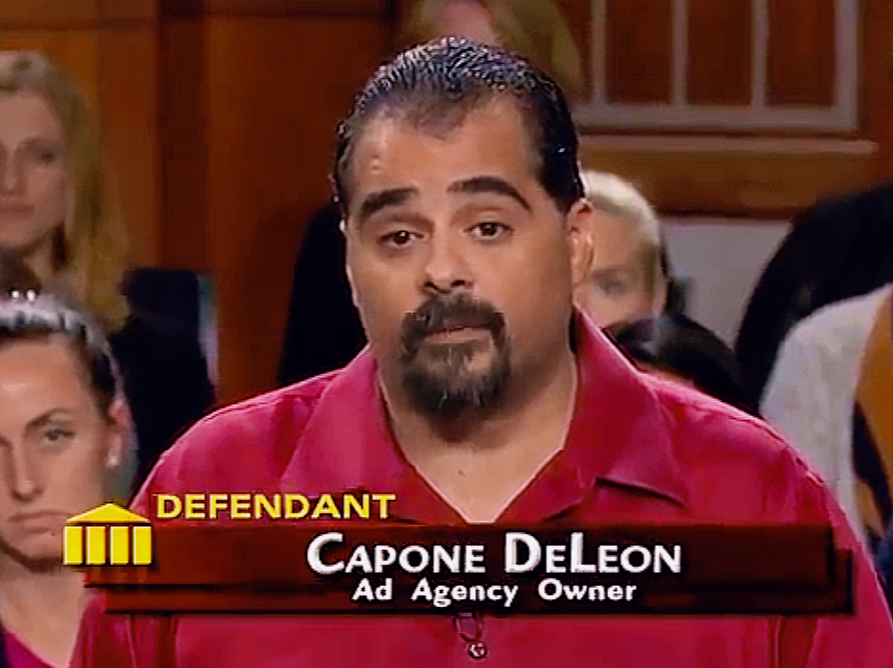
She hired a photographer to provide still photographs and video of the event. The episode’s opening identification refers to the photographer as Capone De Leon. The courtroom caption identifies the case as Williams v. De Leon, and the hearing refers to the defendant as Mr. De Leon. Because the supplied SRT uses both identifiers, this article preserves that distinction rather than guessing which name should replace the other.
Williams paid $500 for the photography and video package. She did not dispute that the photographer came to the ball. He took pictures and recorded video of the four girls. Her complaint was about what she received afterward and whether the promised finished product had been delivered.
The most obvious problem was the background. The photographs were taken against green. Williams said she had paid for a winter-wonderland background and expected the final images to appear with that presentation. She also expected parents to be able to purchase photograph packages connected to the event.
That expectation gave the dispute a practical consequence. These were not merely photographs Williams planned to keep privately. She believed they were supposed to be polished, saleable images for the families who had attended the ball. In her view, the green background made the work look unfinished and unsuitable for a professional event package.
The quality of the video
Williams also objected to the video. In court, a clip was shown of the debutantes dancing. She described the footage as very dark, with considerable movement and blurring. The still photographs and the video, she said, were both below the standard she had expected.
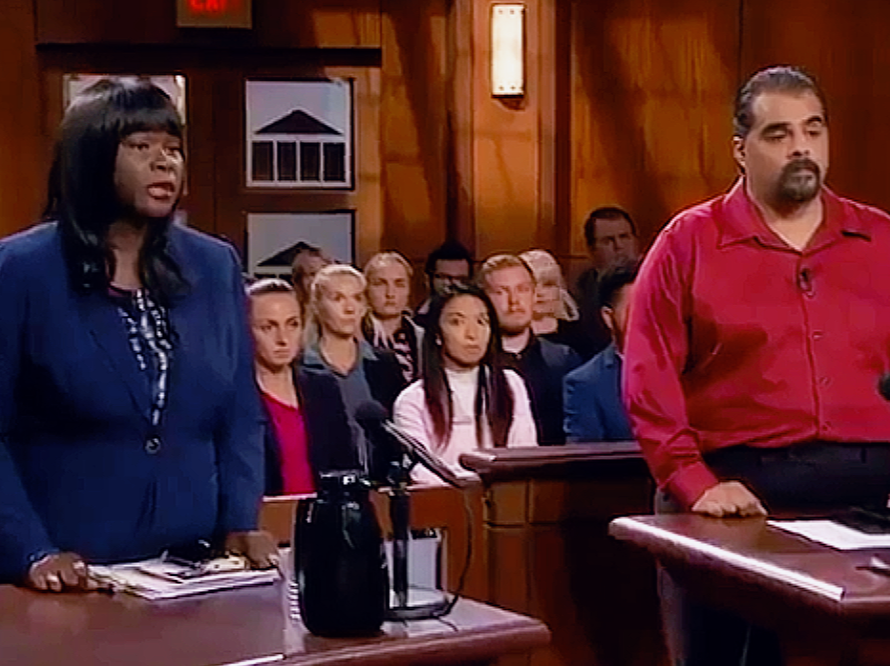
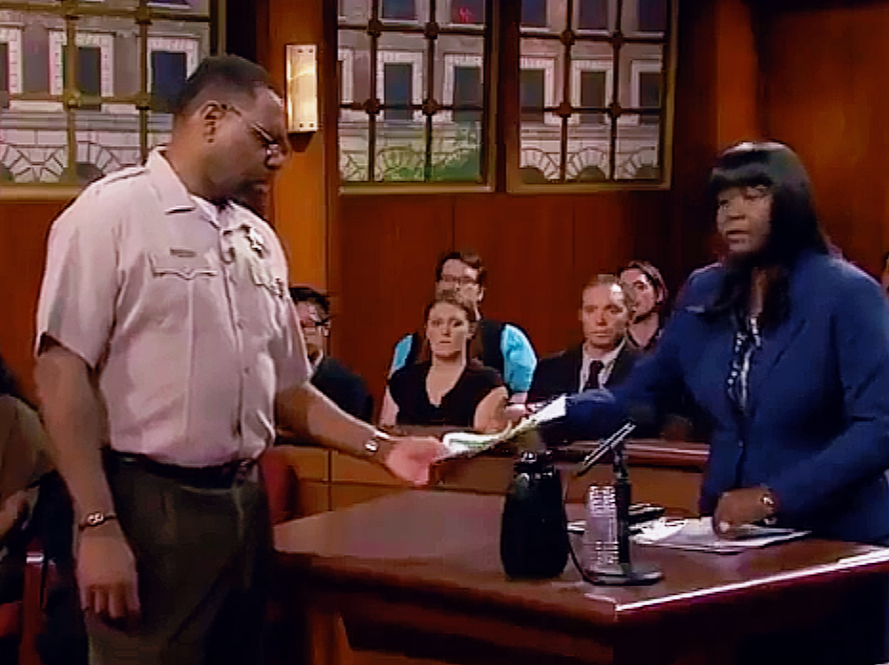
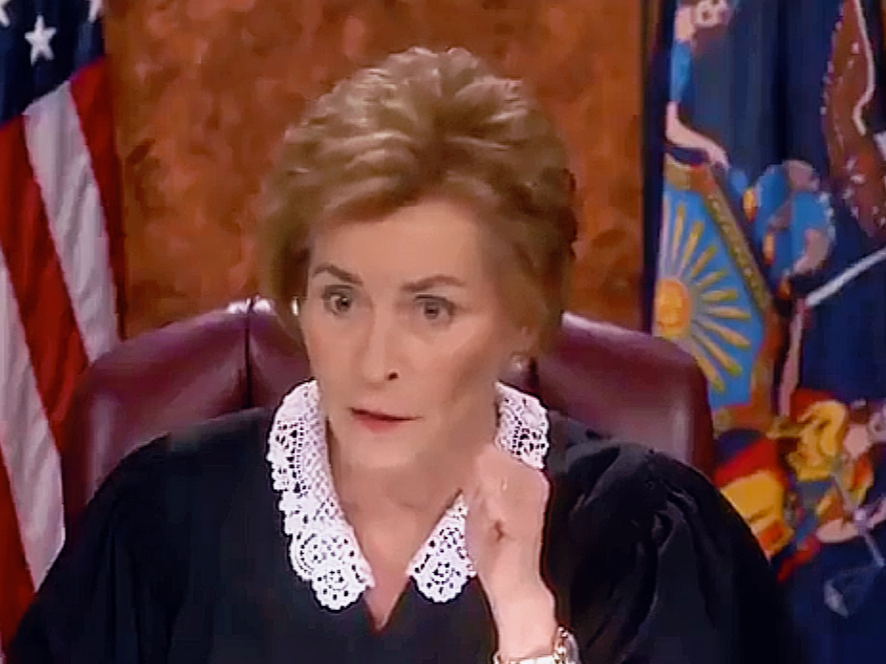
Judge Judy watched the material herself. The exchange was direct. Williams explained what she believed was wrong, but the judge wanted to examine the evidence rather than rely only on a description of it.
The dispute was already becoming more complicated than a simple complaint about poor photography. It involved the original agreement, the planned editing process, the use of an online gallery, and a last-minute problem with the backdrop.
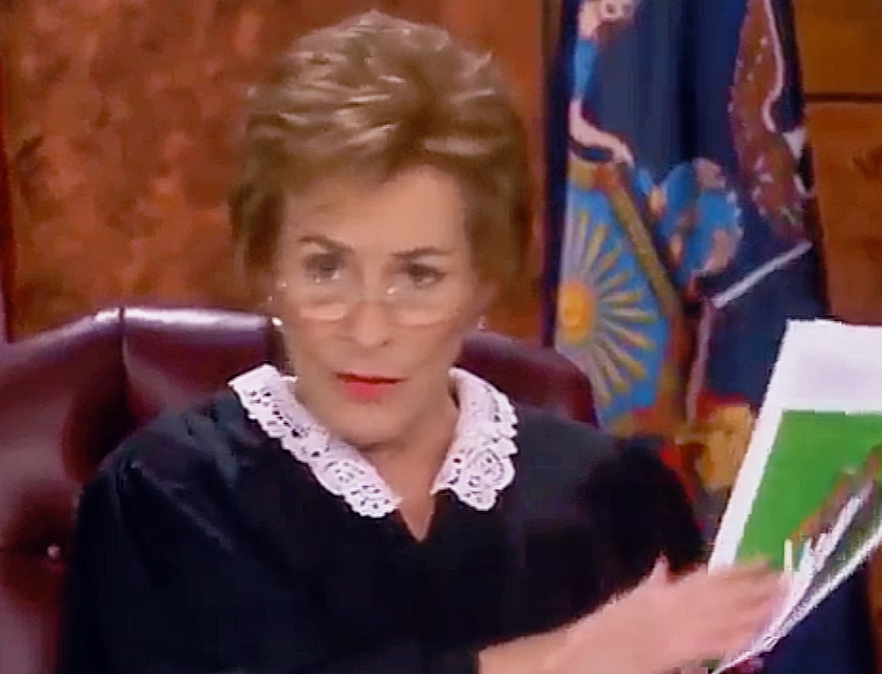
The backdrop that never appeared
Mr. De Leon offered a different account of what had happened. The original backdrop was supposed to be purchased from Amazon. According to his explanation, it was coming from China, and the deposit had not been made until close to the event. The backdrop was therefore unavailable when the ball took place.
He said he had offered an alternative. The girls could be photographed against a green screen, and the background could later be replaced during editing. He described a two-step process. First, the images would be edited in Adobe Lightroom to improve their colors and appearance. Then, the images would be placed online, where customers could view them and order packages with the appropriate backgrounds.
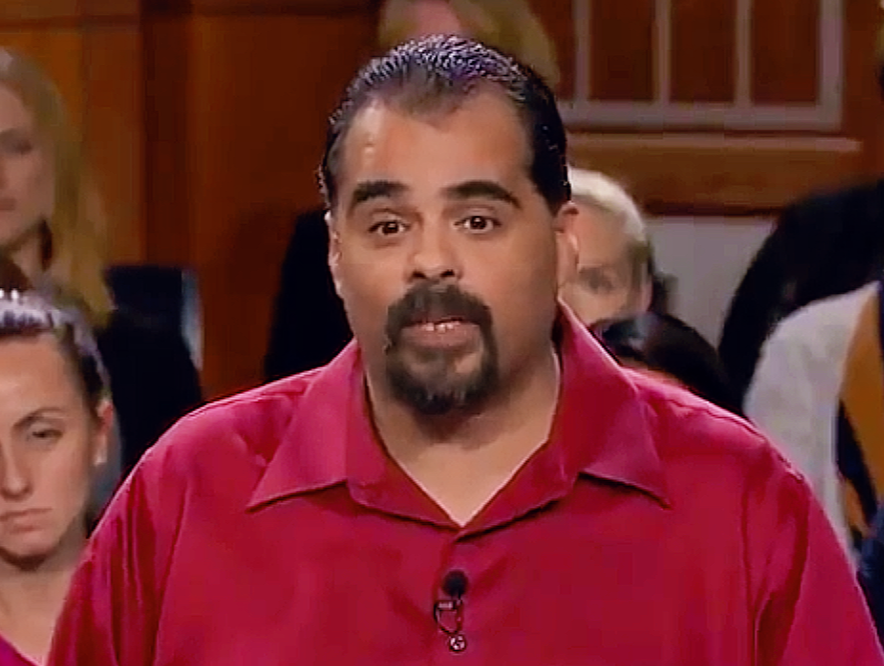
That second step never happened. De Leon said Williams instructed him to stop putting the photographs online. Williams said he had never been told that online publication had to happen before the background could be changed. She believed the photographer had agreed to put the photographs on the winter-wonderland backdrop she had paid for and to have packages available on the night of the production.
The disagreement therefore rested on two different understandings of the same service. Williams believed the backdrop and the opportunity for immediate purchases were part of the finished package. De Leon described those steps as part of a process that could not be completed after Williams stopped the online posting.
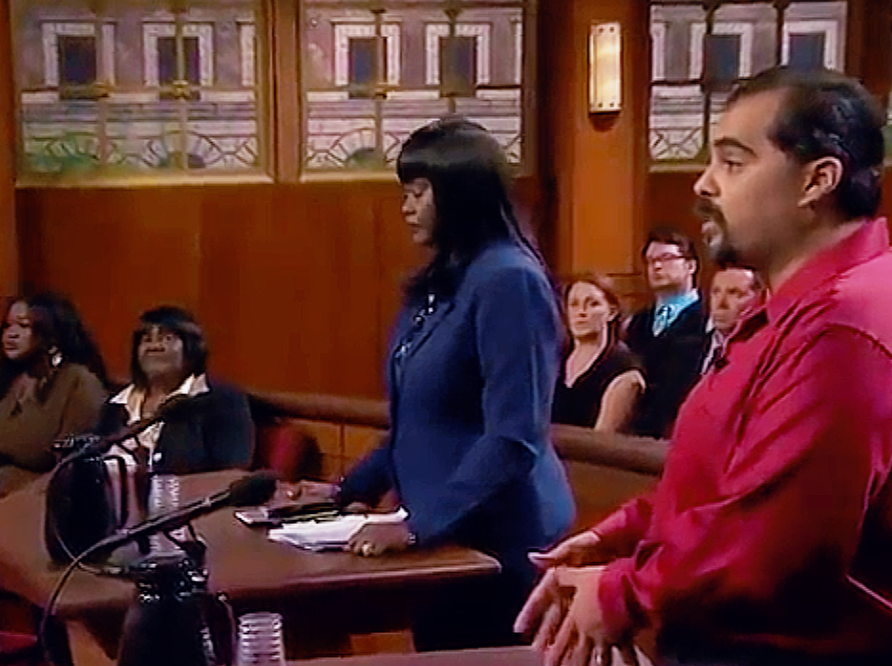
The timing also mattered. Williams said she paid a $200 deposit on June 10, while the event took place on June 26. She noted that she had been communicating with De Leon since March, but the deposit was made only 16 days before the ball.
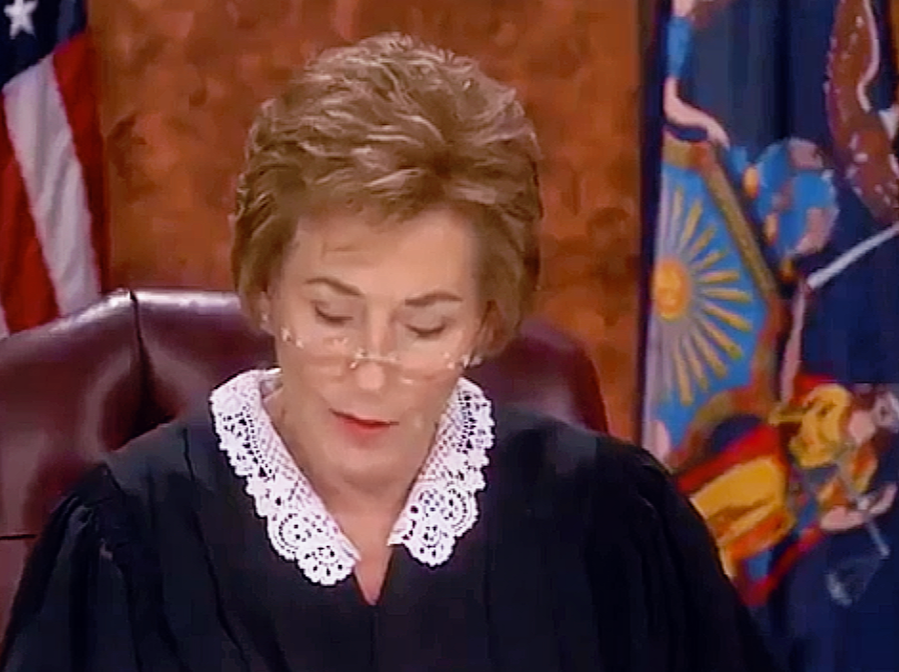
Judge Judy advised Williams that future arrangements should be put into a written contract with every requested service clearly stated. The court then examined the document the parties had brought with them.
What the contract actually promised
The contract was not signed in the conventional way. Williams explained that it had been created electronically through Google Forms. But the more important problem was its content.
Judge Judy pointed out that the document did not mention a winter-wonderland backdrop. It also did not state that completed photographs would be available on the date of the event.
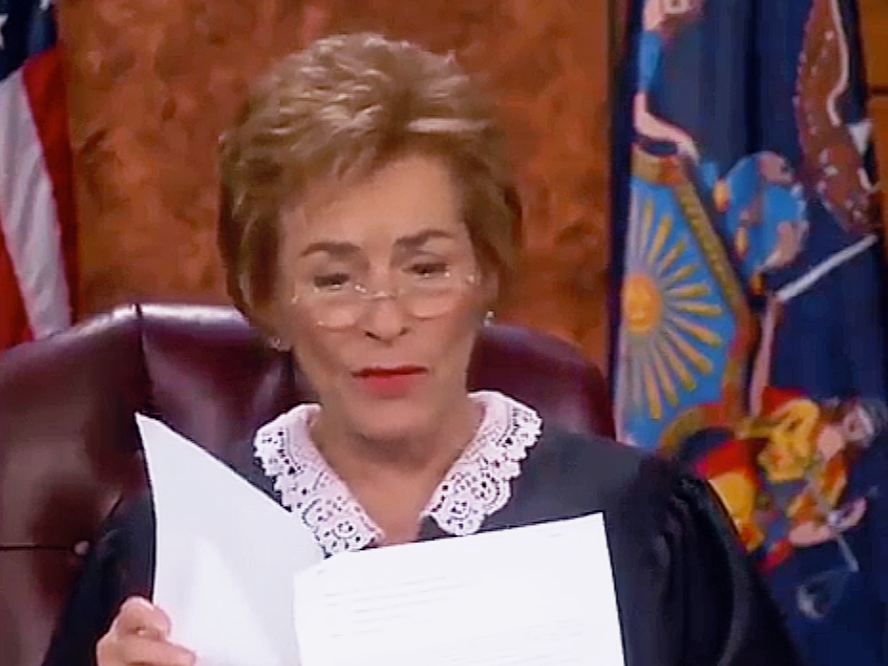
The written terms referred to a photography session for debutantes, personal photographs, prints that participants could purchase, event photography, video recording, raw footage, hundreds of images, and video editing. The listed services totaled more than $500 before the discount that brought the agreed price down to $500.
For Williams, the missing backdrop was the central failure. For the court, the written agreement did not clearly establish that the backdrop was a contractual obligation. The record also showed that De Leon had attended the event, taken still photographs, and recorded video of the four girls.
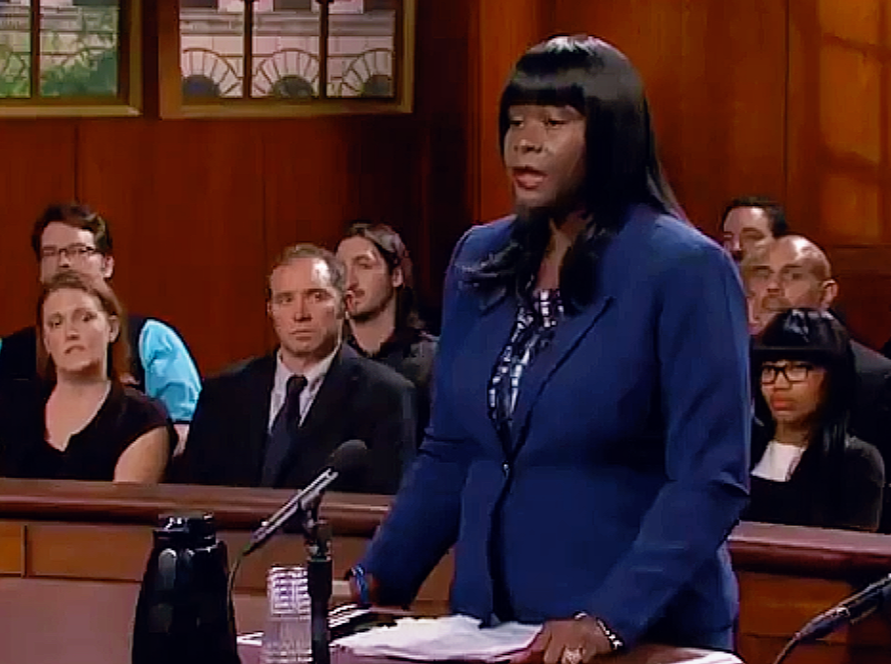
Judge Judy concluded that the agreed services had been provided sufficiently for the $500 payment to stand. The fact that Williams disliked the quality of the images did not, by itself, prove that the photographer had failed to perform the services described in the document.
The case was dismissed. Judge Judy’s practical advice was simple: Williams should not hire the photographer again if she was unhappy with the work. The ruling was less about whether the images were attractive than about what the parties had actually written down before the event.
Case Two: When friendship turned into a vehicle dispute
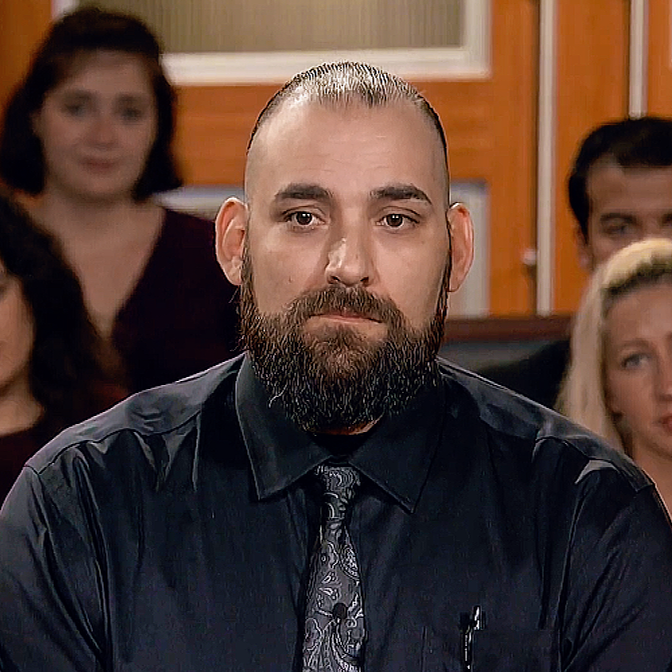
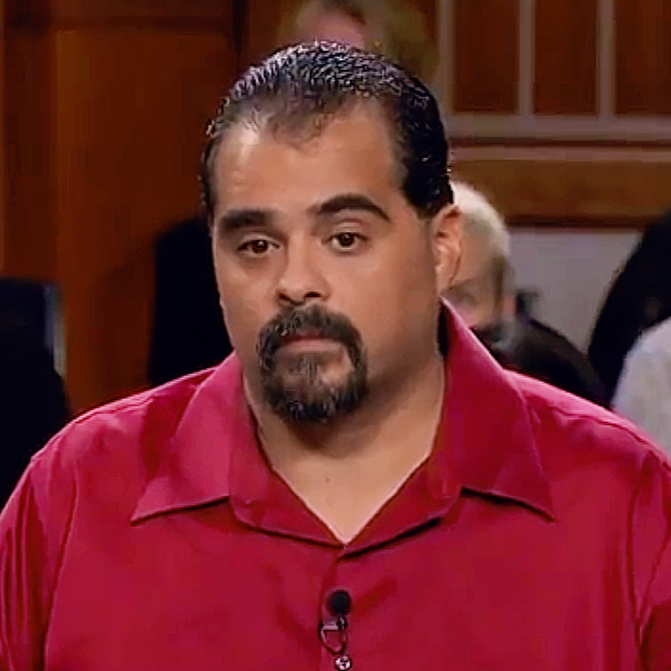
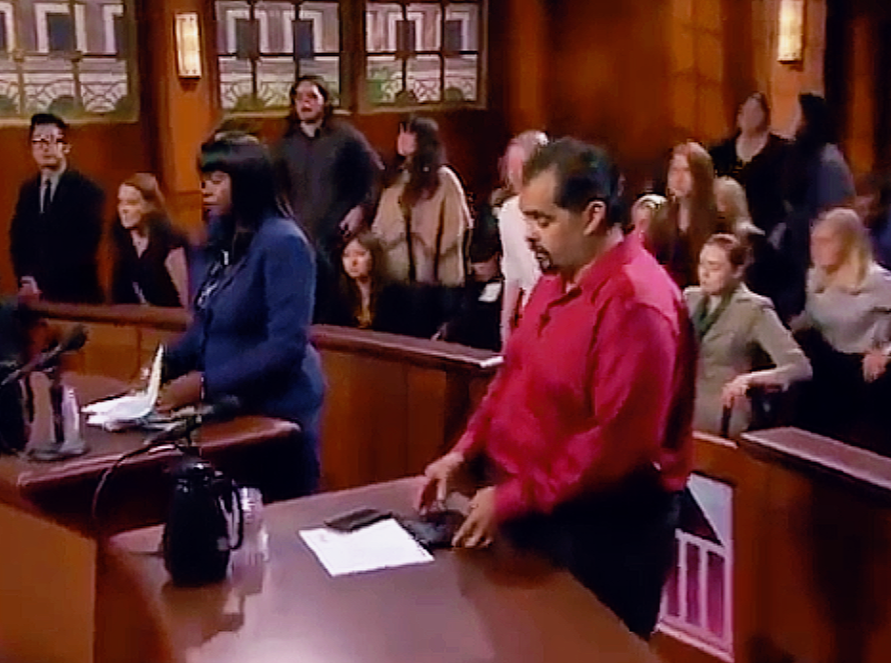
The second case carried a longer and more personal history. Walter Strickland sued his former girlfriend, Angela Nichi, for the return or value of two vehicles, late fees, and punitive damages. Nichi filed a counterclaim seeking $4,200 for unpaid services and repair costs.

Judge Judy noted that there were many pieces to the dispute. The hearing involved a former relationship, years of assistance, multiple vehicles, a damaged pickup, a mechanic’s shop, and disagreements over money. She said she would have to make the case very simple.
Strickland testified that he and Nichi had once been romantically involved but remained friends after the relationship ended. When he developed health problems, he hired Nichi to help with various tasks. She handled matters such as bookkeeping and paying bills.
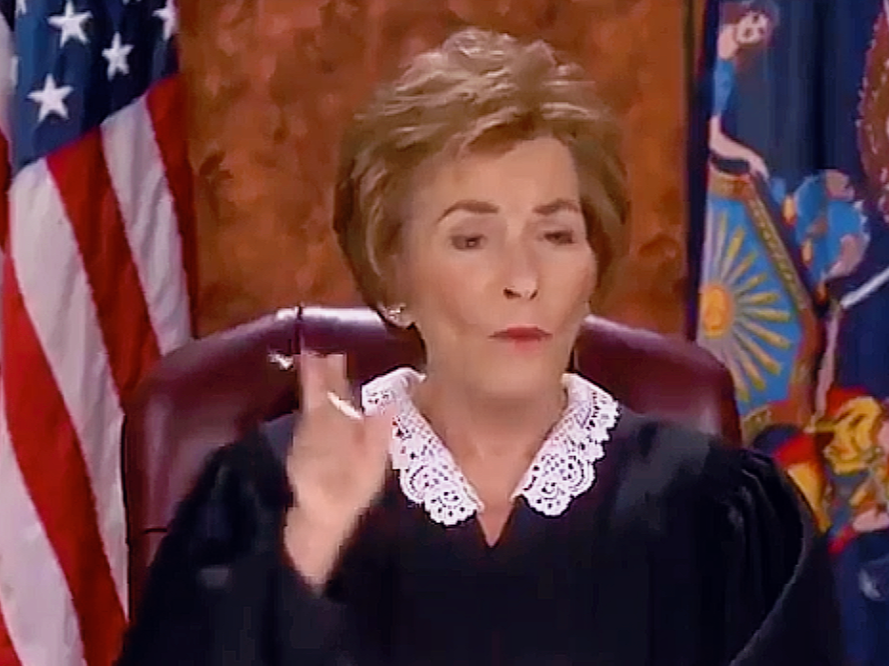
Strickland said he hired her in 2010, when he was working as an over-the-road truck driver and had sometimes been away from home for weeks. At one point, he allowed Nichi to use his brown pickup truck, identified in the hearing as a 1993 F-150.
Nichi’s own vehicle was near the end of its useful life. Because of her business and the shows she attended, she needed a vehicle that could be locked. She eventually asked Strickland to help her find another car.

The $4,500 PT Cruiser
Strickland said Nichi found a vehicle online and asked him to pick it up. When he arrived, that car had already been sold. A 2004 PT Cruiser was available at the same location. It had approximately 69,000 miles on it.
Strickland test-drove the PT Cruiser and decided to purchase it. He said the price was approximately $4,500. The central question was not whether he had paid for the car. It was what he intended the purchase to mean.
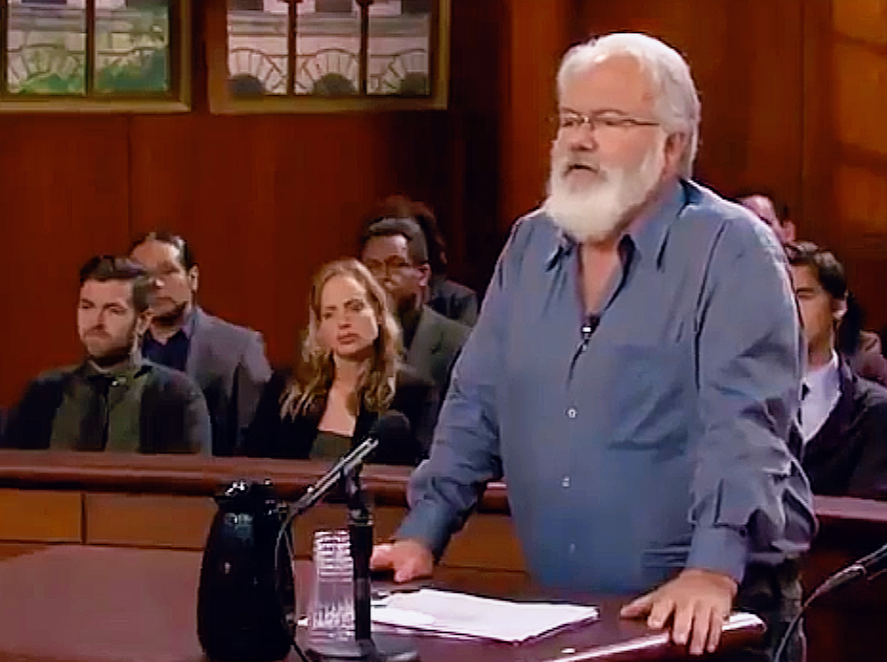
According to Nichi, she had told Strickland that she had no money and could not pay for the vehicle. She said he responded that she had helped him substantially and that he would help her. She recalled that on February 20, he brought the car to her while she was working from her mother’s house in Pinion Hills.
Nichi said Strickland signed a bill of sale and told her the car was hers. She even asked whether he wanted to be listed as a lienholder in case something happened to her. According to her testimony, he declined and said it was her car.
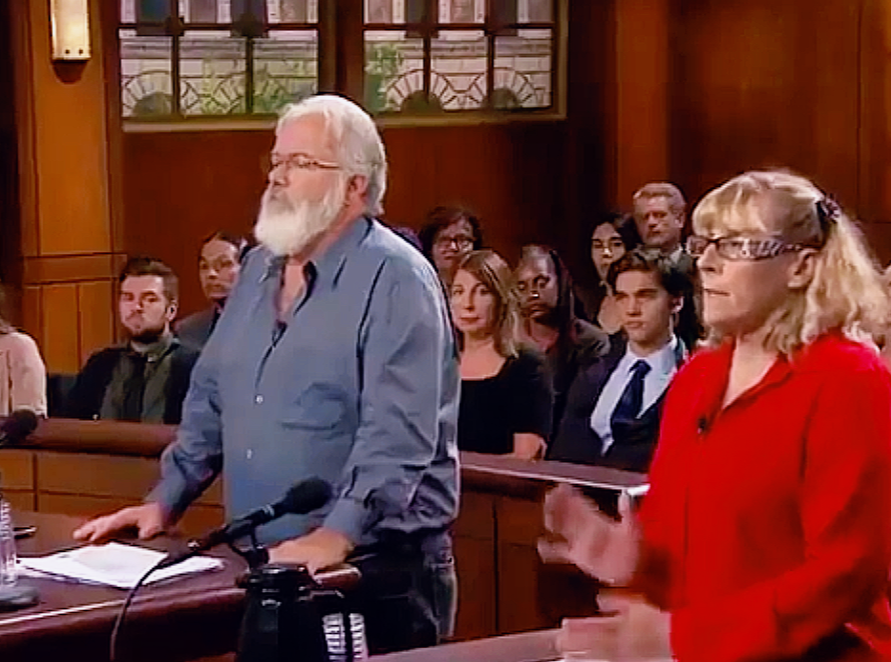
The bill of sale became the most important piece of evidence in the hearing. Judge Judy examined it and compared Strickland’s signature with the signature on an affidavit he had signed. She told him that the document appeared to show that he had sold the vehicle to Nichi on February 20.
The registration history added another layer. The dealership paperwork had initially placed the vehicle in the names of Walter Strickland and Angela Strickland, while also misspelling Nichi’s last name. Nichi testified that she later corrected the registration. The vehicle was ultimately titled and registered to her.
Judge Judy accepted the evidence supporting Nichi’s ownership. She told Strickland that he would not be getting back the car that was in Nichi’s name.
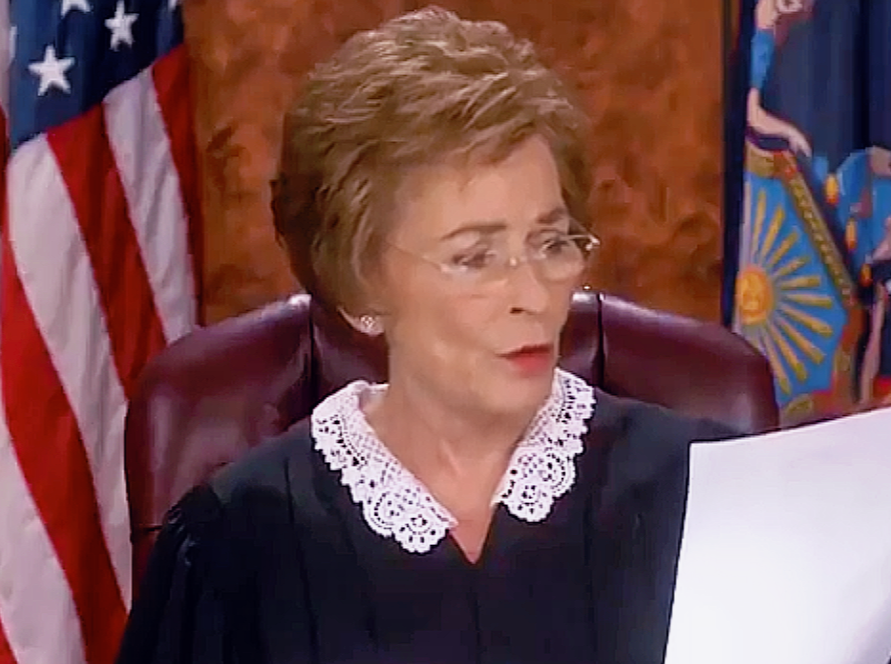
The vehicle left at the mechanic
The second vehicle was an older truck, identified in the hearing as a 1989 F-150. A document from the American Auto Club of Southern California showed that it had been towed to a mechanic on September 25, 2014.
By the time of the hearing, the vehicle had apparently been at the mechanic’s shop for about two years. Strickland acknowledged that it was no longer properly registered or insured because it had been declared nonoperable.
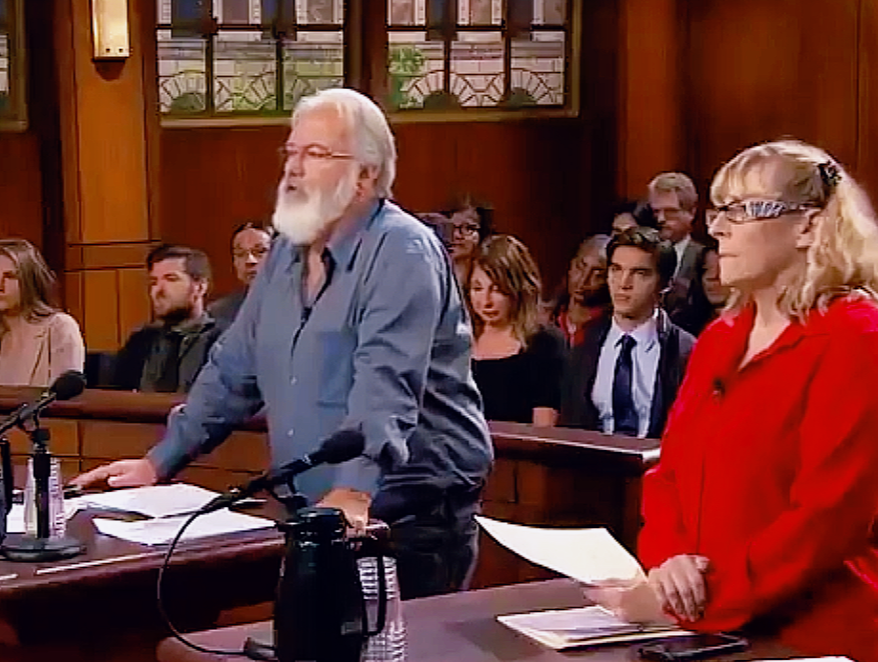
Judge Judy asked whether he wanted the vehicle back. Strickland said that he did. Her response was immediate: if he wanted his car, he should go and retrieve it. The vehicle was in his name, and it had already been sitting at the shop for an extended period.
Strickland attempted to explain that the truck had become part of the larger conflict after Nichi’s son wrecked his brown pickup. He said he had told Nichi to stop doing anything further because he could not afford additional work after paying to have the pickup repaired.
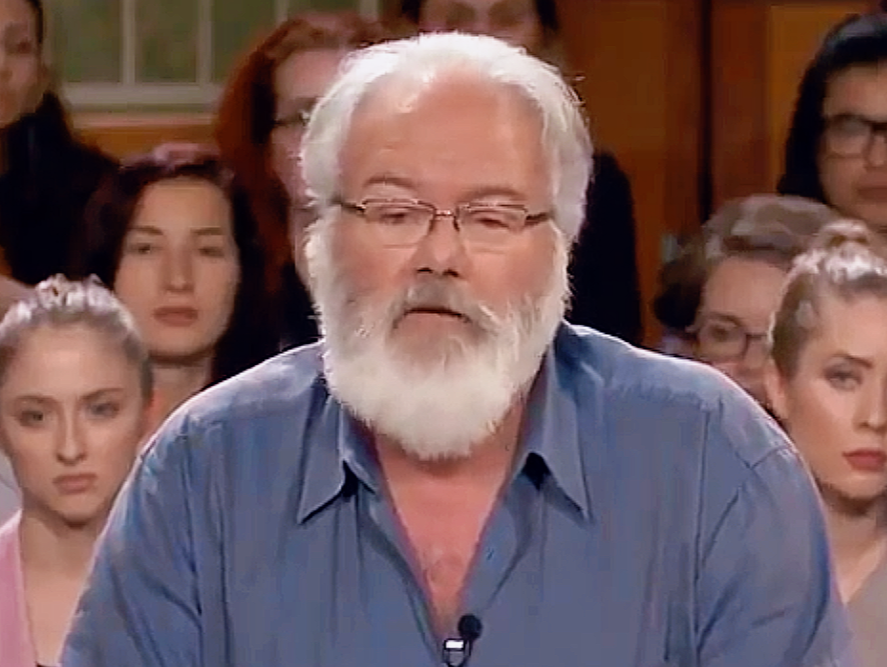
The hearing also briefly touched on passwords for an account and Strickland’s frustration over another matter. Judge Judy declined to allow those issues to expand the case. She said she had already heard what she considered two frivolous causes of action and was not interested in proceeding into a third.
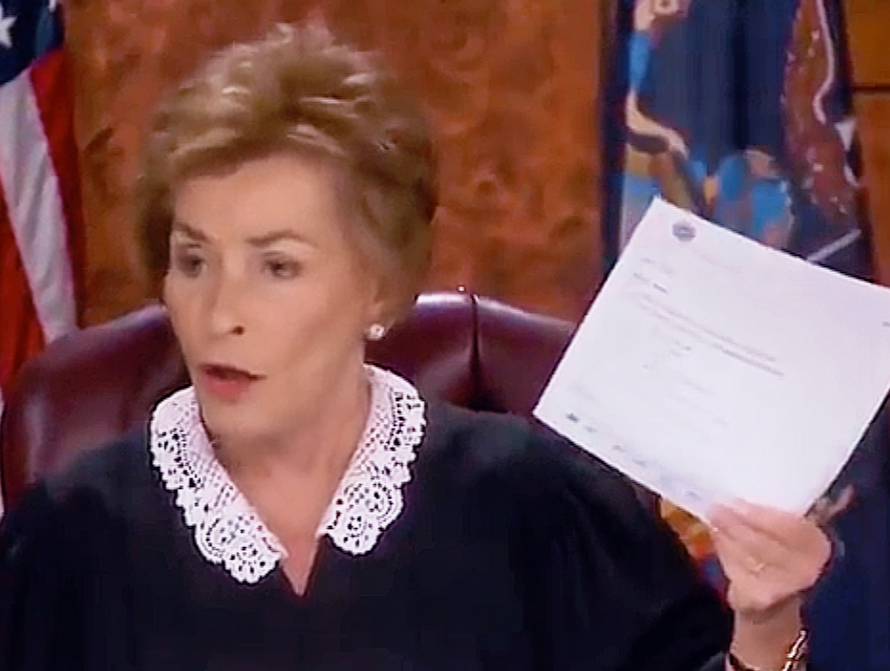
The counterclaim and the final exchange
Nichi’s counterclaim sought $4,200. It included unpaid services, wages, and money she allegedly paid toward repairs to Strickland’s vehicles, including the 1989 F-150.
Judge Judy questioned the scope of the counterclaim. She observed that Nichi had gathered a variety of alleged expenses and placed them into one total. She also returned to the fact that Strickland had purchased the $4,500 PT Cruiser for her.
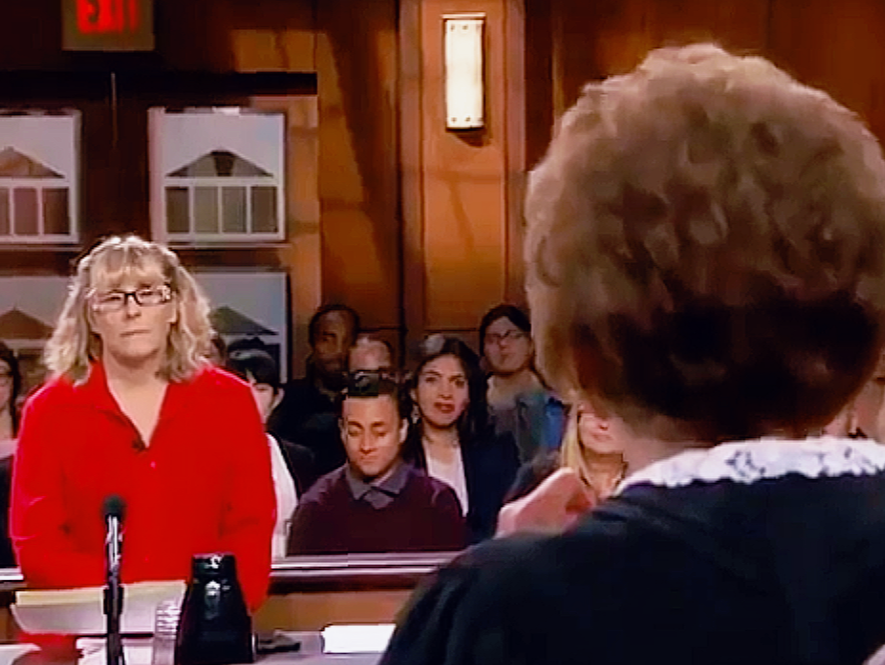
The comparison was important to the judge’s view of the dispute. Nichi was seeking $4,200 for services and repairs, while Strickland had purchased a vehicle worth approximately $4,500 and transferred it to her according to the bill of sale and registration evidence.
Judge Judy ended the hearing without awarding Nichi the $4,200 she sought and without granting Strickland the vehicle recovery, late fees, or punitive damages he requested. Both parties indicated that they understood. They were then excused.
What These Two Separate Cases Revealed
The two hearings involved separate parties, separate disputes, and separate legal claims, but the underlying lesson was similar. In each case, the parties remembered an arrangement differently. The court had to determine whether the available evidence supported the promises being described after the relationship or business arrangement had broken down.
Williams believed the winter-wonderland backdrop and immediate photograph packages were part of her agreement with the photographer. The written contract did not clearly say so. De Leon believed the green-screen images could be processed through an online workflow. Williams said that workflow had never been explained to her and stopped the images from being posted.
Strickland believed the PT Cruiser remained connected to him because he had paid for it. The bill of sale and registration pointed in the opposite direction. Nichi believed years of assistance and repairs supported her $4,200 counterclaim, but the court did not award that amount.
Neither case turned on a dramatic confession. The decisive evidence was ordinary and concrete: a contract, a bill of sale, a title, a registration record, a payment timeline, and the parties’ own actions. Those documents did not erase the frustration on either side, but they gave Judge Judy a basis for separating what had been expected from what had actually been proven.
FAQ
What was Kimberly Williams’s complaint?
Kimberly Williams sought the return of the $500 she paid for photography and video at a formal debutante ball. She objected to the green background, the quality of the photographs, the dark and blurry video, and the absence of the winter-wonderland background she expected.
Did the photographer attend the event?
Yes. The hearing established that the photographer attended the ball, took still photographs, and recorded video of the four girls.
Why was Williams v. De Leon dismissed?
Judge Judy found that the written agreement did not clearly promise the winter-wonderland backdrop or completed photographs on the date of the event. The photographer had attended the event and provided photographs and video, so the court did not order the $500 returned.
Why are two names associated with the photographer?
The opening identification in the supplied SRT refers to Capone De leon, while the courtroom caption and dialogue refer to De Leon. The transcript itself does not explain the difference, so both identifiers are preserved in this article.
Who was Angela Nichi?
Angela Nichi was Walter Strickland’s former girlfriend. After their relationship ended, they remained friends, and Strickland said he hired her to help with bookkeeping, bill payment, and other tasks.
Who received the 2004 PT Cruiser?
The court accepted evidence supporting Nichi’s ownership. A bill of sale appeared to transfer the vehicle to her, and the vehicle was titled and registered in her name.
What did Walter Strickland request?
Strickland sought the return or value of two vehicles, late fees, and punitive damages. Nichi filed a $4,200 counterclaim for unpaid services, wages, and repair-related expenses.
What was the outcome of the second case?
The hearing ended without an award to Strickland on his vehicle claims and without an award to Nichi on her $4,200 counterclaim. The parties were excused.