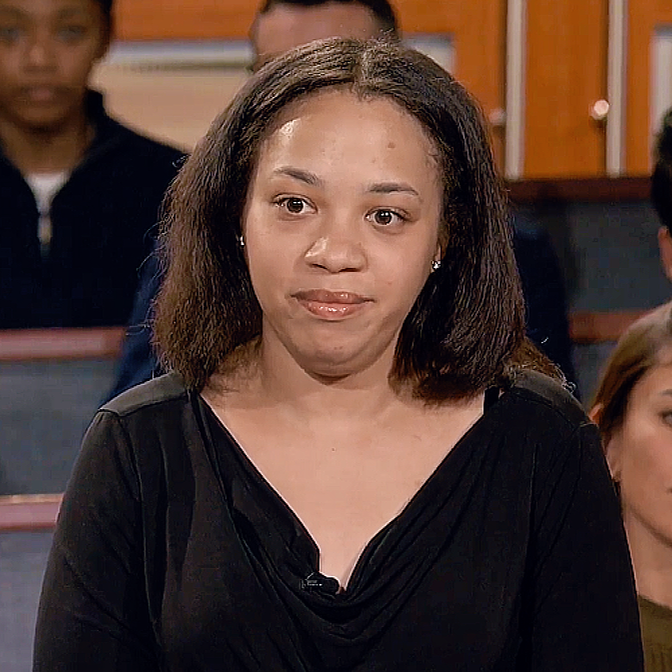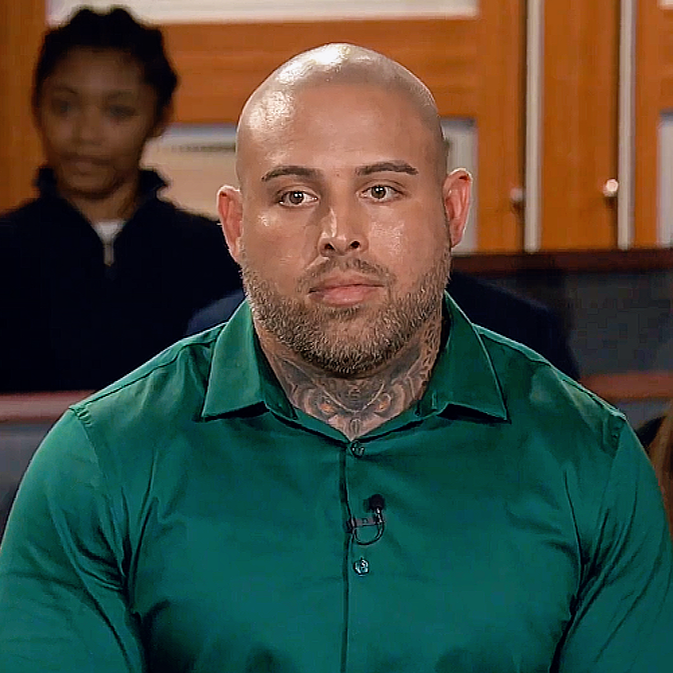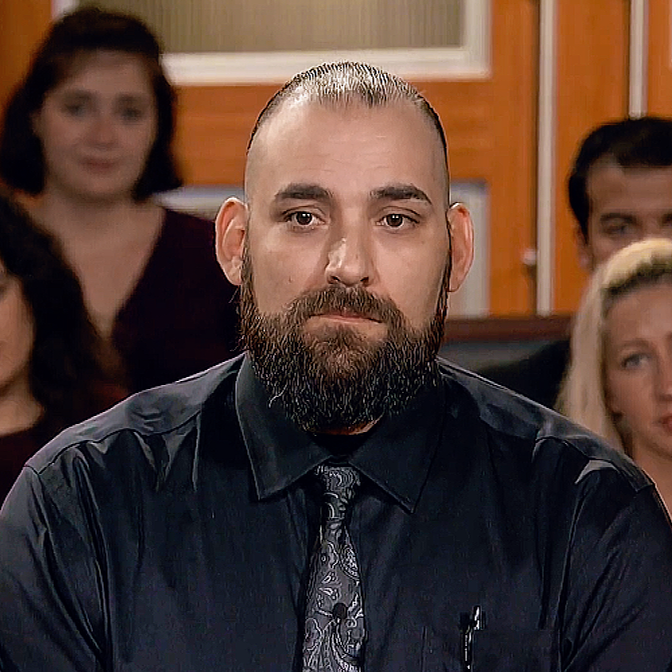
In one Judy Justice case, a friendship between two grieving neighbors ended with testimony about a gun thrown into a lake. In the next, a twenty-year relationship narrowed into a dispute over a Cane Corso, a dirt bike, a truck, and a criminal complaint. These were civil courtroom battles, but the testimony carried the weight of grief, depression, family responsibility, financial resentment, violence, and imprisonment.

The First Case : A friendship that began in shared grief
The first case opened with an ordinary explanation: Robert Feirstein said he had only wanted to be Elizabeth Ramirez’s friend. Ramirez told the court that she had made the boundary clear. She was not looking for a relationship, she said; she wanted friendship, “nothing more, nothing less.”
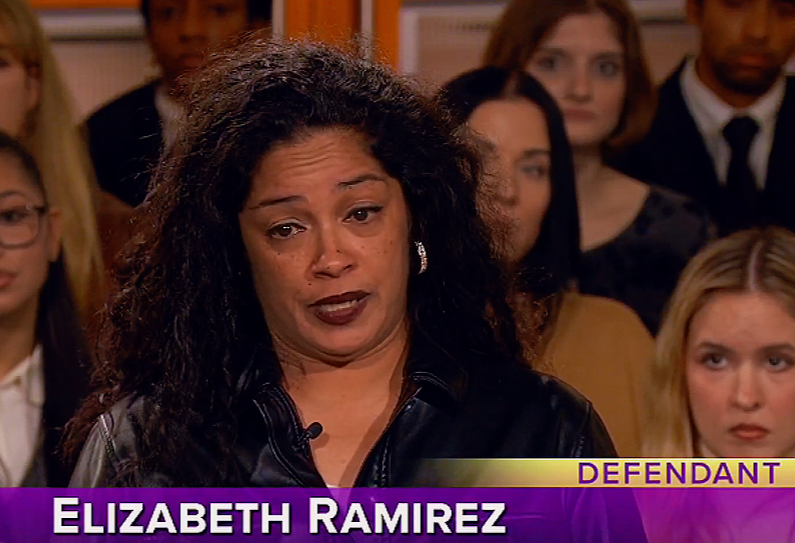
The two lived in the same housing complex. Feirstein had been there for three years, while Ramirez had lived there for approximately two and a half. He was retired from New York City Transit. Ramirez was raising three children—six, fifteen, and twenty—with the twenty-year-old and fifteen-year-old living with her, according to the hearing.
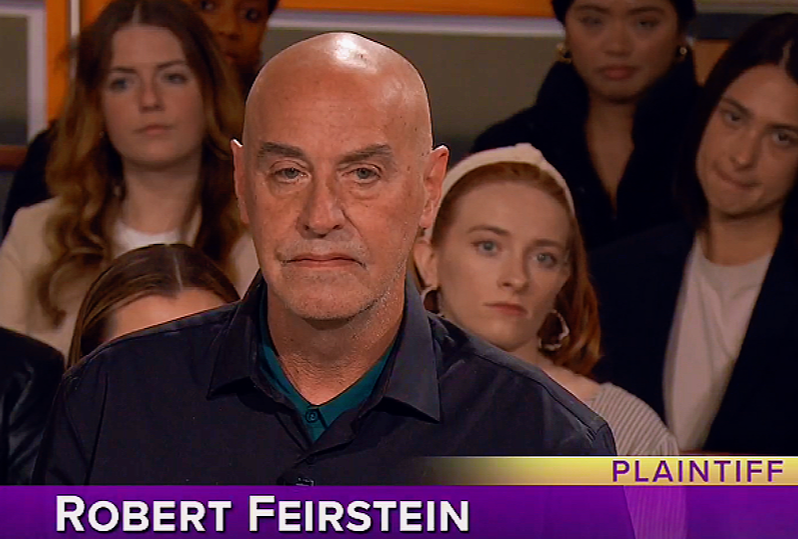
Their connection developed while both were dealing with painful circumstances. Feirstein was grieving the death of his wife. Ramirez was dealing with the removal of her children after an overdose connected, according to her testimony, to severe depression. She denied being addicted to drugs and said the children were sent to her sister for eight months while she completed a program and followed the steps required to regain custody.
The timeline was not entirely clear in the courtroom. Ramirez placed the home inspection in the spring of 2024 and said Feirstein helped her in March, before the children returned. After the mattresses and carpeting were in place, a social worker made a second visit, inspected the room, and said the setup was acceptable.
That practical act of help later became the financial center of the case.
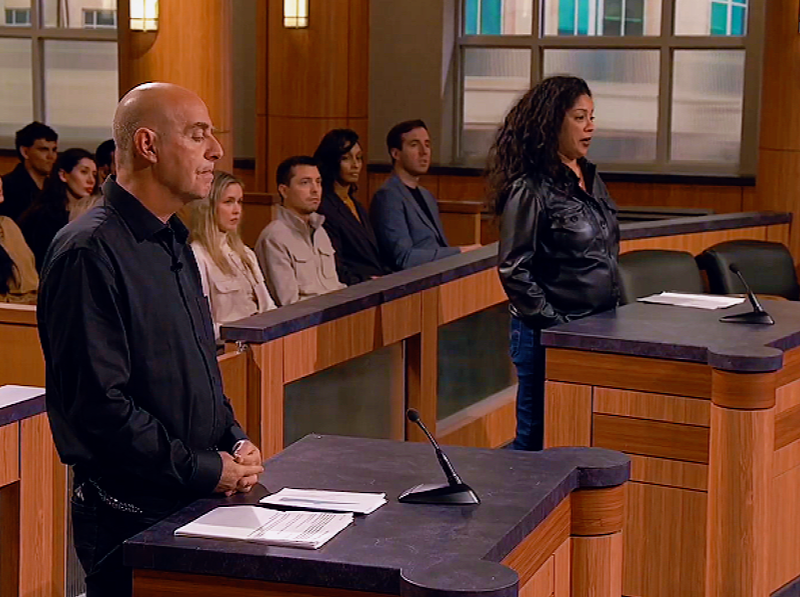
The $1,397 dispute between Robert Feirstein and Elizabeth Ramirez
Feirstein sued Ramirez for the cost of two mattresses and carpeting for the children’s bedroom. The mattresses were purchased on March 21, 2024, for $709. The carpeting was quoted at $680. During the hearing, the total at issue was stated as $1,397 for the mattresses and the room’s furnishings.
Ramirez did not dispute that Feirstein had paid. Her position was that he had offered to do so. She explained that she had been considering layaway when he said, “I got it.” In her account, the purchase was part of a friendship during a period when both people were emotionally vulnerable—not a loan that she had agreed to repay.

The emotional history mattered because the friendship had changed. Ramirez said she tried to distance herself as Feirstein began “spiraling out of control.” She maintained that she had repeatedly explained she was there only as a friend. The two had once supported each other through grief, but the same connection that began as mutual comfort had become a source of conflict.
By the time of the hearing, Ramirez was not working. She said her family helped support her, that she received child support for her daughter, and that her son also had income. Her last full-time job had been as a security guard or gate attendant at the community, ending July 18.

The firearm at the security booth
The case also introduced a far more serious point of tension. Ramirez had worked as a security guard in the complex. Feirstein said there had been a confrontation at the gate and that she pulled a gun. The gun, according to the testimony presented in court, was his. Ramirez lost her job after the incident.
Feirstein said the firearm had been intended for trips to a shooting range. He claimed he had initially wanted to keep it in his safe and had warned that no one should have access to it. He said Ramirez told him she had a place to store it. Ramirez’s explanation was that they had discussed going to the range with her firearms, although the judge pressed him on why he had given someone else a firearm at all.
The gun was later taken from Ramirez during the fight at the gate and thrown into a lake behind the security booth, according to the testimony summarized in court. Feirstein confirmed that he no longer had the firearm.
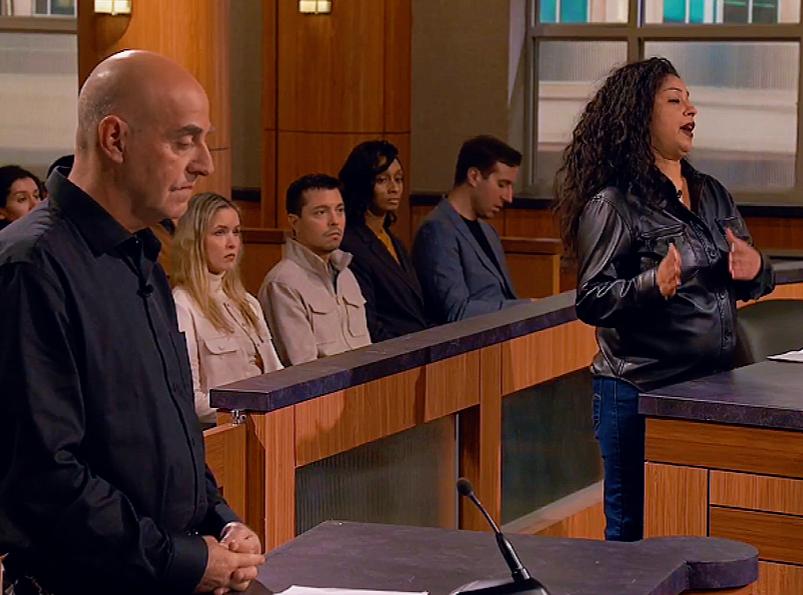
The detail changed the tone of the hearing. What began as a request for reimbursement over bedding and flooring now carried the weight of a failed friendship involving a workplace confrontation, a lost job, and a weapon that disappeared into the water.
Judge Judy ultimately awarded Feirstein $1,397. She explained that providing beds for Ramirez’s children had been necessary for their return to their mother, but she also recognized the resentment that can follow when someone believes they have been used financially. Ramirez’s counterclaim for harassment and a false CPS report was dismissed.
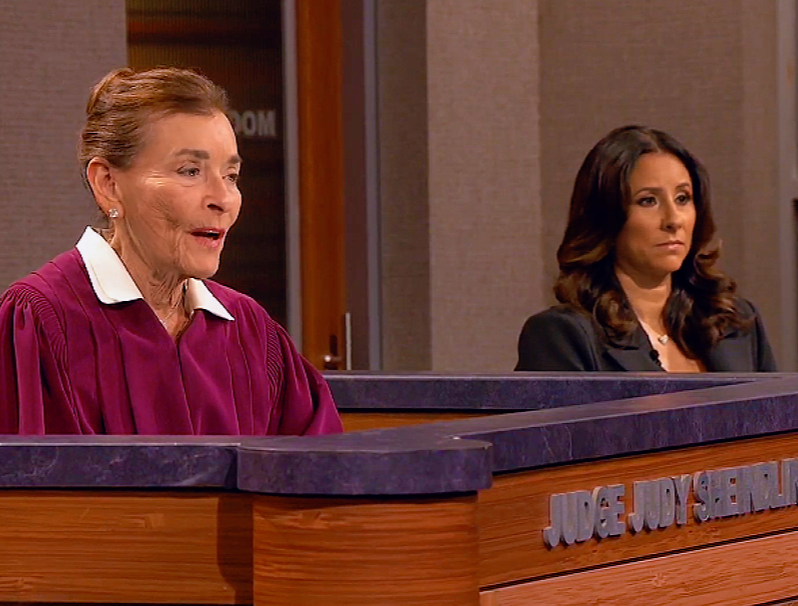
Afterward, Feirstein called the decision fair but said he had not had enough time to present all his papers. Ramirez said she was satisfied with the ruling and emphasized that she had not asked him to purchase the furnishings.
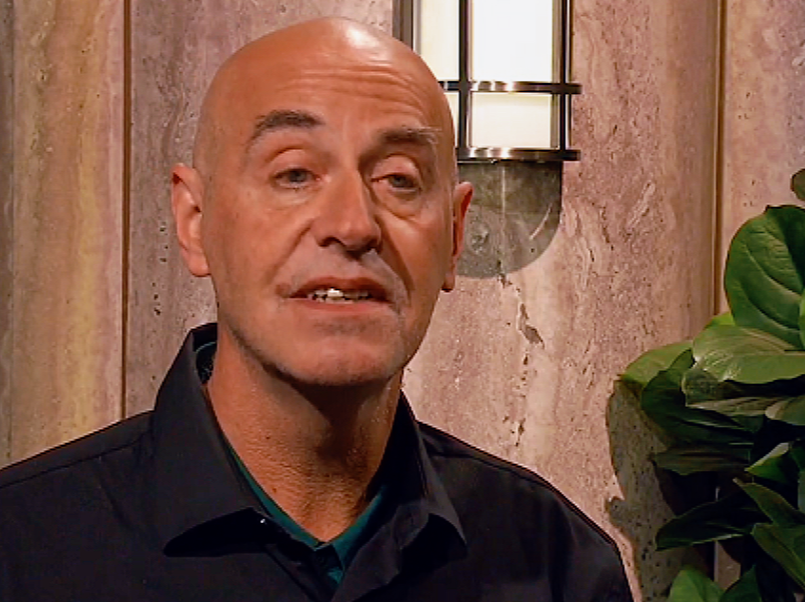
The judge’s later commentary focused on the firearm. If Feirstein knew Ramirez had overdosed during a period of serious depression, the judge questioned why he would give her a gun, even for a trip to a range. The transcript does not establish every detail of Ramirez’s mental-health history or the legal classification of her security work; it records the question as a troubling unresolved issue surrounding the friendship.
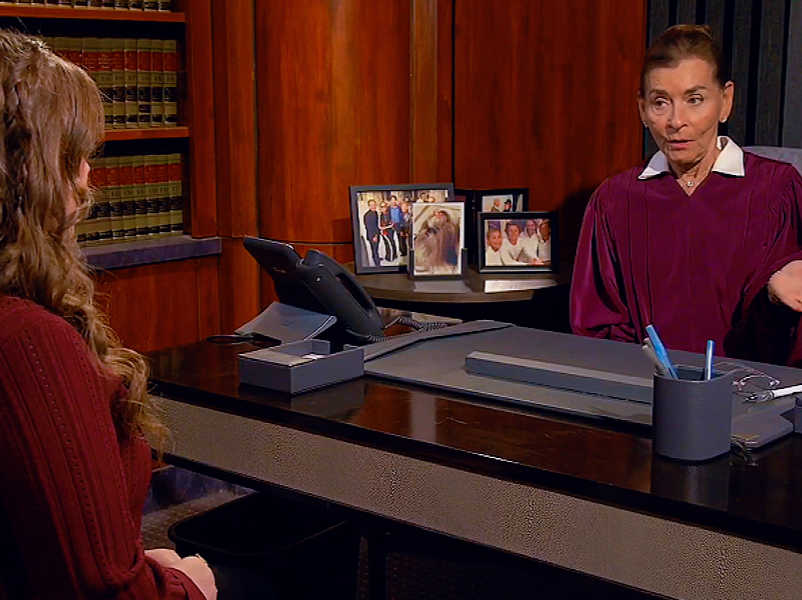
The Second Case : Nicholas Tate, Summer Schuchard, and the fight over property
The second case involved Nicholas Tate and his former girlfriend, Summer Schuchard. According to the courtroom account, they had been in a monogamous relationship for twenty years and had two children. Tate had served two years in prison for assaulting Schuchard. Five months before going to prison, he purchased a Cane Corso dog. He later sought the dog’s return, along with a dirt bike.
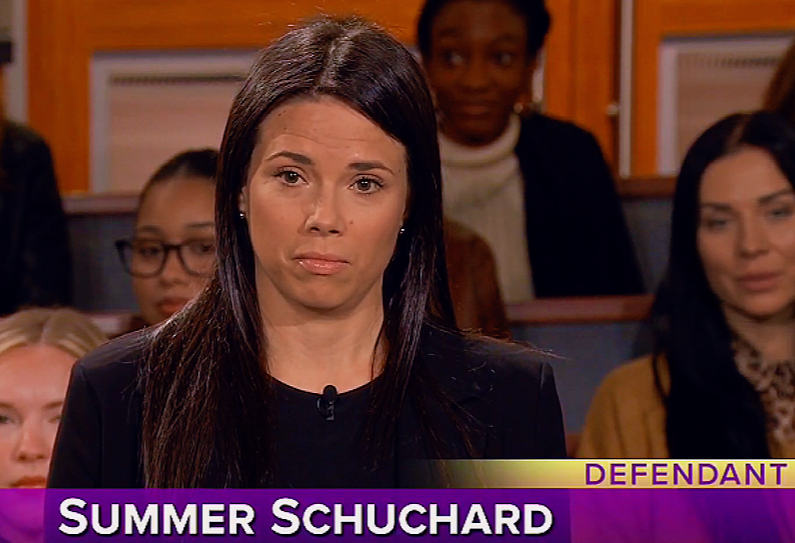
The request immediately collided with the circumstances described in court. The dog had remained with Schuchard and the children throughout Tate’s two years in prison. Judge Judy said the dog was bonded with the children. Tate’s oldest child was thirteen and rode the dirt bike, prompting the judge to question why a father would try to take the bike away from his thirteen-year-old child.
Schuchard filed a counterclaim connected to bail money, legal fees, and a false police report. Tate said approximately $22,000 had been taken from a shared account for bail. He also alleged that Schuchard later wire-transferred $25,000 from the same account without his permission. Judge Judy characterized the competing withdrawals as close enough to resemble an informal division of property after a breakup.

The dispute expanded to a truck. The truck had been purchased during the couple’s twenty years together, was paid off, and was in Tate’s name. Schuchard had also been left with a Bronco that still carried financial obligations. She allowed the Bronco to be repossessed because she could no longer afford it, while the truck remained a separate point of conflict.
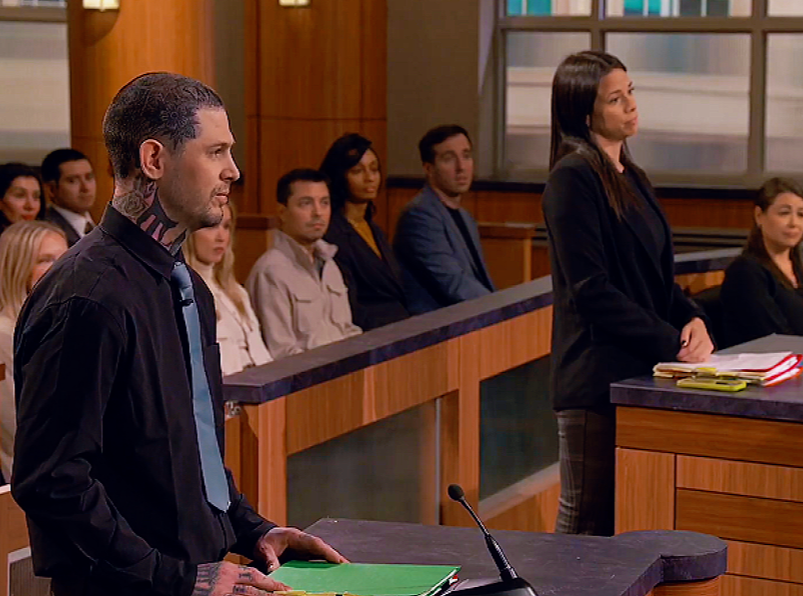
The truck complaint and the dismissed claims
The courtroom then turned to whether Tate—or someone acting for him—had reported the truck stolen. Tate said he had been in jail and believed his father had contacted law enforcement. Dennis said he had not reported it stolen; he had told an officer that the vehicle, in his son’s name, was being offered for sale on Facebook and was no longer at the property.

The distinction was central. Judge Judy examined who caused the criminal complaint that required Schuchard to hire a lawyer and face a felony complaint for approximately a year.
Because the evidence identified the wrong person as the target of the counterclaim, Judge Judy dismissed Tate’s case and dismissed Schuchard’s counterclaim without prejudice, allowing it to be refiled against the correct person. The ruling did not award Tate the dog or dirt bike, and it did not resolve Schuchard’s counterclaim on its merits.
Afterward, Schuchard said the dog was part of her family and that her daughter rode the dirt bike almost every day. Tate said both had been his and complained that his clothes and other belongings disappeared after he was incarcerated. Schuchard said Tate’s parents never arrived to collect the Bronco and his property; the vehicle was eventually repossessed with his belongings inside.

What the courtroom record leaves behind
Both cases were presented as property disputes, but neither was only about property. In the first, mattresses and carpet became the measurable cost of a friendship that had crossed emotional boundaries. In the second, a dog and a dirt bike became symbols of a family and relationship altered by violence, imprisonment, and financial separation.
The record also shows why precision matters. Ramirez’s account of depression differed from the earlier description of drug involvement, while Tate’s account of the truck differed from his father’s explanation.
The first judgment awarded Feirstein $1,397 and dismissed Ramirez’s counterclaim. The second case was dismissed, with Schuchard permitted to refile her counterclaim against the proper person. The courtroom did not restore either relationship. It only assigned responsibility where the available record allowed it—and left the rest to the people who had to live with the consequences.
FAQ
What did Robert Feirstein sue Elizabeth Ramirez for?
Robert Feirstein sued Elizabeth Ramirez for $1,397, representing two mattresses and carpeting purchased for her children’s bedroom.
What was the outcome of the Feirstein v. Ramirez case?
Judge Judy awarded Feirstein $1,397 and dismissed Ramirez’s counterclaim for harassment and a false CPS report.
Why was a gun discussed in the first case?
The court heard testimony that Ramirez pulled a firearm during a confrontation at the community gate and that the firearm belonged to Feirstein. The testimony said it was later thrown into a lake behind the security booth.
What did Nicholas Tate want from Summer Schuchard?
Nicholas Tate sought the return of a Cane Corso dog and a dirt bike. The dog had stayed with Schuchard and their two children during Tate’s two-year prison sentence.
Did Nicholas Tate win the dog or dirt bike dispute?
Not in that proceeding. Judge Judy dismissed Tate’s case, so he did not obtain the dog or dirt bike through the judgment. Schuchard’s counterclaim was dismissed without prejudice and could be refiled against the correct person.
Why was the truck important in the second case?
The truck was purchased during Tate and Schuchard’s twenty-year relationship, was paid off, and was in Tate’s name. The hearing examined whether Tate or his father had contacted law enforcement after the truck was offered for sale.