The courtroom was supposed to settle a neighborhood dispute. Instead, it revealed how quickly the ordinary business of running a residential building can become personal: a disputed election, letters mailed to tenants, criticism posted on walls, shared text messages, a broken fingernail, and a name one neighbor did not want used. By the end of the hearing, Margaret McNulty and Angel Rittenburg had both asked the court to recognize the other person’s wrongdoing. Judge Judy saw something different—a bitter association conflict in which hurt feelings and strong opinions had not become legally actionable claims.
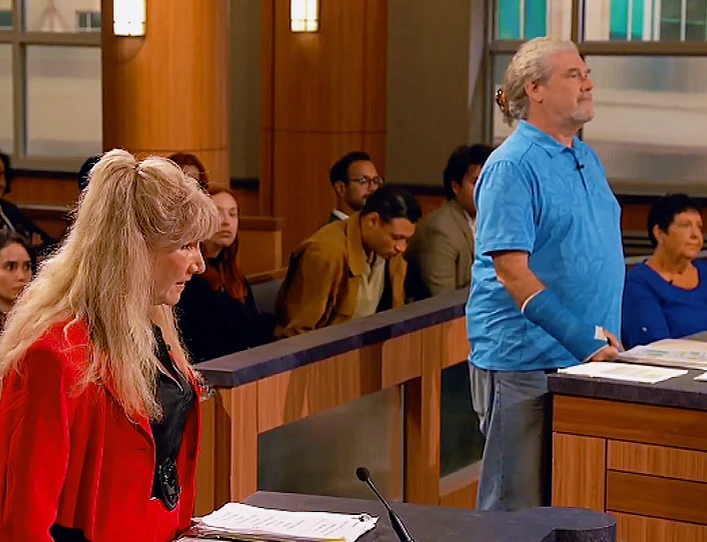
A neighborhood dispute reaches court
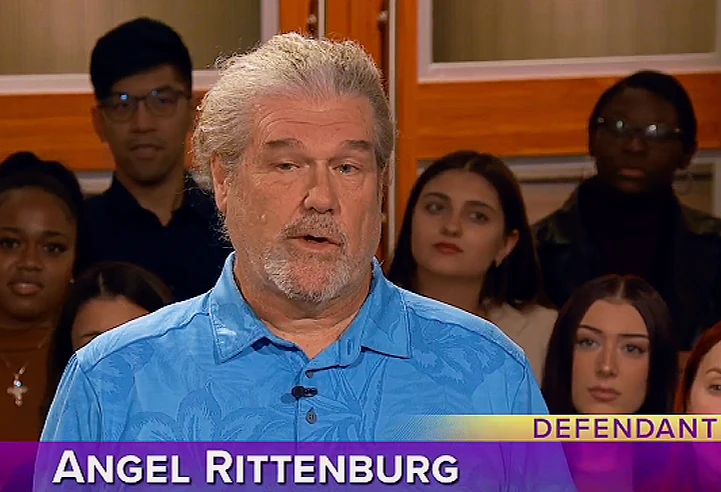
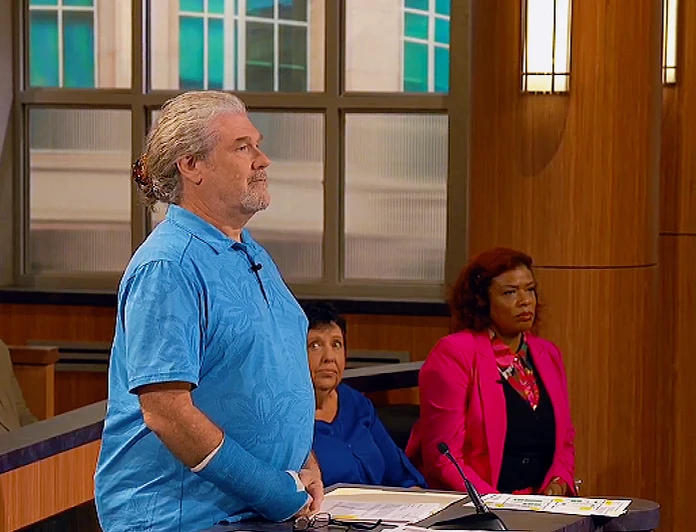
The case was identified as McNulty v. Rittenburg. Margaret McNulty told the court that she had been president of her tenants association for ten years. Angel Rittenburg, who said he had lived in the community since June 2021, was connected to the association as its treasurer. They were not strangers brought together by a single incident; they were neighbors participating in the same small governing system.
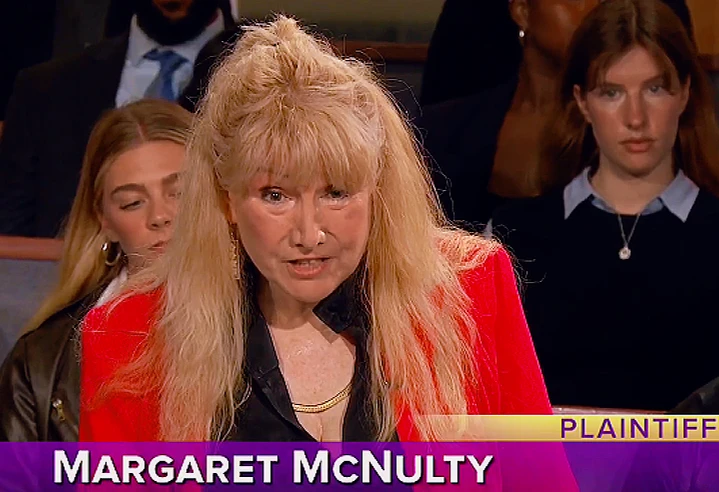
That context shaped everything that followed. The dispute concerned who controlled the association, how board meetings and elections were handled, and what information should be shared with residents. McNulty alleged defamation, harassment and assault. Rittenburg filed a countersuit alleging defamation and seeking reimbursement for the cost of mailing information to residents.
At the beginning, Judge Judy separated the emotional weight of the allegations from the legal questions. She said she would hear about the alleged assault, described as Rittenburg taking a wallet or checkbook from McNulty’s hand, but immediately questioned the absence of an injury. The defamation claim required a different kind of proof: what was said, how was it communicated, and was it a false statement of fact rather than a protected opinion?

The letters that turned board politics into evidence
McNulty described a sustained campaign of communication. Rittenburg had mailed material to people throughout the building, using self-addressed, stamped envelopes so residents could respond to him. She said there had been three waves of mailings and that some of the material had also been posted on the building walls in multiple languages.

One letter had been sent in Rittenburg’s capacity as treasurer. It questioned the association’s most recent voting procedure and referred to association rules as well as HUD-related regulations. The letter asked McNulty to follow established rules, keep board meetings open to tenants, and comply with federal guidelines intended to promote fair and transparent elections. Rittenburg also copied HUD and SFHA, which the hearing identified as the San Francisco Housing Authority.

To McNulty, the letters damaged her reputation. To Rittenburg, they documented concerns that residents needed to know before making decisions about their association. The courtroom therefore became a test not only of what the letters said, but also of whether criticism about a board president’s performance could be treated as defamation.

The election allegation and the missing proof
The most concrete accusation concerned ballots. One of Rittenburg’s communications stated that McNulty had counted votes before depositing them in the ballot box. McNulty called the allegation a lie. Judge Judy then asked Rittenburg what evidence he had.
Rittenburg admitted that he had not been present at the meeting. He referred instead to witness accounts and named Stayce Cole, who had attended. When Cole was called, however, her testimony did not support the claim. She said she had not witnessed McNulty count the ballots before they were placed in the box, and she said McNulty had never told her that she had done so. Rittenburg accepted that he had apparently received incorrect information.

The voting procedure itself was also less straightforward than the allegation suggested. McNulty explained that there were no keys to the ballot box that day, so the ballots could not be placed inside it. A pile was made in front of the box instead. That detail did not prove that every criticism in Rittenburg’s letters was false, but it demonstrated why the judge kept returning to the difference between a verified fact and an assumption presented too confidently.

Rittenburg also acknowledged that he had incorrectly stated that McNulty arrived twenty minutes late to a meeting. He said there was no official notation of the arrival time, admitted that he had made the statement without facts, apologized to McNulty, and promised to be more factual when reporting to tenants. McNulty called the apology sarcastic. Judge Judy nevertheless treated the correction and apology as important.

Opinion, privacy and the limits of a defamation claim
The letters included statements that the board had been replaced with members McNulty had chosen, that those members were aligned with her actions, and that the arrangement could allow unchecked control over decisions, including financial matters. Another passage said the meeting schedule appeared structured to support an agenda and claimed that residents’ rights to a fair election were being violated.
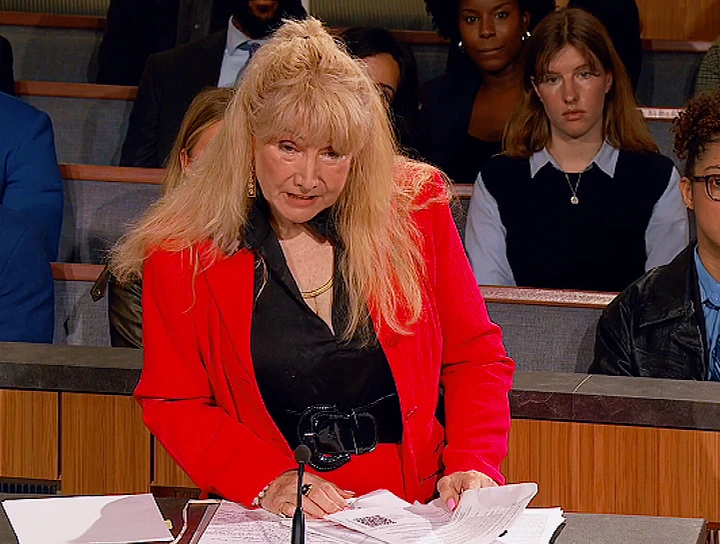
McNulty regarded those statements as lies. Judge Judy regarded the central accusations as opinions about association governance. Rittenburg was allowed to believe that McNulty was doing a poor job, that the election was unfair, or that the board was acting in its own interest. He was also allowed to communicate that view to residents and government offices. The judge’s boundary was clear: he could not present an invented criminal act, medical condition, or other provably false fact as truth.
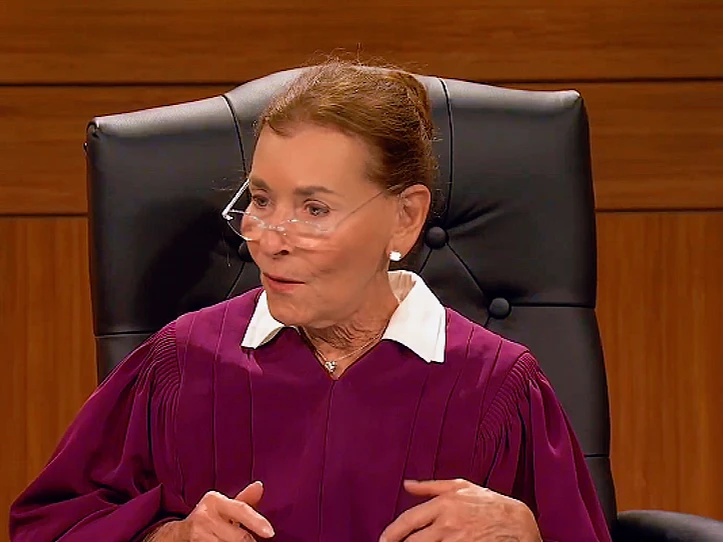
The same reasoning entered the dispute over text messages. McNulty said Rittenburg had “doxed” her private correspondence by collecting and distributing texts she had sent to other people. Judge Judy distinguished between hacking into a computer and receiving messages voluntarily from someone who had been part of the conversation. If another recipient shared the texts with Rittenburg, the judge said, McNulty could not treat the exchange as though he had stolen the messages.
This did not mean the communications were emotionally harmless. It meant that offense, embarrassment and reputational discomfort were not enough, on the evidence shown, to establish the legal claim McNulty had brought.
The confrontation and the countersuit
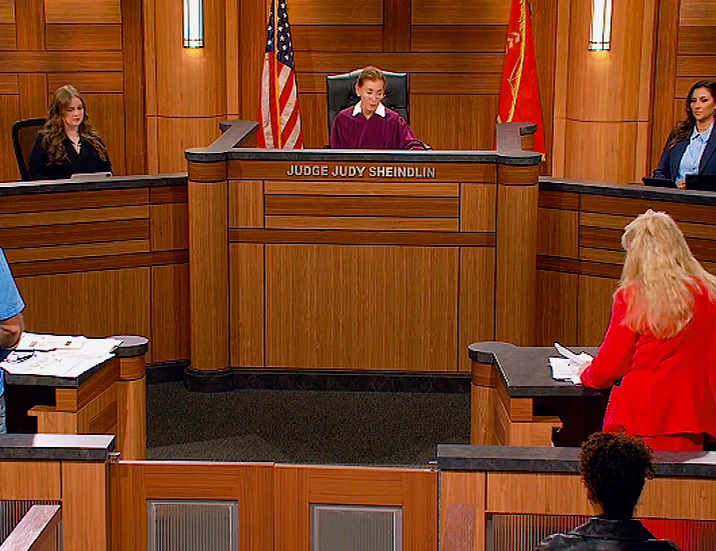
McNulty later described the face-to-face incident in more personal terms. She said Rittenburg had humiliated her in front of tenants, acted hostilely, and pulled a checkbook from her hand, breaking a fingernail in the process. Judge Judy explained that there was no standalone legal claim for “humiliation” and asked whether McNulty had sought medical treatment for an injured finger. The transcript does not show medical evidence establishing a compensable injury.

Another point of tension involved Rittenburg’s preferred first name. He wanted to be called by a name different from the name given to him at birth. McNulty acknowledged that she had posted something using his given name instead of the name he preferred. Judge Judy said the incident had clearly bothered him, but did not regard it as a crime or an actionable defamation claim on the record presented.
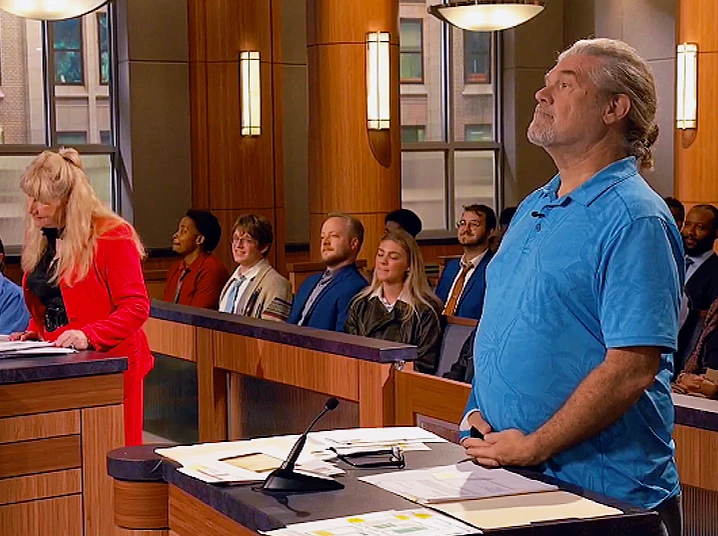
Rittenburg’s countersuit focused on that issue, McNulty’s alleged self-interest on the board, and the information he said she should have shared openly. He argued that he had mailed material to residents so they could make informed decisions and that McNulty should bear the resulting postage and mailing costs. Judge Judy rejected the argument. If Rittenburg chose to send mass mailings independently, the expense remained his responsibility.
Why Judge Judy dismissed both claims
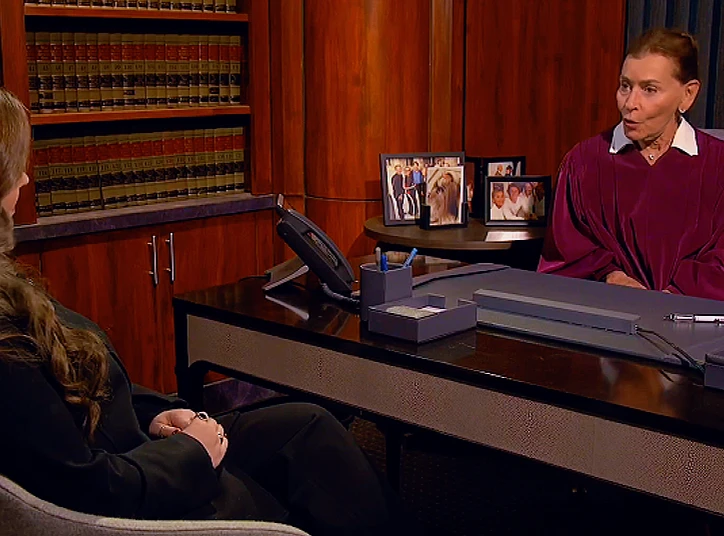
Judge Judy ultimately dismissed McNulty’s case. The statements shown to her were, in her view, largely expressions of opinion about how the association was being run. The alleged confrontation did not establish the kind of actionable injury McNulty was claiming, and the discussion about shared texts did not show that Rittenburg had hacked or stolen her communications.

She then dismissed Rittenburg’s counterclaim. His dissatisfaction with McNulty’s leadership did not make her responsible for the mailings he chose to send. The hearing ended with the judge telling both sides to live in peace and making clear that anyone who continued sending letters would have to bear the cost personally.

After court, McNulty said she wanted the matter to be over so the residents could return to living peacefully. Rittenburg said he believed the result was unfair. In the closing discussion, the judge and court personnel suggested that the conflict may have begun when McNulty used the wrong name for Rittenburg and then expanded into a larger struggle over elections, board authority and personal alliances inside the building.

The case did not determine who was the better president, treasurer or neighbor. It established something narrower and more instructive: a person may strongly criticize the leadership of a tenants association, but criticism does not automatically become defamation. A resident may send information to fellow tenants, but choosing to do so does not automatically create a right to reimbursement. And in a close community, an argument that begins with governance can quickly become a dispute about identity, respect and trust.
FAQ
What was McNulty v. Rittenburg about?
It was a dispute between neighbors involved in the same tenants association. Margaret McNulty accused Angel Rittenburg of defamation, harassment and assault. Rittenburg countersued for defamation and mailing expenses.
Why did Margaret McNulty sue Angel Rittenburg?
McNulty said Rittenburg circulated letters criticizing her leadership, questioned the association’s election procedures, shared text messages, and confronted her during an incident involving a checkbook. Judge Judy concluded that the material presented did not establish an actionable claim.
What was the election dispute?
Rittenburg questioned whether the association’s voting process complied with association and HUD-related rules. He alleged that votes had been counted before being placed in the ballot box, but Stayce Cole said she had not witnessed that conduct. Rittenburg then acknowledged that he apparently had incorrect information.
Why was Rittenburg’s countersuit dismissed?
He argued that McNulty should reimburse him for mailing information to residents because she had not been sufficiently transparent. Judge Judy ruled that his voluntary decision to send the mailings did not make McNulty responsible for the postage.
Did Judge Judy rule that all of Rittenburg’s statements were true?
No. The ruling distinguished between opinions and factual claims. Rittenburg was allowed to express views about McNulty’s leadership and the fairness of the election, but the judge also emphasized that an objectively false factual statement could be actionable.