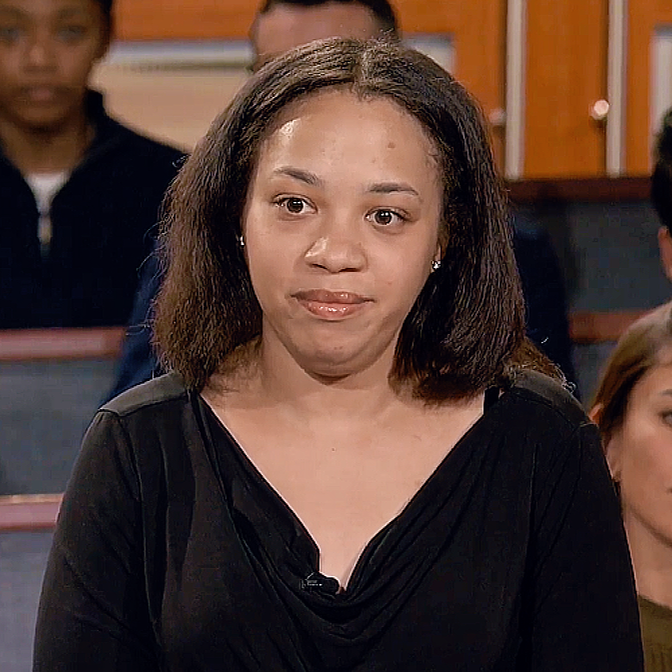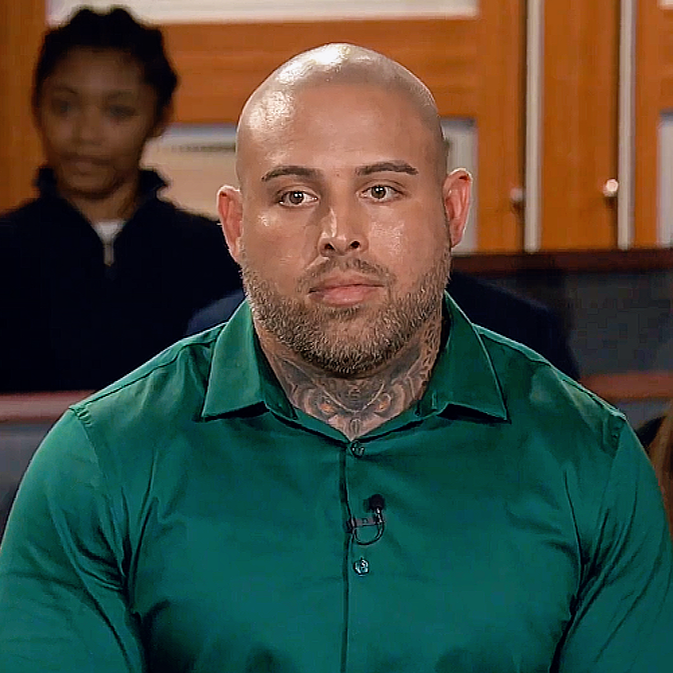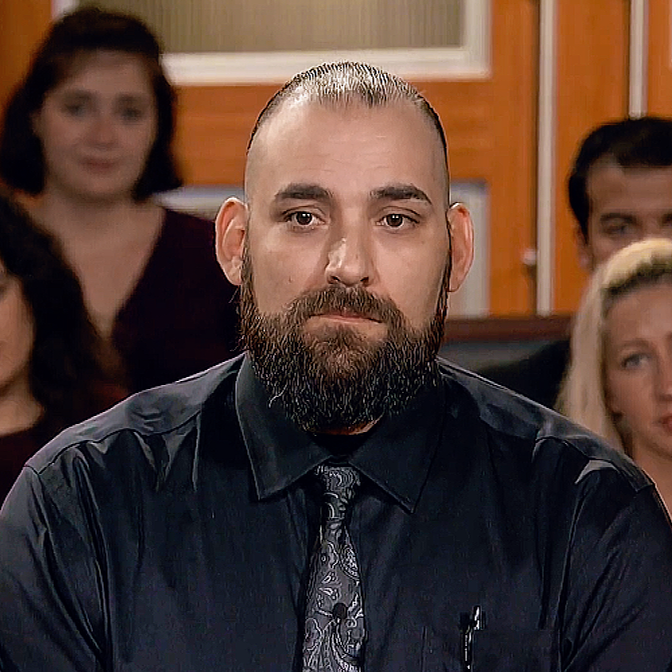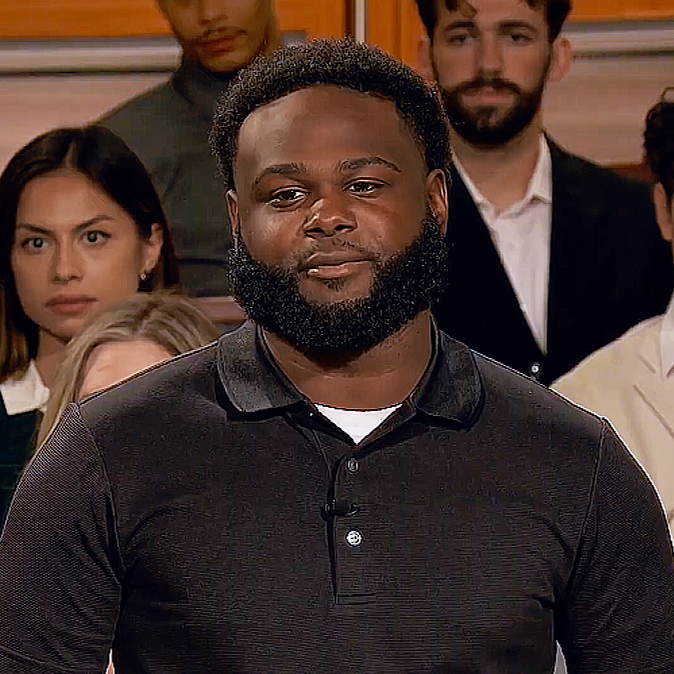
Two days after Paco arrived at Tara and William Wieland’s home, the dog was at a veterinary clinic. The visit produced a $195 bill, but it also gave a family argument a new gravity. What began as a handoff during a move became a dispute over whether Paco had been given away for good, whether he could be taken back, and why a restraining-order filing had entered the conflict. By the end of the hearing, the stated judgment was $2,695.
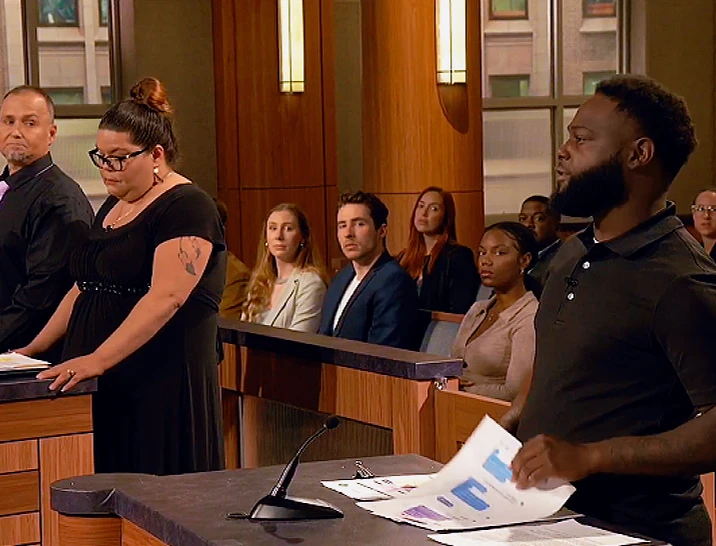
Two Days After Paco Arrived
The first clear marker in the story came after the transfer, not before it. Tara and William Wieland said they took Paco to a veterinarian two days after receiving him. They told the court that the dog had double ear infections and was in rough condition; Tara also said Paco was severely dehydrated. The bill presented at the hearing was $195, and the testimony described medication for both ears and an infection.
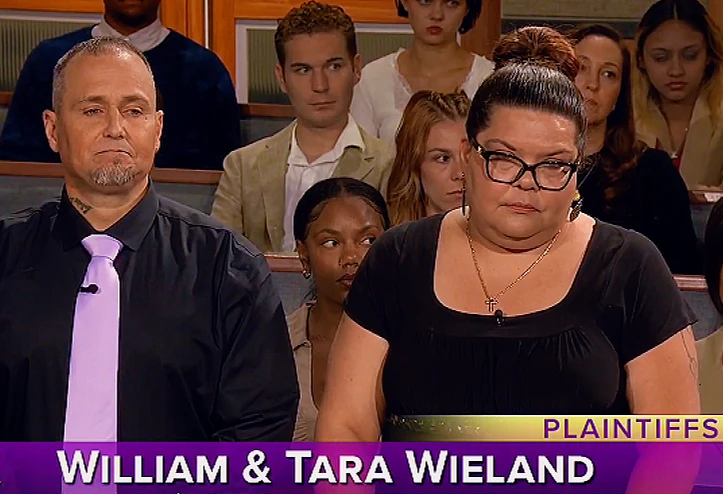
That visit did not settle the case, but it changed its stakes. Paco was no longer simply a dog being watched during a family move. The Wielands said they had taken on the cost and responsibility of his care. Charles Garrett, Paco’s purchaser, disagreed about what that responsibility meant and why the dog’s ears had become infected.
The question before the court was therefore not only who had paid for care. It was whether the handoff itself had been permanent.
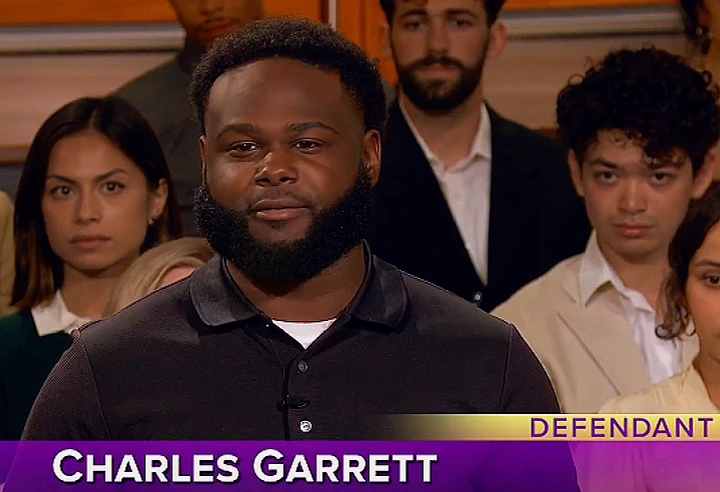
Why Paco Needed a New Home
Charles said he had bought Paco through a Marketplace group called Bully Minnesota. He initially referenced a $650 asking price, then said he negotiated it down and paid $500. The transcript records the purchase date only as August 23 of “last year”; it does not identify the year.
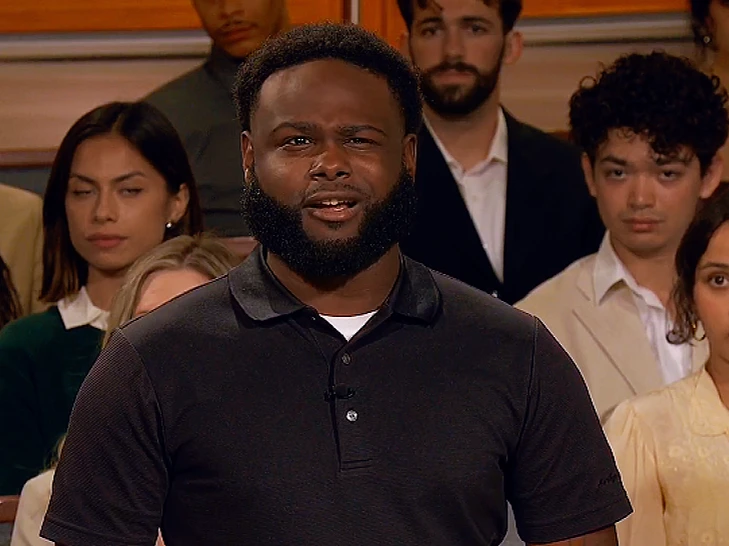
By the time Paco changed homes, Charles and Kourtney—Tara’s daughter and Charles’s partner—had moved into an apartment where they said dogs were not allowed. They were also expecting a second child. Those circumstances explain why another home was needed, but they did not answer the central question: was Tara being asked to watch Paco, or to take him as her own?
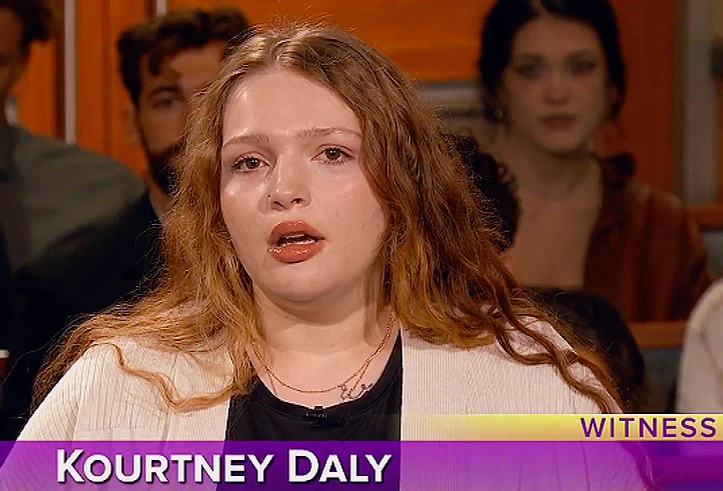
Kourtney said her grandmother had first contacted Tara about taking care of the dog. She later reached out to Tara herself. According to Kourtney’s reading of her phone messages, she asked on April 22 whether Tara was going to take Paco; Tara replied, “Yeah. When can we get him?” The following day, Tara said she could take him “Today.” The messages discussed arranging the dog and his belongings, but the excerpt did not include words explicitly calling the arrangement temporary.
The Dates Do Not Fully Line Up
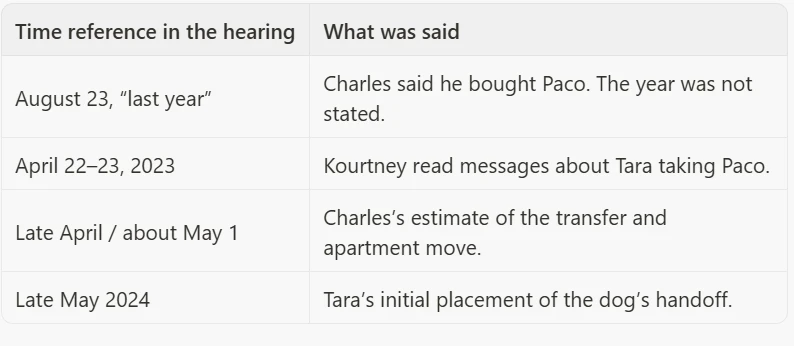
A careful account must leave the timeline exactly where the broadcast leaves it: partly contested. Tara initially placed the handoff in late May 2024. Charles estimated that it was around the end of April, after a move he said happened about May 1. Kourtney read messages dated April 22 and 23, 2023. The hearing did not resolve those different dates, so this account does not choose one over the others.
Gift or Temporary Care? Family Versions Diverged
Tara said she had spoken with Kourtney rather than Charles. Charles said he did not personally contact Tara because they did not get along. That distance mattered. Informal family arrangements often depend on a shared understanding, yet the people at the center of this one described that understanding in sharply different terms.
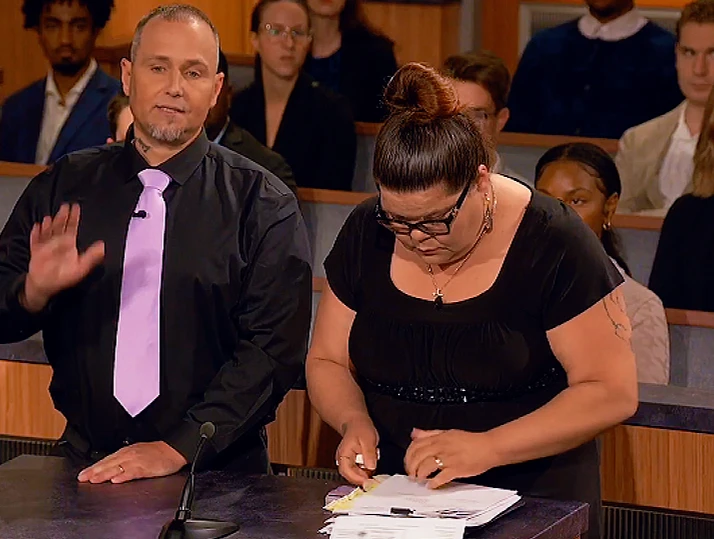
William’s account focused on the delivery itself. He said that while Charles unloaded Paco and the dog’s crate, he made clear that he would not accept responsibility unless Paco would be the Wielands’ dog—with no later return. William recalled Charles saying the apartment could not have a dog and that there was not time for one with a second child coming. Charles said he did not remember that conversation, but he acknowledged that he delivered Paco to William.
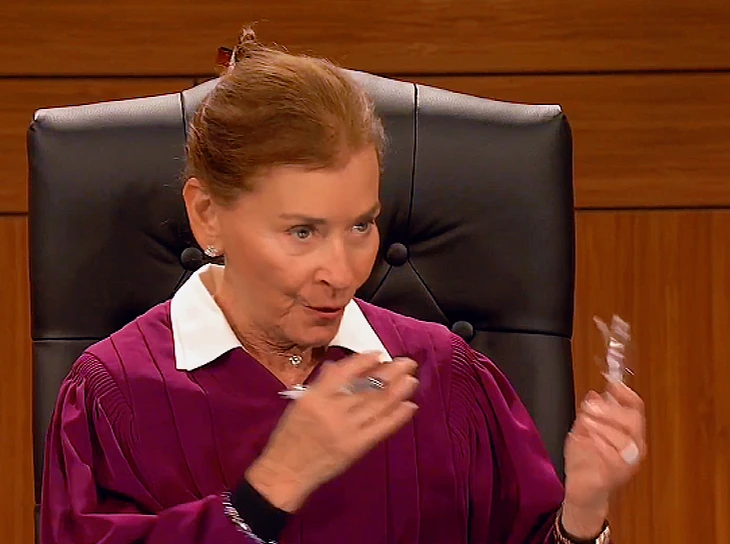
The judge treated the surrounding circumstances as consistent with William’s account: the apartment did not allow dogs, another child was expected, and the messages read in court did not say the Wielands were only providing temporary care. The judge concluded that Paco had been given to Tara and William rather than placed with them temporarily. That was the pivotal finding in the case.
Medical Care Turned a Handoff Into Evidence
Once the court accepted that finding, the veterinary visit became more than a family expense. It showed what the Wielands did after Paco arrived and supported their position that they were preparing to keep him. The judge awarded $195 for the bill in addition to the dog’s $500 purchase price.
Charles offered a different explanation for the ear infections, saying that ears left uncleaned over two months could develop a buildup and infection. The hearing did not make a criminal finding of animal mistreatment, and this article makes none. It was a civil dispute about the dog, the costs claimed by the Wielands, and the consequences of taking Paco back after the transfer.
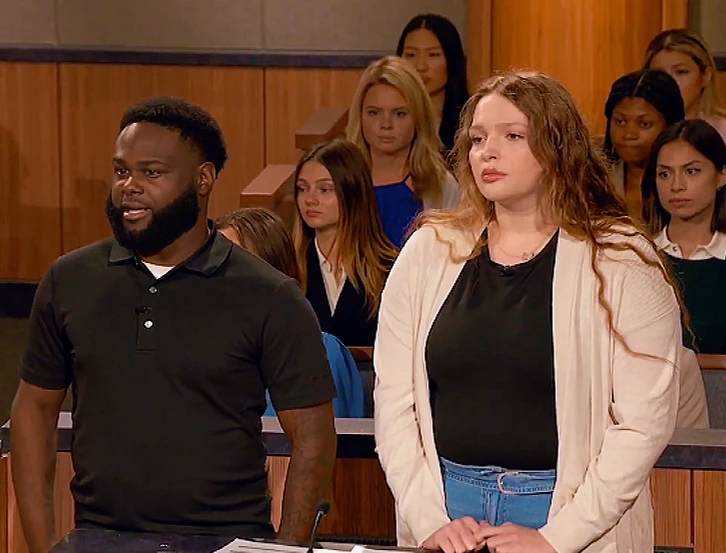
Charles also said that he gave William $200 in cash when Paco was returned, describing it as money for food and related expenses. William said he tore it up. The final $695 portion of the judgment listed $500 for the dog and $195 for veterinary care; the televised ruling did not list a $200 deduction.
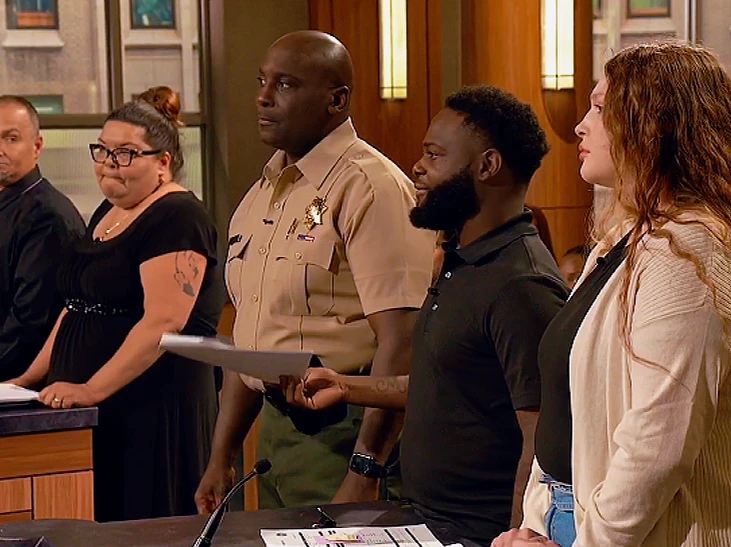
Paco’s Return and a New Legal Dispute
The case did not end with the handoff. In the hearing, the time Paco spent with the Wielands was itself described differently—initially as about a month and a half, then as two to two-and-a-half months. Charles said his mother later moved into the same apartment complex and could have a dog. Authorities became involved, and Paco was returned to Charles.
What happened next was also unsettled in Charles’s testimony. He first said Paco was sold. When the judge asked him to slow down, he corrected that statement: Paco had stayed with his mother for two or three months, and Charles said his sister was then watching the dog while he planned another move. The available transcript therefore does not support saying that Paco was sold.
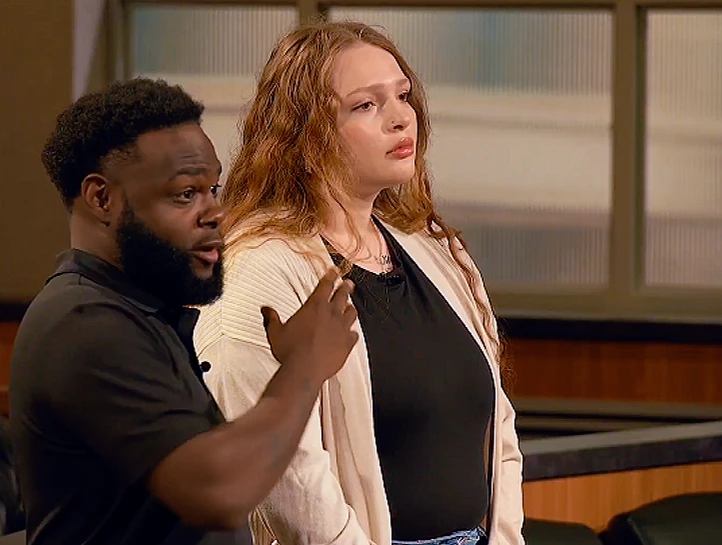
The second part of the case concerned a restraining-order filing. Kourtney said she had filed an order against her mother, Tara. Documents shown to the judge, however, identified Charles Garrett as petitioner against Tara Wieland. One document was dated June 6, 2024; Kourtney said that was the day Paco was returned. A signature page showed a filing date of June 18, 2024.
Charles initially said he had never filed a restraining order. After the signature was shown, he said he did not remember signing it; later, he said he might have but did not recall. The broadcast also contains differing statements about whether the related matter was dismissed or denied. The judge’s finding, as shown in the episode, was that Charles had filed the petition bearing his signature and later denied or could not remember doing so.
How the $2,695 Judgment Was Calculated
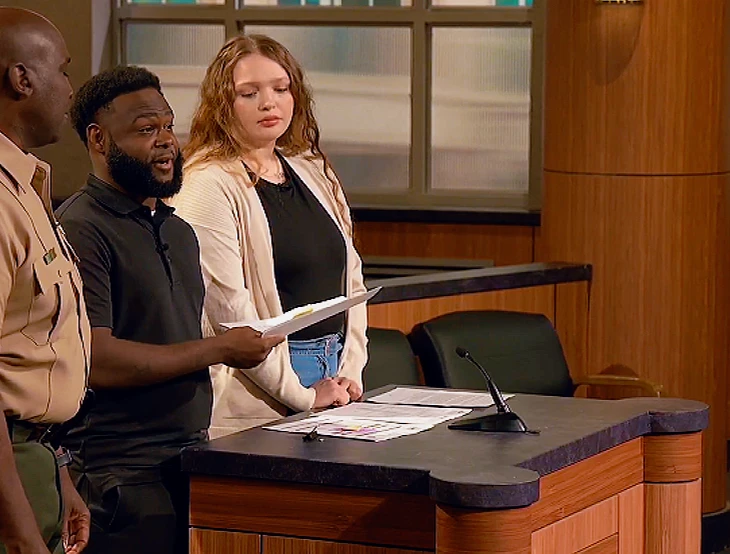
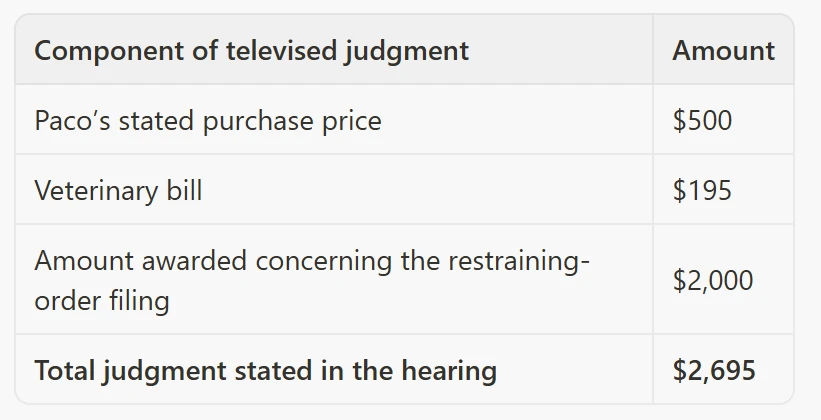
The announced judgment had two parts. The first was $695 for Paco and the veterinary bill. The second was $2,000 concerning the restraining-order filing. The court stated a total of $2,695 for Tara and William Wieland.
An Argument That Reached Beyond a Dog
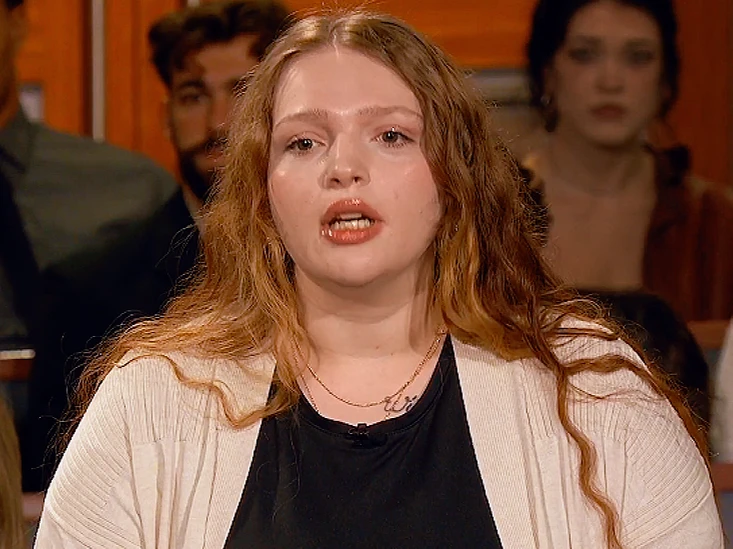
The ruling closed the case, not necessarily the underlying family rupture. In the episode’s closing comments, Tara said she was grateful for the decision and hurt that her relationship with Kourtney remained strained. Kourtney said she filed an order for her own reasons, because she did not want harassment directed at herself or her children. Charles said he did not want a connection with Tara.
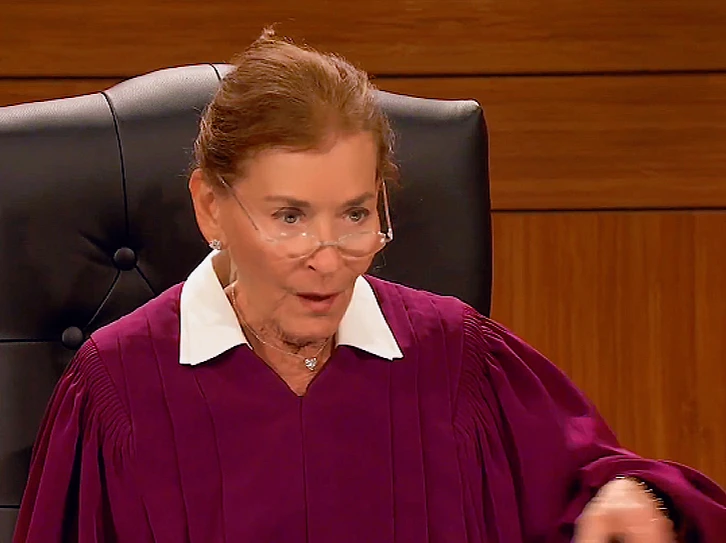
Judge Judy’s final discussion returned to the people who were not formal parties to the dog dispute: the children and Paco. She said the grandparents had been seeing the children before the incident and expressed regret that a disagreement over a dog could harm that relationship. That is the judge’s interpretation of the story presented on the program, not an independent account of the family’s private life.
For readers, the case is a reminder of how quickly an informal handoff can become a high-stakes argument when the terms are never written down and trust has already broken down. For accuracy, the limits are as important as the outcome: the supplied transcript contains competing transfer dates, varying accounts of Paco’s later placement, and inconsistent descriptions of the restraining-order process. The findings, amounts, and testimony reported above are those presented in the broadcast.
FAQ
Who bought Paco before the dispute?
Charles Garrett testified that he bought Paco through a Marketplace group called Bully Minnesota and ultimately paid $500. The transcript identifies the date only as August 23 of “last year,” without stating the year.
Did the judge decide Paco had been given away permanently?
Yes. In the televised hearing, the judge found that Charles had given Paco to Tara and William Wieland rather than asking them to provide temporary care.
Why did Tara and William Wieland receive $2,695?
The stated total included $500 for Paco, $195 for the veterinary bill, and $2,000 concerning the restraining-order filing.
Was Paco sold after he was returned to Charles?
The transcript does not support that conclusion. Charles initially said Paco was sold, then corrected himself and said the dog had stayed with his mother before his sister began watching him.
Does this case establish that a restraining order was legally false?
No broader conclusion should be drawn from the supplied excerpt. It shows the televised judge’s finding that Charles filed a petition he later denied or could not remember filing, followed by a $2,000 award. It does not include a complete court docket or an independent legal record.