
In one courtroom, a buyer stood behind a demand for her $1,000 back after returning a horse she said was not the rideable trail horse she had been promised. In another, a tenant faced a $675 rent claim after acknowledging that he had signed a lease amendment without reading all of its terms. Across both hearings, Judge Judy pressed past the accusations and toward the dates, documents, photographs, and admissions that could be tested.
Case One: The Horse Returned to Its Seller
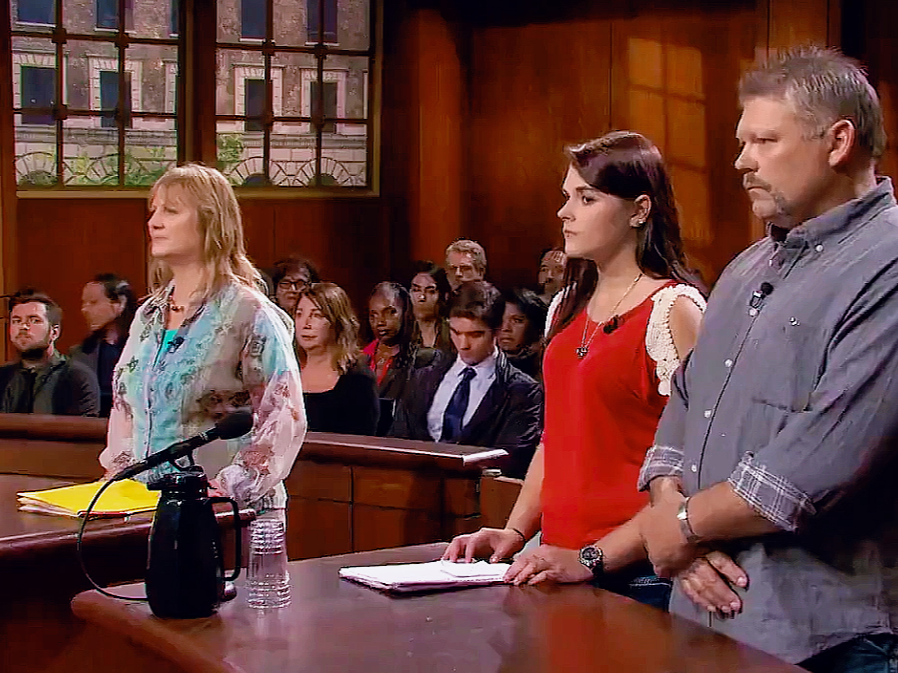
The first hearing opened with a deceptively simple question: had a buyer purchased a horse that was not fit to ride, and was she therefore entitled to her money back? The buyer is identified here as
Nikki: the transcript calls her “Miss Erickson” in one passage and “Miss Arkinson” in another, while the testimony identifies her as Nikki . The sellers disputed the claim and filed a counterclaim of their own after the horse was returned to their property without their permission.

The dispute involved a horse named Eva. Nikki had paid $1,000 for her on July 31, 2016. The sellers had acquired Eva in 2014 after learning that the horse was not receiving proper care following its former owner’s divorce. They said they had rescued her and paid nothing for her. Later, one seller decided to sell Eva while pursuing a rodeo career and looking for another rodeo horse.
The sellers acknowledged that Eva had moved into a less prominent place in their routine. They also described the mounting cost of caring for four horses, including feed, veterinary treatment, and farrier work. Their explanation suggested that the sale was partly an effort to recover expenses while finding Eva another home.
Nikki’s position was different. She said the horse had been represented as a rideable trail horse. When the horse did not perform as expected, she sought to undo the transaction and recover the purchase price. The sellers, in turn, argued that she had kept Eva for almost three weeks, returned her by trespassing on their property, and left them responsible for additional care.

The Timeline Behind the Horse Claim
The timing became the central issue. Nikki purchased Eva on July 31, 2016. She returned the horse on August 20, 2016. During the hearing, she said a veterinarian examined Eva on August 19, and she maintained that communication about the problem occurred when she had an opportunity to ride the horse.
Judge Judy focused on the gap between the purchase and the first documented complaint. The hearing established that the horse remained in the buyer’s custody for close to three weeks. The judge repeatedly returned to the question of what happened during that period and why the sellers were not advised sooner, by a provable email or text message, that the horse was allegedly unsuitable.

Nikki said she had not been able to ride Eva immediately. She also said the sellers knew she wanted a rideable horse and that there had been an express warranty. But the judge emphasized that a buyer seeking a return could not wait while retaining control of the animal and then expect an automatic refund. The court’s concern was not simply whether Eva had a pre-existing condition. It was whether the buyer acted promptly and whether the evidence showed what occurred while the horse was in her care.
The sellers’ counterclaim was based on the unauthorized return and the expenses of caring for Eva afterward. The hearing, however, did not end with an award to the sellers. Judge Judy rejected the buyer’s request for a refund, but she also rejected the counterclaim.
The Photograph That Changed the Hearing
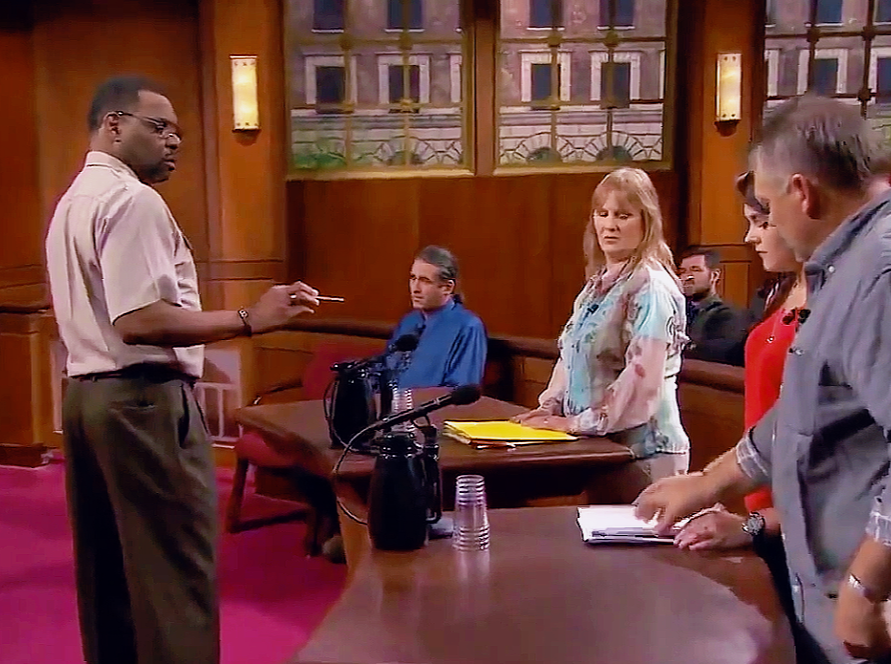
A photograph or internet image became an important point of credibility. Nikki denied that she had ridden Eva. The other side presented an image connected to a ride on August 14, 2016, five days before the veterinary examination and six days before the horse was returned.
The image did not straightforwardly show Nikki riding Eva. The testimony developed that Tia had been riding her own horse while her unnamed boyfriend rode Eva. The image therefore did not prove every part of the sellers’ argument. It did, however, complicate the buyer’s account of how little had happened with the horse during the three-week period.
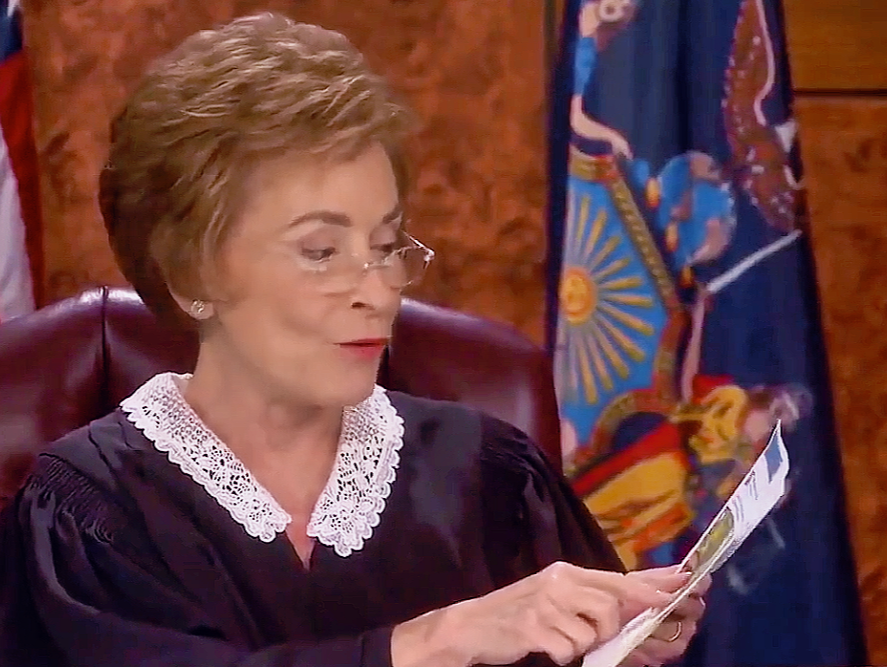
Judge Judy stated that she did not believe Nikki’s account and ruled that she would not receive her $1,000 back. At the same time, the judge declined to award the sellers’ counterclaim. The reasoning was that the sellers would likely resell Eva, and that they could not simply shift every cost back to the buyer after a period in which the horse had been under the buyer’s control.
The case was dismissed. The ruling left both sides without the recovery they sought: Nikki did not receive a refund, and the sellers received nothing on their counterclaim.

Case Two: A Rental Dispute Over Six Weeks of Rent
The second hearing moved from a horse sale to a landlord-tenant conflict. The plaintiff, Linda Bartolomeo, had rented a property to the defendant’s former girlfriend. The defendant, Mr. Wooten, moved into the house with her. When the girlfriend moved out, he remained there.

At first, Mr. Wooten was not a signatory to the girlfriend’s lease. He later signed a new lease after she left. The hearing centered on that lease and an amendment that changed the payment schedule. The original arrangement called for rent of $112.50 per week. The amendment changed the schedule to $225 every two weeks, payable on the eighth and twenty-second of each month.
Mr. Wooten said he moved into the property on March 15, 2016, after the house had been provided earlier in the year and required substantial cleanup. He moved out on October 4, 2016. The period examined by the court ran from July 2 through October 4, 2016.

The Lease Amendment and the Unpaid Balance
Linda Bartolomeo claimed unpaid rent. Mr. Wooten acknowledged that he had not paid for portions of August and September, but he disputed the amount and argued that he had withheld rent because the landlord had violated the lease.
The questioning eventually narrowed the dispute. Mr. Wooten said he had not paid the third and fourth weeks of August or the corresponding period in September. When Judge Judy asked whether the unpaid period amounted to four, six, or eight weeks, Mr. Wooten ultimately stated that it was six weeks. At the biweekly rate of $225, six weeks equaled $675.
Mr. Wooten argued that he had placed the money in escrow because the landlord failed to comply with the agreement. He also complained that the house was being shown to potential buyers and that people were being sent into the property without his approval.

The lease amendment became especially important. It stated that neither party was in default as of July 2 and required Mr. Wooten to keep the house in acceptable condition for potential buyers. It also described work that was to be completed, including interior trim and painting by August 1. Mr. Wooten said he had understood that the amendment only changed the rent from weekly to biweekly and admitted that he had not read all of it before signing.
Judge Judy made the consequence clear: signing a document without reading it did not remove the signer’s responsibility for its terms. The hearing also established that the landlord provided the listed appliances, including a stove, refrigerator, dishwasher, microwave, washer, dryer, toaster oven, and cappuccino maker.

The Marijuana Allegation and Property Claims
The case took a sharper turn when the court addressed marijuana plants and growing equipment. Mr. Wooten said Linda Bartolomeo had told him he could grow marijuana and had shown him where to do it. He later clarified that the growing occurred outside the house, not inside. He also said the landlord had left grow lights, power strips, buckets, and other items behind.
When asked why he grew marijuana, Mr. Wooten gave a direct answer: he was tired of paying for it. He also said that he and Linda Bartolomeo had smoked together when he first signed the lease. Linda Bartolomeo disputed his account, and the hearing did not turn on a separate finding about the legality or ownership of the growing operation.

Linda Bartolomeo further alleged damage to the property and sought the replacement of three bedroom doors because of scratches. The photographs shown in court included a door with marks near the bottom and what appeared to be a dog in the image. Mr. Wooten denied damaging the doors and said the house was left in better condition than when he moved in. He also said the carpets had already needed to be removed because of four dogs that were present before his occupancy.

Linda Bartolomeo mentioned a bed and two televisions that had been left by the previous tenant, who was Mr. Wooten’s former girlfriend. The judge moved past that claim during the hearing. No separate award for those items was entered in the final ruling described in the SRT.
Mr. Wooten also described receiving a 14-day eviction notice from a realtor after paying rent in August. He argued that the lease called for a 30-day notice and that the notice was not signed or accompanied by a stated reason. The hearing nevertheless focused on the rent that remained unpaid during the time he continued to live in the house.
The Final Judgments
The two cases ended differently in detail but similarly in structure: the court separated the parties’ competing accusations from the amounts the evidence supported.
In the horse case, Tia did not recover the $1,000 purchase price. The sellers also received nothing on their counterclaim for trespass, the return of the horse, or care expenses. The case was dismissed.
In the rental case, Judge Judy entered judgment for Linda Bartolomeo in the amount of $675, representing six weeks of unpaid rent at $225 every two weeks. The court did not award the requested replacement cost for the three doors or a separate recovery for the other property allegations described during the hearing.
The hearings illustrate why dates, written agreements, and conduct after a dispute begins can matter as much as the original accusation. A delayed complaint affected the horse buyer’s refund request. A signed amendment affected the tenant’s defense. In both rooms, the final result turned on what the parties could establish—not only on what they believed had happened.

FAQ
What was the first Judge Judy case about?
The first case concerned Nikki’s purchase of a horse named Eva for $1,000 on July 31, 2016. She claimed the horse was not the rideable trail horse she had been promised and sought a refund. The sellers filed a counterclaim after the horse was returned to their property.
Why was the horse refund denied?
The court focused on the fact that Eva remained with Nikki for almost three weeks before the dispute was documented through a veterinary examination and return. Judge Judy also questioned the evidence about whether the horse had been ridden during that period and did not believe Nikki’s account.
Did the horse sellers win their counterclaim?
No. Judge Judy denied the counterclaim as well as Nikki’s refund request. The case was dismissed.
How much rent did Mr. Wooten allegedly owe?
The court calculated six weeks of unpaid rent at $225 every two weeks, for a total of $675.
What was the second case about?
The second case involved landlord Linda Bartolomeo and tenant Mr. Wooten. It concerned unpaid rent, a lease amendment, a disputed eviction notice, alleged property damage, and claims involving marijuana-growing equipment.
What was the final ruling in the rental case?
Judge Judy entered judgment for Linda Bartolomeo for $675 in unpaid rent. The SRT does not show an additional award for the doors, bed, televisions, or other disputed property claims.