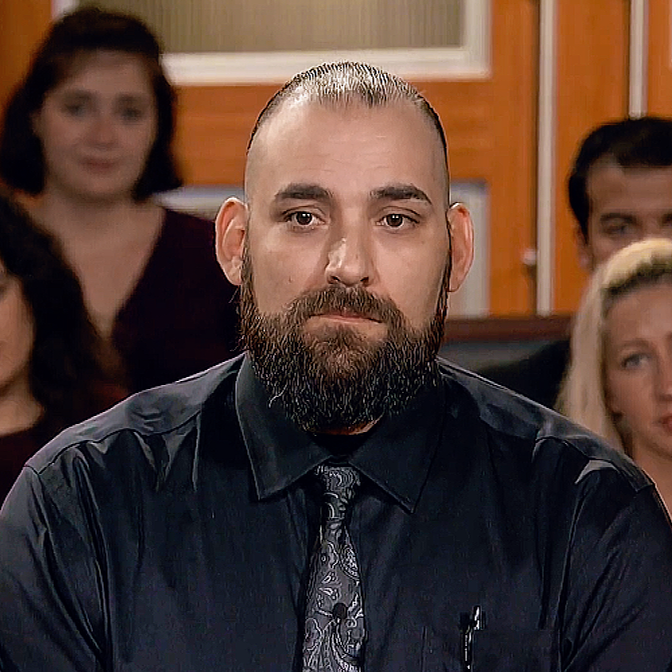
The argument started with a question about who would care for a young child. It moved from a car to a bedroom, where Marcus Polidore said a lamp was used against him before a porcelain cup cut his leg. Kyla Purcell told the court that she had been trying to escape after Polidore pushed her onto a bed and choked her. Their accounts were almost impossible to reconcile.
Two years later, the dispute reached civil court. But Judge Judy Sheindlin was not simply asked to decide which story sounded more convincing. She also had to consider the hospital record, a police report, protective-order proceedings, and Polidore’s later guilty plea to violating a temporary protection order. The final ruling dismissed both sides’ claims and redirected the dispute over their daughter to family court.

A relationship already under strain
Marcus Polidore and Kyla Purcell had known each other for years. They had been romantically involved and shared a daughter who was not yet three years old at the time of the hearing. Both described a relationship that had been unstable. Polidore said they had lived together after the child was born, although only intermittently. When Judge Sheindlin asked where they were living during the 2022 incident, Polidore said they were at Purcell’s residence. Purcell immediately disputed that description.
The transcript does not independently resolve the couple’s living arrangement; it records two people describing the same relationship in sharply different terms.

The argument begins with childcare
According to Polidore, the dispute began because he had concerns about a babysitter chosen for their daughter. He said he was not necessarily forbidding the child from going there; he wanted to discuss the situation. Purcell’s account focused on a related but more immediate disagreement: she said Polidore wanted to take her car and pick up their daughter himself because he did not approve of the babysitter.

The argument began in the car. Polidore testified that Purcell tried to throw his insulin out of the middle console and eventually threw it out the window. He said he told her he would get more. When they arrived at the residence, he said Purcell slammed the door and continued yelling at him. He followed her into the bedroom after parking the car.

Polidore said that, while he was leaning partly on the bed, Purcell picked up a lamp from the nightstand and hit him with it three times. He testified that he stood up, wrapped his arms around her to stop the attack, and let her go after she dropped the lamp. He then returned to the bed, where he said she tried to swing at him again.

Purcell described the lead-up differently. She said she was trying to leave for work and retrieve her stethoscope. In her account, Polidore blocked the bedroom doorway when she attempted to go out. She said she tried to move between his arms, but he pushed her, threw her onto the bed, and choked her.

The court was therefore presented with two competing sequences: Polidore said the physical attack began with the lamp, while Purcell said the confrontation began when he prevented her from leaving. That difference became the central question behind the porcelain cup.

Two versions of the bedroom confrontation
Polidore testified that after he put his feet out to keep Purcell away, she picked up a porcelain cup from the nightstand. He said he warned her not to throw it. According to his testimony, she threw the cup, he heard a pop, and his leg suddenly felt numb. When he looked down, he said, the leg was bleeding.

He said Purcell took her stethoscope and left. Polidore then called a friend, who drove him to the hospital. Judge Sheindlin later reviewed the hospital record and said it documented sutures and a relatively serious injury. The record also noted that Polidore had Type 1 diabetes.
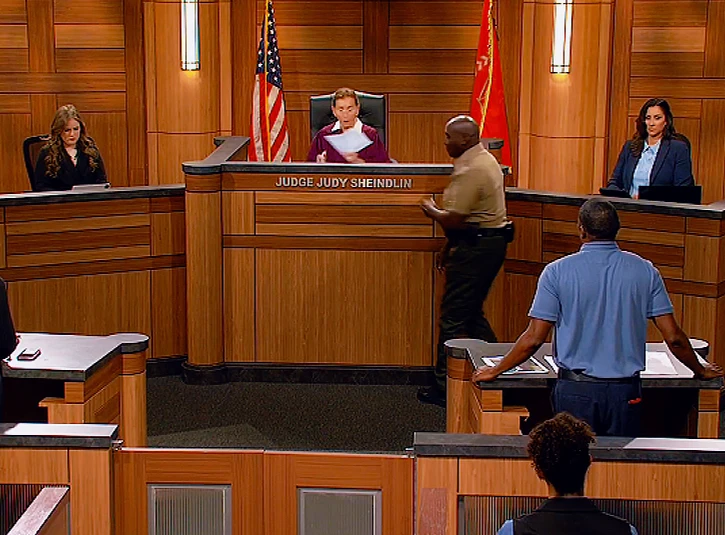
Purcell did not deny throwing the cup. She gave it a different meaning. She said Polidore had been on top of her and choking her. She recalled trying to get him off and believed she kneed him. When he got off the bed, she said, she stood up and tried to run through the door. As Polidore began to chase her, she grabbed the porcelain cup and threw it behind her while leaving the room.

Purcell said she then went to work. She estimated that the confrontation took place around 4:00 or 5:00 p.m. She testified that she worked an eight-hour shift, picked up the child around 11:30 p.m. or midnight, and returned home. Polidore was not there when she arrived, according to her account.

The hospital record and the April 4 protective order
Polidore acknowledged that he did not file charges against Purcell; charges were filed against him instead. Purcell testified that on April 4, her first day back at work, she applied online for an emergency protective order and texted Polidore not to be at the house when she returned.

Purcell said Polidore responded that he received mail at the residence, which meant he lived there, and that she would have to evict him. Neither party had the text messages available in court. Judge Sheindlin treated that absence as significant when evaluating the claim that the messages existed.

A police report reviewed during the hearing was dated April 6 and referred to a domestic-violence incident said to have occurred on Monday, April 4. The report identified Polidore as the victim and recorded his statement that Purcell had struck him in the leg with a porcelain cup. Judge Sheindlin also referred to photographs and text messages that Purcell had shown police. Those messages reportedly included an apology for hitting Polidore, along with her statement that she would not have done so if he had not choked her.
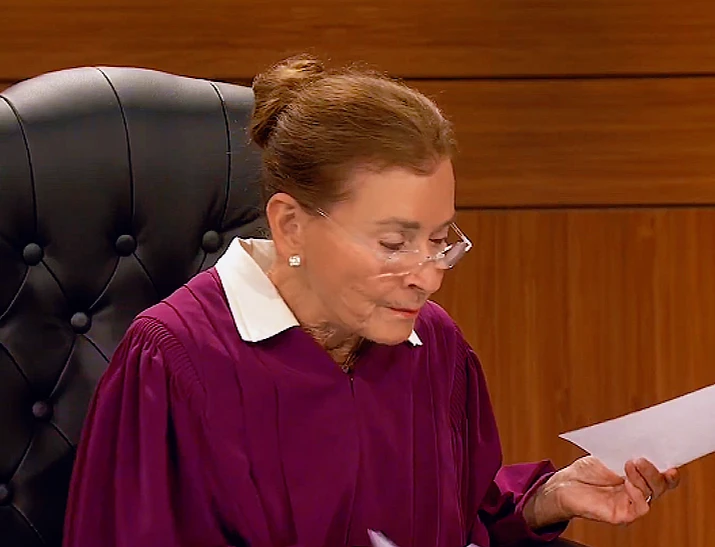
Purcell also described a later encounter at the residence. She said Polidore entered while she was washing dishes and the baby was nearby. She told him he had ten minutes to leave, she testified, but he took alcohol from the counter and refused to go. Purcell alleged that he poured beer on their infant daughter. Polidore called that allegation a lie. The hearing did not resolve that dispute as an independent finding of fact.

The criminal case changes the civil hearing
The case then turned to what happened in January 2024. Polidore said the criminal charges had been dismissed and that he had fought the case for two years. Documents shown to Judge Sheindlin indicated that he had taken a plea to violating a temporary protection order. The other charges were dismissed with prejudice, and Purcell was granted a permanent protective order.

Polidore acknowledged the plea but insisted that prosecutors had not had evidence against him. He said Purcell had invited him to the house and denied several details described in the documents. Judge Sheindlin repeatedly brought the discussion back to the same point: Polidore had had an opportunity, with a lawyer, to contest the underlying allegations in the criminal case. Instead, he pleaded guilty to a protective-order violation.

Polidore challenged the descriptions and said some of the paperwork was unfamiliar to him. Judge Sheindlin was not retrying the criminal case; she was deciding whether either party had proved a civil claim for money.

Why the judge dismissed both claims
Polidore sued for medical bills related to his leg injury, lost wages, and what he characterized as false charges. Purcell filed a counterclaim for lost wages and emotional distress. She said she had missed work for five court appearances and sought $2,000 related to the alleged assault.

Judge Sheindlin rejected Purcell’s lost-wage argument because Purcell had continued working after the incident and had not missed work on the day after it. The judge also noted that Purcell had not gone to a doctor or hospital for the marks shown in her photographs. Her counterclaim was dismissed.
Polidore’s claim was dismissed as well. Judge Sheindlin’s reasoning centered on the procedural history. He had been injured, had gone to the hospital, and had presented photographs, but the court also considered that he had chosen to plead guilty to violating a protective order rather than take the underlying allegations to trial. The judge did not declare that Purcell’s entire account had been proven. Instead, she concluded that Polidore could not obtain the requested money on the record and history presented in the civil hearing.

The ruling was shaped by the evidence, credibility disputes, and consequences of the prior criminal proceedings. Both Polidore’s claim and Purcell’s counterclaim were dismissed.

A separate fight over visitation
The hearing then moved from the money claims to the couple’s daughter. Polidore said he had not seen the child in two years. He maintained that he had contacted Purcell’s mother but had not received a response. Purcell said that was inaccurate.

Judge Sheindlin pointed out that the protective order allowed Polidore to pursue contact with his daughter through the child’s mother. She advised him to file for visitation in family court, explaining that this civil court could not set visitation.

Polidore said he intended to file after rebuilding his life. Family court was the appropriate next step.
After the ruling, Polidore continued to insist that Purcell had seriously injured his leg. Purcell said the permanent restraining order existed for a reason and that she did not plan to see him again. Their closing comments reflected the same division that had defined the hearing: injury and financial consequences on one side, fear and protection on the other.
The case ended without a financial award to either party. What remained was an unresolved account of the confrontation, a permanent protective order, and a recommendation to address visitation in family court.

FAQ
Who sued whom in the Judy Justice case?
Marcus Polidore sued his former girlfriend, Kyla Purcell, seeking compensation connected to his leg injury, medical bills, lost wages, and related allegations. Purcell countersued for lost wages and emotional distress.
What did Marcus Polidore say happened?
Polidore said Purcell hit him three times with a lamp and later threw a porcelain cup that injured his leg. He testified that he went to the hospital and received sutures.
What did Kyla Purcell say happened?
Purcell said Polidore blocked the bedroom doorway, pushed her onto the bed, and choked her. She said she threw the porcelain cup behind her while trying to escape and then went to work.
Was either party awarded money?
No. Judge Judy Sheindlin dismissed Polidore’s claim and Purcell’s counterclaim.
What happened in the criminal proceedings?
The transcript states that, in January 2024, Polidore pleaded guilty to violating a temporary protective order. The other charges were dismissed with prejudice, and Purcell received a permanent protective order.
What did the judge recommend about the child?
Judge Sheindlin advised Polidore to pursue visitation in family court, which was the appropriate forum for addressing contact with the child.