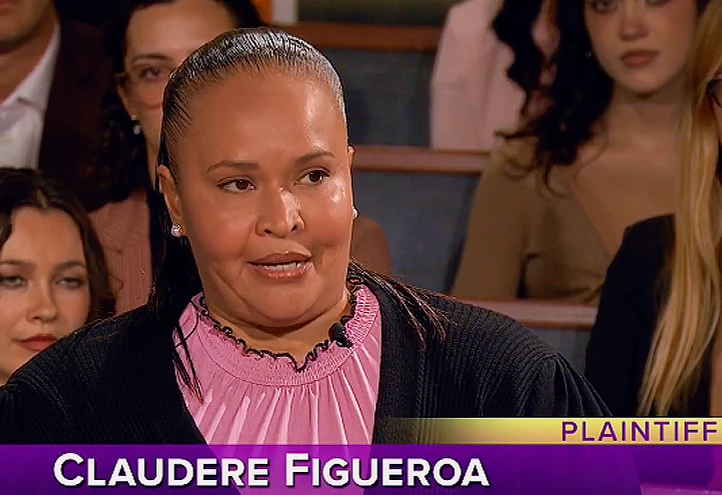
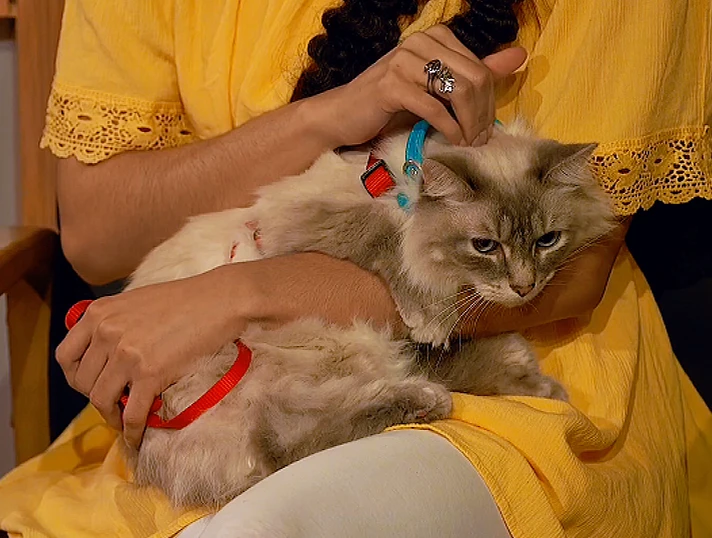
The courtroom fell quiet when Claudere Figueroa finally saw Fugitive again. She called the cat by name, reached toward him, and said he looked frightened. For nearly five years, she said, he had been part of her life. But by the time the case reached Judge Judy Sheindlin’s courtroom, Fugitive had spent months roaming outside, had received veterinary treatment from another woman, and was living in what the judge described as a good home.
The question was not simply whether Fugitive belonged to Figueroa. The judge accepted that he did. The harder question was whether ownership alone was enough to bring him home—and whether Figueroa was prepared to pay $1,500 for the care Bonney Klabunde had provided.

The eviction that changed Fugitive’s life
The case was identified as Figueroa v. Klabunde, case 4017. Claudere Figueroa sued her former neighbor, Bonney Klabunde, seeking the return of Fugitive, the cat both women discussed throughout the hearing. Klabunde did not deny that Fugitive had originally been Figueroa’s cat. Her position was that the animal had been left without proper care, and that she had stepped in when no one else did.
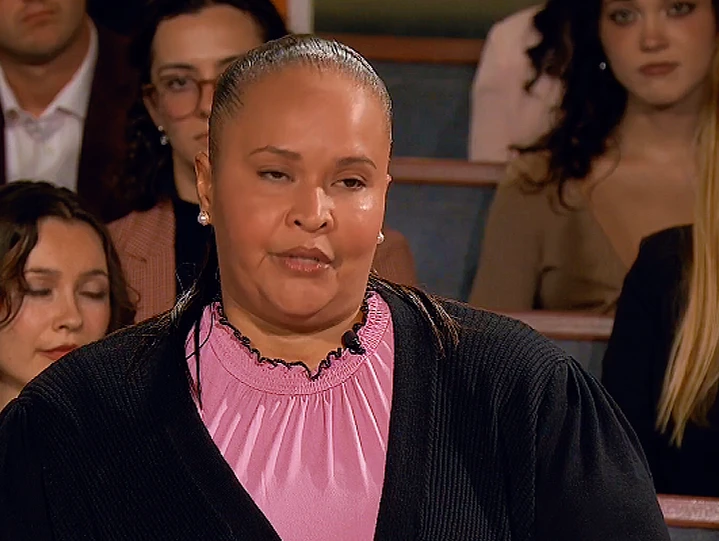
Figueroa told the court that she had been evicted from her apartment on March 21. According to her account, she left Fugitive with people in the building, mainly Deenetray Gray, with Yessica Pacheco also mentioned during the hearing. She argued that the cat was not completely alone because her son, Israel Figueroa, was staying with Deenetray.

Klabunde offered a far less forgiving description of that day. She said surveillance footage showed Figueroa opening the door, shooing Fugitive outside, and leaving. Klabunde had not personally watched the scene happen, and the photographs she referred to were not available in court. Still, the allegation became the first major dividing line between the two sides: Figueroa described a temporary arrangement during a housing crisis, while Klabunde described a cat that had effectively been left behind.
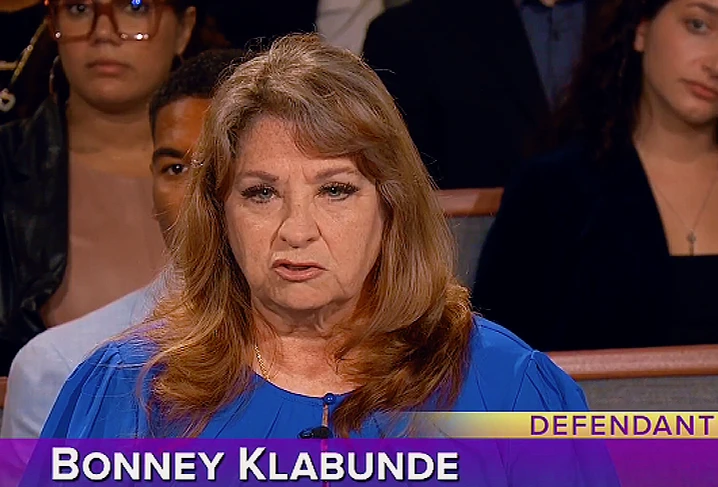
By the end of May, Klabunde said she learned that Fugitive was alone and wandering around the apartment property. Before taking him in, she and her son had been leaving food outside, near bushes where the cat was hiding. The testimony also described Fugitive as an indoor-outdoor cat who moved in and out of first-floor windows and returned when he was hungry.
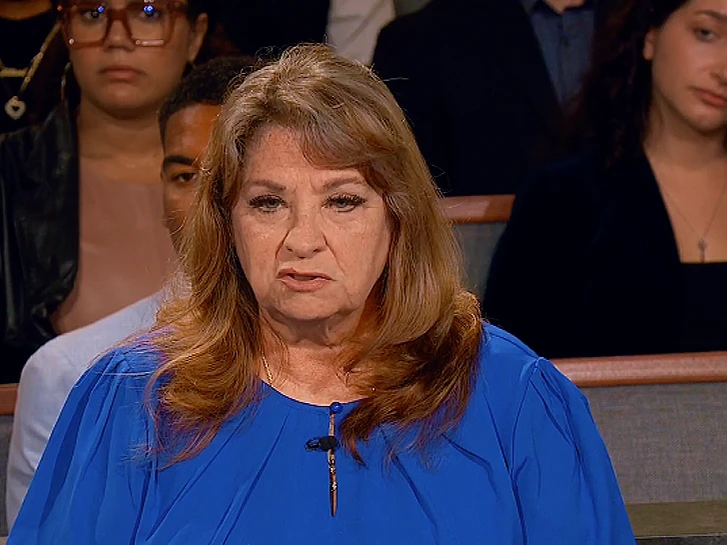
That detail made the ownership dispute more complicated. Fugitive had a recognized owner, but his daily situation had become uncertain. The case was no longer only about who had first adopted him. It was also about who had been responsible for him during the months when his owner no longer had a stable home.
Two different accounts of what happened
Figueroa said she wanted Fugitive back because he was her cat and because she had obtained him for her son as an emotional animal. She told Judge Judy that her children were now housed—one in Burbank and the other in Hollywood—and that Fugitive had somewhere to go. She also said she was living in a shelter that allowed cats.
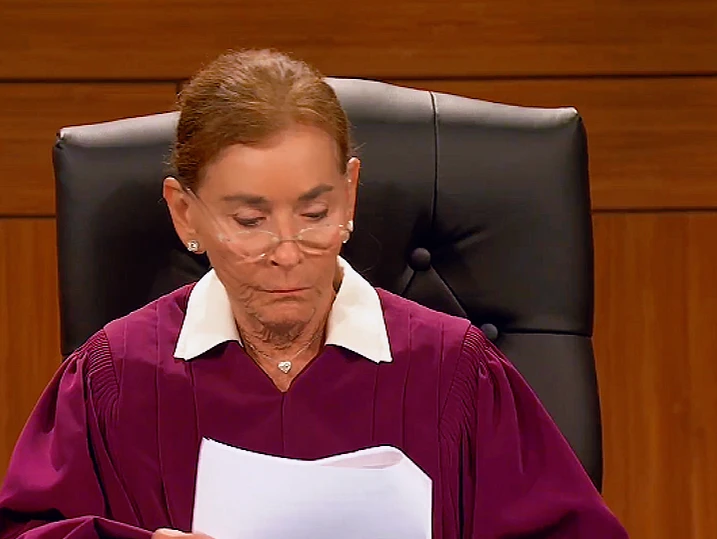
Judge Judy examined the document Figueroa brought to court. The paperwork stated that the shelter would reasonably accommodate participants with an assistance animal. It did not, in the judge’s reading, establish that Figueroa was permitted to keep an ordinary pet cat there. The distinction mattered because Figueroa used the language of an emotional-support or assistance animal, while the hearing did not establish that Fugitive had been formally designated as a service animal or assistance animal.
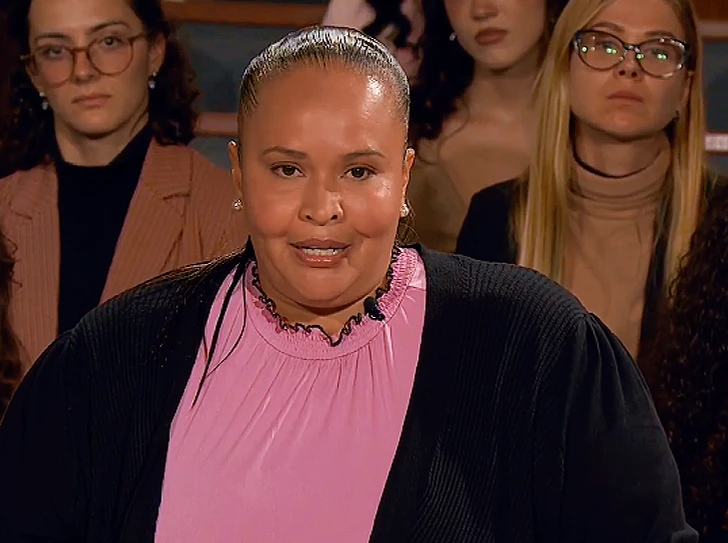
Klabunde’s account focused less on labels and more on what Fugitive needed. She said she took him to a veterinarian and brought him in for shots on three separate occasions. Judge Judy stated that the cat had been undernourished when Klabunde took him in. Klabunde said she had spent at least $1,500 on his care and had receipts to support that amount.
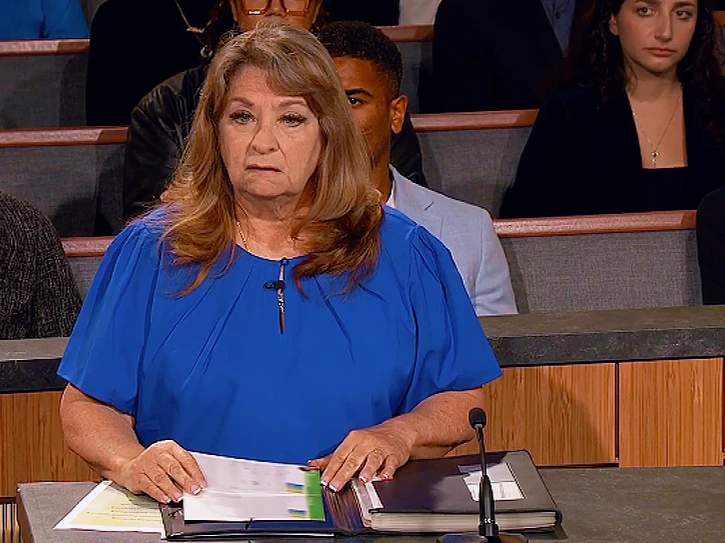
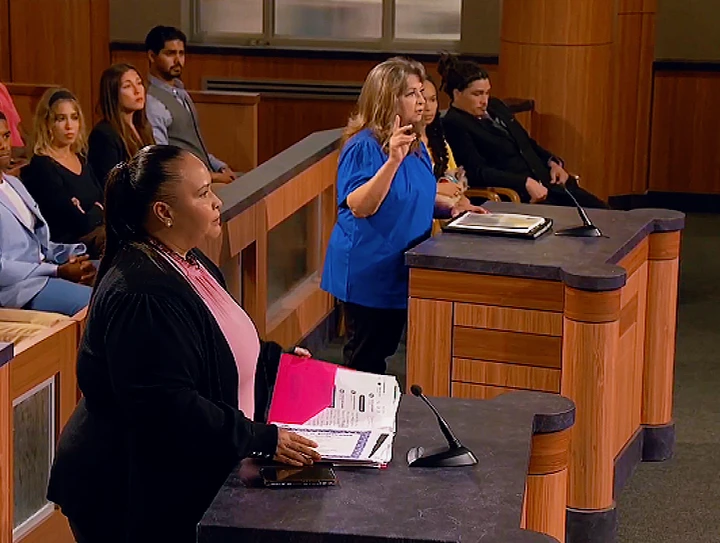
The contrast was direct. Figueroa spoke about the history she shared with Fugitive and the emotional importance of getting him back. Klabunde pointed to the care that had been provided after the cat was found outside. In the courtroom, both women claimed a connection to Fugitive, but they were describing two different kinds of responsibility.
The shelter paperwork and missing veterinary records
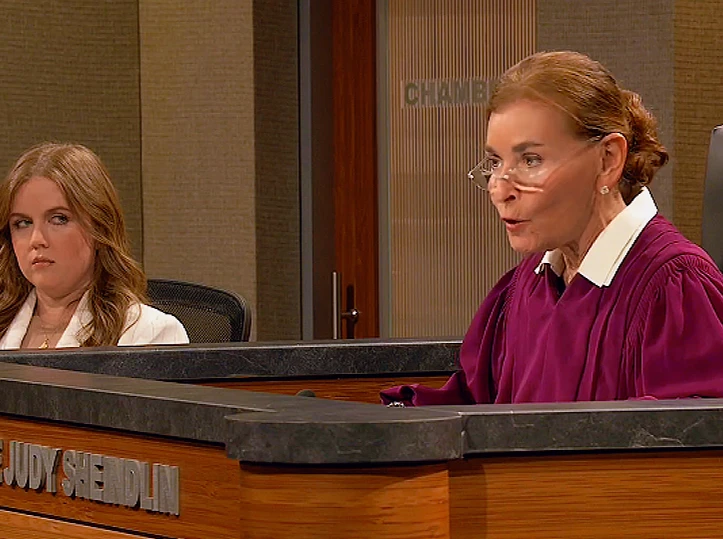
The most damaging moment for Figueroa came when Judge Judy asked about Fugitive’s medical history. Figueroa initially tried to explain that she had taken the cat for shots, but when the judge asked for the veterinarian’s name, she admitted that she did not know it because she had never taken Fugitive to a vet. She also acknowledged that the cat had never received shots before Klabunde took him in.
Judge Judy repeatedly emphasized what she believed responsible care required. An assistance animal, she said, would be taken to a veterinarian, vaccinated, and given a collar. The transcript does not independently establish every aspect of Fugitive’s condition before Klabunde intervened, and the judge expressly said there was not sufficient proof to establish neglect in every respect. But the absence of veterinary care became a central fact in the ruling.
Figueroa also described a serious car accident on May 27 that left her unable to walk. She said the injury prevented her from going to the apartment immediately. That explanation gave the court important context: her delay was not presented only as indifference, but also as the result of injury, eviction, and unstable housing. Even so, Judge Judy did not treat those circumstances as an answer to what had happened to Fugitive during the intervening months.
A dispute that moved from the apartment to the police station
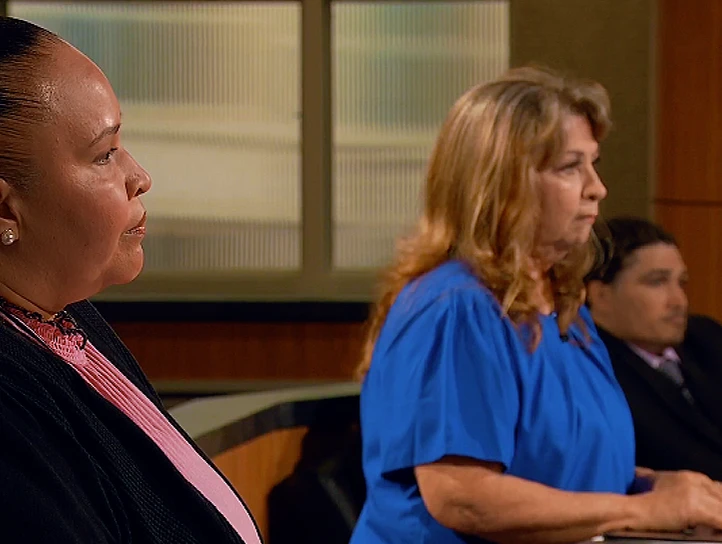
Figueroa testified that she went to Klabunde’s home on June 22 with documentation showing ownership. She said Deenetray had made repeated attempts to communicate with Klabunde, but Klabunde refused to return Fugitive. Figueroa then filed an online report. She said the report was rejected because the matter was considered civil and she was directed to go to a police station instead.
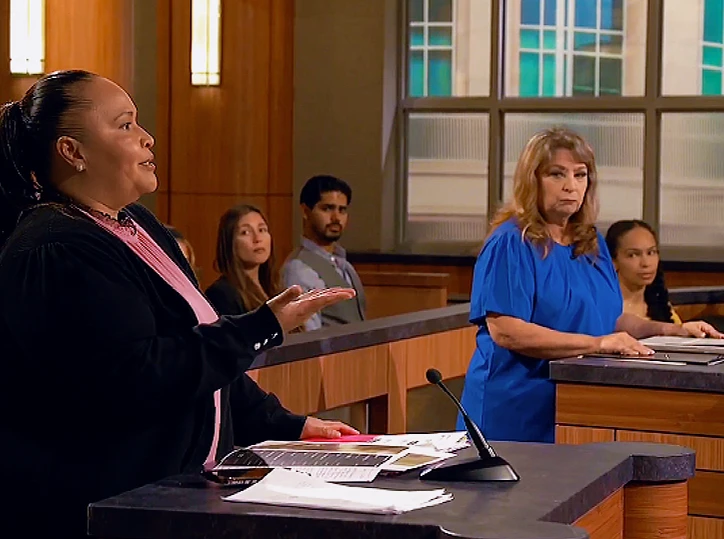
At the police station, Figueroa said an officer told her that the police could not resolve the ownership dispute but could arrange a civil standby. On July 1, officers went to the residence. Figueroa said Klabunde refused to open the door. Klabunde disputed aspects of Figueroa’s account, and Judge Judy stopped the parties when they began arguing about what Klabunde knew or did not know at the time.
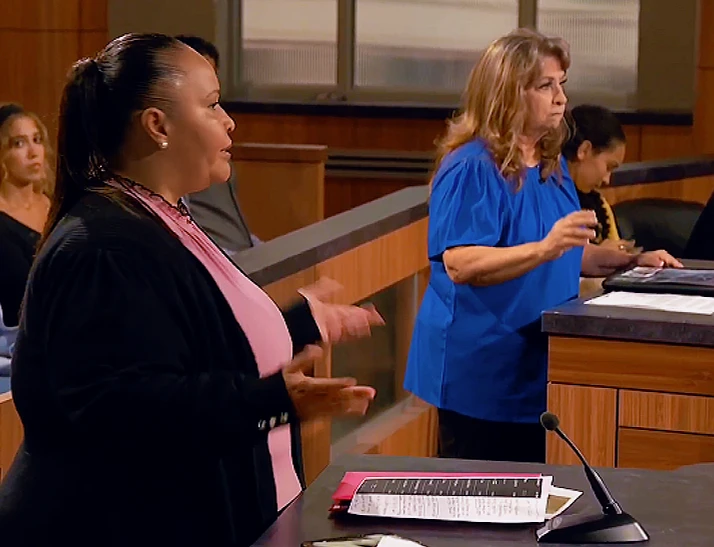
By then, the disagreement had moved well beyond a private conversation between former neighbors. It involved an eviction, a cat living outside, competing claims of care, police involvement, veterinary expenses, and a court trying to decide what would happen next.

Judge Judy’s conditional decision
Judge Judy made clear that Figueroa’s ownership claim had not disappeared. At the same time, the judge believed Klabunde had taken responsibility for a cat who had not received veterinary care while in Figueroa’s possession. The judge also questioned whether Figueroa could legally or practically keep Fugitive at the shelter where she was living.
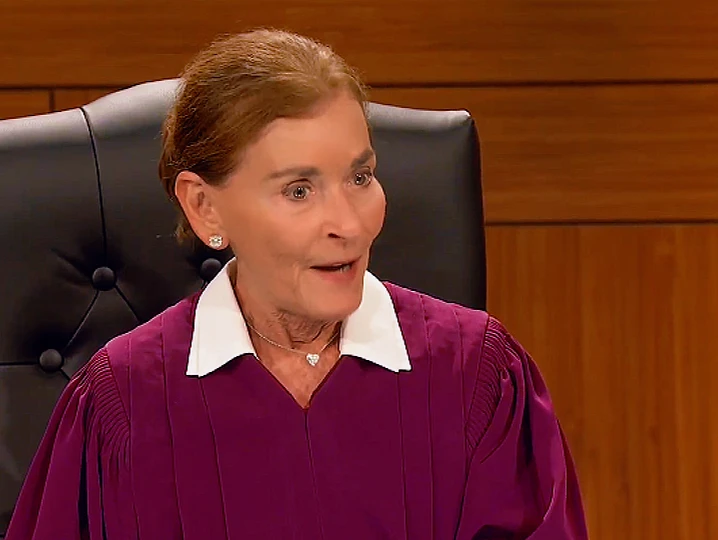
The ruling gave Figueroa two options. If she wanted Fugitive back, she had to pay Klabunde $1,500 in cash for the care she had provided. The exchange was scheduled for Monday at noon at the Mission Police Station on Sepulveda Boulevard. Both parties were instructed to be there between 12:00 and 12:15. If Figueroa arrived with the money, the order would direct that Fugitive be returned. If she was not there by 12:15, Judge Judy said Klabunde could leave and the cat would be hers.

The alternative was designed for Figueroa’s son. Judge Judy offered $300 so Figueroa could adopt another cat, one that could be properly vaccinated and neutered. Figueroa rejected that option. She said Fugitive meant too much to her and that she would get the $1,500.

The judge’s reasoning was not that money could measure the relationship between a person and a pet. Instead, the payment was meant to force responsibility into the decision. Figueroa could not simply rely on the fact that Fugitive had once been hers. If she wanted him returned, she had to show a financial commitment to the care that had been missing.

The last time Figueroa saw Fugitive in court
After the decision, Figueroa asked to see Fugitive. When the cat was brought out, she called, “Fugitive,” and greeted him affectionately. She said he looked scared and told him she loved him. The moment was brief, but it exposed the emotional core of the dispute: to Figueroa, Fugitive was family; to Klabunde, he had become a cat who depended on her.

In the closing discussion, Figueroa said she respected the judge’s decision. She also said Fugitive was an outdoor cat and believed he was suffering because he wanted to be outside. Klabunde said Fugitive was now healthy, loved, and part of her family. Judge Judy acknowledged Figueroa’s difficult circumstances but returned to the condition she had imposed: if Figueroa wanted the cat back, she needed to have “skin in the game.”
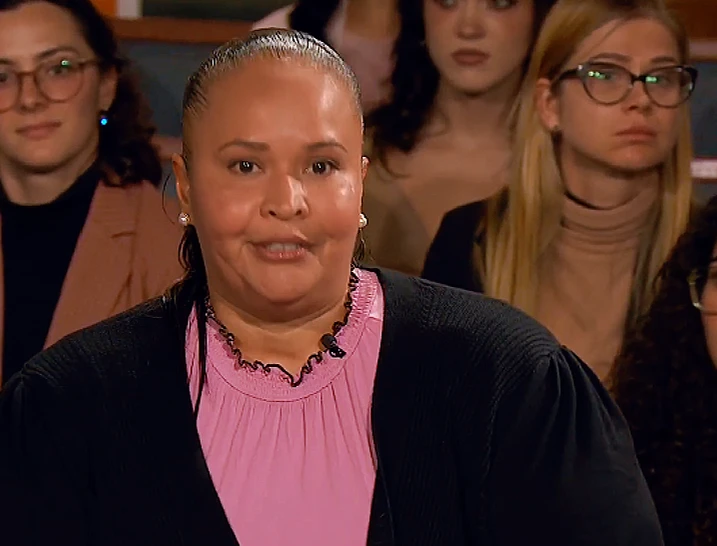
The transcript ends with Figueroa agreeing to pay $1,500 and the Monday exchange being scheduled. It does not record whether she ultimately arrived with the money or whether Fugitive was returned. That uncertainty is important. The hearing documents a decision and a plan—not the final result.
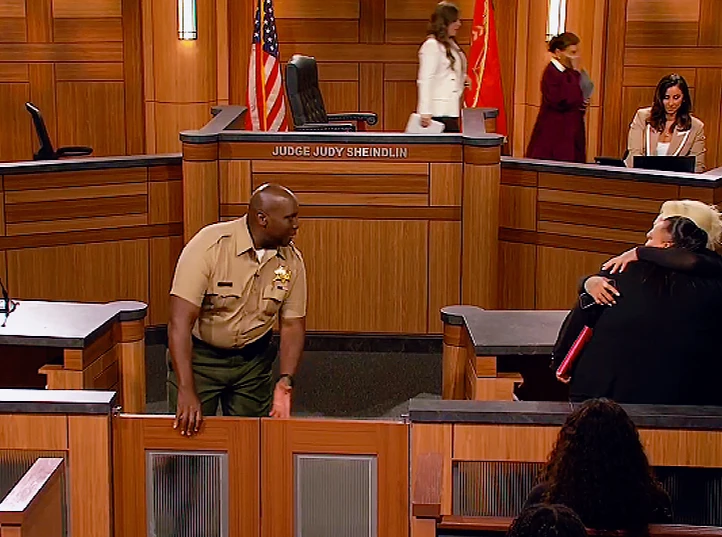
What the case leaves behind is a difficult question with no simple answer: when a pet owner loses housing and another person provides the animal’s food and medical care, where does ownership end and responsibility begin? For Judge Judy, the answer was conditional. Fugitive was Figueroa’s cat, but reclaiming him required more than saying so. It required proof that she was prepared to care for him again.
FAQ
Who was suing whom in the Fugitive cat case?
Claudere Figueroa sued her former neighbor, Bonney Klabunde, seeking the return of Fugitive. Klabunde countersued for the cost of caring for the cat.
Why did Bonney Klabunde take Fugitive in?
Klabunde said Fugitive was alone and roaming around the apartment property after Figueroa’s eviction. She and her son had been leaving food outside near the bushes where the cat was hiding before she took him in.
How much did Claudere Figueroa agree to pay?
Figueroa agreed to pay Klabunde $1,500 in cash for the care and expenses associated with Fugitive. The payment was scheduled to take place on Monday at the Mission Police Station.
Was Fugitive officially an emotional support or assistance animal?
The hearing did not establish that Fugitive had been formally designated as a service or assistance animal. The shelter document shown in court referred to accommodation for an assistance animal, but Judge Judy said it did not prove that Figueroa could keep a cat there.
What was the alternative to paying $1,500?
Judge Judy offered Figueroa $300 so she could adopt another cat for her son. Figueroa chose to pursue the return of Fugitive instead.
What happened if Figueroa did not appear with the money?
Judge Judy stated that if Figueroa was not at the Mission Police Station by 12:15, Klabunde could leave and Fugitive would remain with her.
Does the SRT confirm the final outcome?
No. The SRT confirms the ruling and the scheduled Monday exchange, but it does not document whether the payment occurred or whether Fugitive was ultimately returned.